THE CLASSIC COLLECTION✦Jules Bastien-Lepage and his artCLASSIC FREE BOOKS
Jules Bastien-Lepage and his art
André Theuriet & Mathilde Blind & George Clausen & Walter Sickert
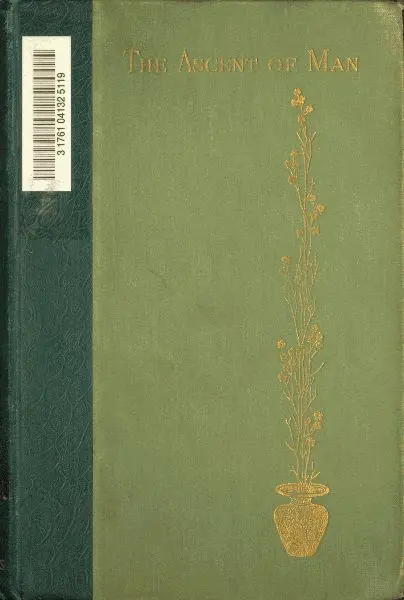
THE CLASSIC COLLECTION · 1889
"The Ascent of Man" by Mathilde Blind is a poetic work written in the late 19th century. The collection explores profound themes of existence, the struggle of life, and the evolution of humanity through vivid and evocative imagery. Through its verses, the work delves into the complexities of human emotions, the relationship with nature, and the philosophical underpinnings of love and mortality. At the start of the book, the prelude sets a lyrical tone, urging the soul to ascend and explore the depths and heights of existence. Following this, the first part introduces a vivid exploration of life's primal forces, detailing the tumultuous emergence of humanity from chaos, intertwined with the themes of love, survival, and the inevitable conflicts of existence. Blind's intricate language captures the struggle of life against a backdrop of natural beauty and primal instincts, establishing a rich thematic foundation that invites readers to reflect on the ascent of mankind in both a literal and metaphorical sense.
Introduction adapted from the source catalogue; source summaries may be automatically generated.
Free to read · English · 21,645 words · No account needed
MAKE TIME FOR A GOOD BOOK
On by default. Untick to stop anonymous reading totals. Each page counts after 10 seconds in view. How this works.
Anonymous counting is on unless you have switched it off.
And from the clash of warring Nature's strife Man day by day wins his imperilled life; For, goaded on by want, he hunts the roe, Chases the deer, and lays the wild boar low. In his rude boat made of the hollow trees He drifts adventurous on the unoared seas, And, as he tilts upon the rocking tide, Catches the glistening fish that flash and glide Innumerably through the waters wide. He'll fire the bush whose flames shall help him fel The trunks to prop his roof, where he may dwell Beside the bubbling of a crystal well, Sheltered from drenching rains or noxious glare When the sun holds the zenith. Delving there, His cumbered wife, whose multifarious toil Seems never done, breaks the rich virgin soil, And in the ashes casts the casual seeds Of feathered grass and efflorescent weeds; When, as with thanks, the bounteous earth one morn Returns lush blades of life-sustaining corn. And while the woman digs and plants, and twines To precious use long reeds and pliant bines, He--having hit the brown bird on the wing, And slain the roe--returns at evening, And gives his spoil unto her, to prepare The succulent, wildwood scented, simmering fare, While with impatient sniffs and eager-eyed His bronze-limbed children gather to his side. And, when the feast is done, all take their ease, Lulled by the sing-song of the evening breeze And murmuring undertones of many-foliaged trees; While here and there through rifts of green the sky Casts its blue glance like an all-seeing eye. But though by stress of want and poignant need Man tames the wolf-sprung hound and rearing steed, Pens up the ram, and yokes the deep-horned ox, And through wide pastures shepherds woolly flocks; Though age by age, through discipline of toil, Man wring a richer harvest from the soil, And in the grim and still renewing fight Slays loathly worms and beasts of gruesome might By the close-knitted bondage of the clan, Which adding up the puny strength of man Makes thousands move with one electric thrill Of simultaneous, energetic will; Yet still behind the narrow borderland Where in security he seems to stand, His apprehensive life is compassed round By baffling mysteries he cannot sound, Where, big with terrors and calamities, The future like a foe in ambush lies: A muffled foe, that seems to watch and wait With the Medusa eyes of stony fate.-- Great floods o'erwhelm and ruin his ripening grain, His boat is shattered by the hurricane, From the rent cloud the tameless lightning springs-- Heaven's flame-mouthed dragon with a roar of wings-- And fires his hut and simple household things; Until before his horror-stricken eyes The stored-up produce of long labour lies, A heap of ashes smoking 'neath the skies.-- Or now the pastures where his flocks did graze, Parched, withered, shrivelled by the imminent blaze Of the great ball of fire that glares above, Glow dry like iron heated in a stove; Turning upon themselves, the tortured sheep, With blackening tongues, drop heap on gasping heap, Their rotting flesh sickens the wind that moans And whistles poisoned through their chattering bones; While the thin shepherd, staring sick and gaunt, Will search the thorns for berries, or yet haunt The stony channels of some river-bed Where filtering fresh perchance a liquid thread Of water may run clear.--Now dark o'erhead, Thickening with storm, the wintry clouds will loom, And wrap the land in weeds of mournful gloom; Shrouding the sun and every lesser light Till earth with all her aging woods grows white, And hurrying streams stop fettered in their flight. Then famished beasts freeze by the frozen lakes, And thick as leaves dead birds bestrew the brakes; And, cowering blankly by the flickering flame, Man feels a presence without form or name, When by the bodies of his speechless dead In barbarous woe he bows his stricken head. Then in the hunger of his piteous love He sends his thought, winged like a carrier dove-- Through the unanswering silence void and vast, Whence from dim hollows blows an icy blast-- To bring some sign, some little sign at last, From his lost chiefs--the beautiful, the brave-- Vanished like bubbles on a breaking wave, Lost in the unfathomed darkness of the grave. When, lo, behold beside him in the night,-- Softly beside him, like the noiseless light Of moonbeams moving o'er the glimmering floor That come unbidden through the bolted door,-- The lonely sleeper sees the lost one stand Like one returned from some dim, distant land, Bending towards him with his outstretched hand. But when he fain would grasp it in his own, He melts into thin moonshine and is gone-- A spirit now, who on the other shore Of death hunts happily for evermore.-- A Son of Life, but dogged, while he draws breath, By her inseparable shadow--death, Man, feeble Man, whom unknown Fates appal, With prayer and praise seeks to propitiate all The spirits, who, for good or evil plight, Bless him in victory or in sickness smite. Those are his Dead who, wrapped in grisly shrouds, Now ride phantasmal on the rushing clouds, Souls of departed chiefs whose livid forms He sees careering on the reinless storms, Wild, spectral huntsmen who tumultuously, With loud halloo and shrilly echoing cry, Follow the furious chase, with the whole pack Of shadowy hounds fierce yelping in the track Of wolves and bears as shadowy as the hosts Who lead once more as unsubstantial ghosts Their lives of old as restlessly they fly Across the wildernesses of the sky. When the wild hunt is done, shall they not rest Their heads upon some swan-white maiden's breast, And quaff their honeyed mead with godlike zest In golden-gated Halls whence they may see The earth and marvellous secrets of the Sea Whereon the clouds will lie with grey wings furled, And in whose depths, voluminously curled, The serpent looms whose girth engirds the world? Far, far above now in supernal power Those spirits rule the sunshine and the shower! How shall he win their favour; yea, how move To pity the unpitying gods above, The Daemon rulers of life's fitful dream, Who sway men's destinies, and still would seem To treat them lightly as a game of chance, The sport of whim and blindfold circumstance-- The irresponsible, capricious gods, So quick to please or anger; whose sharp rods Are storms and lightnings launched from cloven skies; Who feast upon the shuddering victim's cries, The smell of blood, and human sacrifice. But ever as Man grows they grow with him; Terrific, cruel, gentle, bright, or dim, With eyes of dove-like mercy, hands of wrath, Procession-like, they hover o'er his path And, changing with the gazer, borrow light From their rapt devotee's adoring sight. And Ormuzd, Ashtaroth, Osiris, Baal-- Love spending gods and gods of blood and wail-- Look down upon their suppliant from the skies With his own magnified, responsive eyes. For Man, from want and pressing hunger freed, Begins to feel another kind of need, And in his shaping brain and through his eyes Nature, awakening, sees her blue-arched skies; The Sun, his life-begetter, isled in space; The Moon, the Measurer of his span of days; The immemorial stars who pierce his night With inklings of things vast and infinite. All shows of heaven and earth that move and pass Take form within his brain as in a glass. The tidal thunder of the sea now roars And breaks symphonious on a hundred shores; The fitful flutings of the vagrant breeze Strike gusts of sound from virgin forest trees; White leaping waters of wild cataracts fall From crag and jag in lapses musical, And streams meandering amid daisied leas Throb with the pulses of tumultuous seas. From hills and valleys smoking mists arise, Steeped in pale gold and amethystine dyes. The land takes colour from him, and the flowers Laugh in his path like sun-dyed April showers. The moving clouds in calm or thunderstorm, All shows of things in colour, sound, or form Moulded mysteriously, are freshly wrought Within the fiery furnace of his thought.
Your reading position is saved on this browser. Take it to another device with a library code. Reading pages adapt to text, rather than matching a printed edition.
André Theuriet & Mathilde Blind & George Clausen & Walter Sickert
Mathilde Blind
BEHIND THE BOOK
This eBook is for the use of anyone anywhere in the United States and most other parts of the world at no cost and with almost no restrictions whatsoever. You may copy it, give it away or re-use it under the terms of the Project Gutenberg License included with this eBook or online at www.gutenberg.org. If you are not located in the United States, you will have to check the laws of the country where you are located before using this eBook. Read the source licence.
The original source file, including credits and licence, is retained by this library. Request an original-format copy at no charge. Please include the book title and Project Gutenberg identifier #39844.
KEEP YOUR CURIOSITY GOING

Eric Mackay
Edmund Gosse
Sophia Margaretta Hensley
Gilbert Parker
George MacDonald

Elizabeth Bibesco