THE CLASSIC COLLECTION✦Jules Bastien-Lepage and his artCLASSIC FREE BOOKS
Jules Bastien-Lepage and his art
André Theuriet & Mathilde Blind & George Clausen & Walter Sickert
THE CLASSIC COLLECTION · 1889
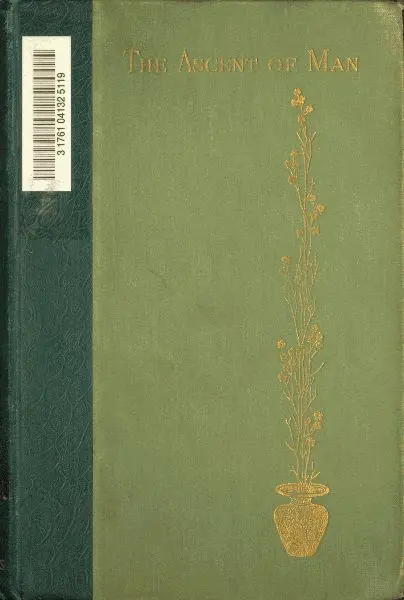
"The Ascent of Man" by Mathilde Blind is a poetic work written in the late 19th century. The collection explores profound themes of existence, the struggle of life, and the evolution of humanity through vivid and evocative imagery. Through its verses, the work delves into the complexities of human emotions, the relationship with nature, and the philosophical underpinnings of love and mortality. At the start of the book, the prelude sets a lyrical tone, urging the soul to ascend and explore the depths and heights of existence. Following this, the first part introduces a vivid exploration of life's primal forces, detailing the tumultuous emergence of humanity from chaos, intertwined with the themes of love, survival, and the inevitable conflicts of existence. Blind's intricate language captures the struggle of life against a backdrop of natural beauty and primal instincts, establishing a rich thematic foundation that invites readers to reflect on the ascent of mankind in both a literal and metaphorical sense.
Introduction adapted from the source catalogue; source summaries may be automatically generated.
Free to read · English · 21,645 words · No account needed
MAKE TIME FOR A GOOD BOOK
On by default. Untick to stop anonymous reading totals. Each page counts after 10 seconds in view. How this works.
Anonymous counting is on unless you have switched it off.
For the glitter of gold in the gold of their hair. They smiled and they cozened, their bold eyes shone brightly And lightened with laughter, as, lit by the flare
Of the wind-fretted gas-lamps, they footed it lightly, Or, closely enlacing and bowered in gloom, With mouth pressed to hot mouth, their parched lips drain nightly
The wine-cup of pleasure red-sealing their doom. Brief lives like bright rockets which, aridly glowing, Fall burnt out to ashes and reel to the tomb.
On, on, loud and louder the rough night was blowing, Shrill singing was mixed with strange cries of despair; And high overhead the black sky, redly glowing,
Loomed over the city one ominous glare, As dark yawning funnels from foul throats for ever Belched smoke grimly flaming, which outraged the air.
On, on, by long quays where the lamps in the river Were writhing like serpents that hiss ere they drown, And poplars with palsy seemed coldly to shiver,
On, on, to the bare desert end of the town. When lo! the wind stopped like a heart that's ceased beating, And nought but the waters, white foaming and brown,
Were heard as to seaward their currents went fleeting. But hark! o'er the lull breaks a desolate moan, Like a little lost lamb's that is timidly bleating
When, strayed from the shepherd, it staggers alone By tracks which the mountain streams shake with their thunder, Where death seems to gape from each boulder and stone.
I turned to the murmur: the clouds swept asunder And wheeled like white sea-gulls around the white moon; And the moon, like a white maid, looked down in mute wonder
On a boy whose wan eyelids were closed as in swoon. Half nude on the ground he lay, wasted and chilly, And torn as with thorns and sharp brambles of June;
His hair, like a flame which at twilight burns stilly, In a halo of light round his temples was blown, And his tears fell like rain on a storm-stricken lily
Where he lay on the cold ground, abandoned, alone. With heart moved towards him in wondering pity, I tenderly seized his thin hand with my own:
Crying, "Child, say how cam'st thou so far from the city? How cam'st thou alone in such pitiful plight, All blood-stained thy feet, with rags squalid and gritty,
A waif by the wayside, unhoused in the night?" Then rose he and lifted the bright locks, storm driven, Which flamed round his forehead and clouded his sight,
And mournful as meres on a moorland at even His blue eyes flashed wildly through tears as they fell. Strange eyes full of horror, yet fuller of heaven,
Your reading position is saved on this browser. Take it to another device with a library code. Reading pages adapt to text, rather than matching a printed edition.
André Theuriet & Mathilde Blind & George Clausen & Walter Sickert
Mathilde Blind
BEHIND THE BOOK
This eBook is for the use of anyone anywhere in the United States and most other parts of the world at no cost and with almost no restrictions whatsoever. You may copy it, give it away or re-use it under the terms of the Project Gutenberg License included with this eBook or online at www.gutenberg.org. If you are not located in the United States, you will have to check the laws of the country where you are located before using this eBook. Read the source licence.
The original source file, including credits and licence, is retained by this library. Request an original-format copy at no charge. Please include the book title and Project Gutenberg identifier #39844.
KEEP YOUR CURIOSITY GOING

Eric Mackay
Edmund Gosse
Sophia Margaretta Hensley
Gilbert Parker
George MacDonald

Elizabeth Bibesco