THE CLASSIC COLLECTION✦Lost DiariesCLASSIC FREE BOOKS
Lost Diaries
Maurice Baring
THE CLASSIC COLLECTION · 1920
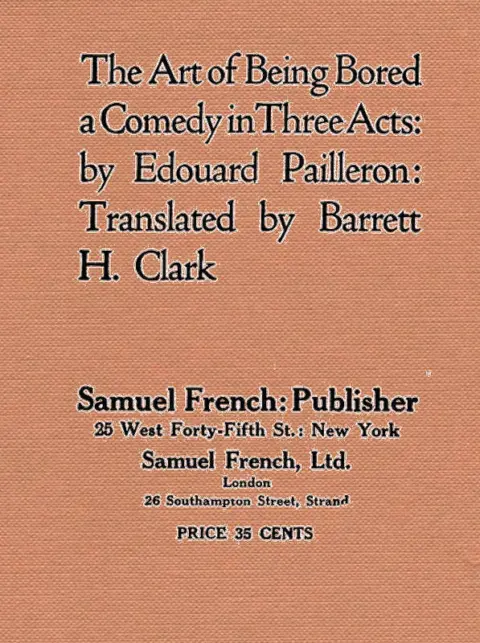
"The Art of Being Bored: A Comedy in Three Acts" by Edouard Pailleron is a play written in the late 19th century. The story is set within the social circles of Parisian life, highlighting the interactions among characters who embody various societal roles and aspirations. The central characters include Paul and Jeanne, a newlywed couple navigating the complexities of social expectations and the artifice of high society. The beginning of the play introduces the audience to a drawing-room at Madame de Céran's château, where the dynamics of social interactions unfold. Paul, a sub-prefect, advises his wife Jeanne on how to comport herself in this influential circle, emphasizing the need for decorum and subtlety. As various guests arrive, including their host and a collection of socialites, themes of political ambition, societal expectations, and the struggle against ennui begin to emerge. The opening sets a humorous yet critical tone toward the superficiality of their interactions, suggesting that the art of being bored is a central concern of the characters' lives.
Introduction adapted from the source catalogue; source summaries may be automatically generated.
Free to read · English · 27,398 words · No account needed
MAKE TIME FOR A GOOD BOOK
On by default. Untick to stop anonymous reading totals. Each page counts after 10 seconds in view. How this works.
Anonymous counting is on unless you have switched it off.
MME. DE CÉRAN. And this is your first attempt in the realm of the drama? Ah, well, maturity of years guarantees maturity of talent!
DES MILLETS. Alas, Madame la comtesse, the play was written fifteen
years ago!
LADIES. Fifteen years!—Is it possible?! Really?
GAIAC. Ah, Des Millets has faith in his work! We must encourage those who have faith, should we not, ladies?
MME. DE LOUDAN. Of course! We must encourage the tragic form, must we not, General? Tragedy——
GENERAL. (Interrupting himself in his conversation with VIROT) Eh? Oh, yes, tragedy! Horace! Cinna! Of course, we must! Tragedy is necessary for the masses—(To DES MILLETS) May we have the title?
DES. MILLETS. Philippe-Auguste!
GENERAL. Fine subject! Good military subject!—In verse, isn’t it?
DES MILLETS. Oh, General! A tragedy——!
GENERAL. A good many acts, I suppose?
DES MILLETS. Five.
GENERAL. Ha! Ha! Good! Good!
JEANNE. (Aside to PAUL) Five acts! How lovely! We’ll have plenty of
time——!
PAUL. Sh-h!
MME. DE LOUDAN. The road to Parnassus is long!
MME. DE SAINT-RÉAULT. What a mighty effort!
MME. ARRIÉGO. It must be encouraged!
(SUZANNE’S laugh is heard above the murmur of the conversation.)
MME. DE CÉRAN. Suzanne!
DUCHESS. (To MADAME DE CÉRAN) Lead out young Euripides and his press agent! Get rid of the lot of them!
MME. DE CÉRAN. Now ladies, shall we go into the large drawing-room and hear the reading? (To DES MILLETS) Are you ready, Monsieur?
DES MILLETS. As you please, Madame la comtesse.
PAUL. (Aside to JEANNE) Age before beauty!
MME. DE CÉRAN. Come, ladies!
MME. DE LOUDAN. (Intercepting her) Oh, but first, Countess, let us—the ladies and me—carry out our little plot! (Going to BELLAC, and saying with an air of supplication) Monsieur Bellac?
BELLAC. Marquise?
MME. DE LOUDAN. I want to ask a great favor of you.
BELLAC. (Graciously) The favor which you ask me becomes as nothing in comparison with the favor you do me in asking it so charmingly.
LADIES. Oh, how lovely!
MME. DE LOUDAN. This poetic tragedy will doubtless occupy the remainder of the evening; it will certainly prove a fitting climax!—Please say a few words beforehand—as few as you like! Of course, Genius must not be overtaxed! But, please just a few words. They will be received like the Manna of old!
SUZANNE. Please, Monsieur Bellac!
MME. ARRIÉGO. Be generous!
BARONESS. We throw ourselves at your feet!
BELLAC. (Defending himself) Oh, ladies!
MME. DE LOUDAN. Come to our assistance, Lucy—you, his Muse! You plead
with him!
LUCY. Of course; I ask him now.
SUZANNE. And I, I want him too!
Your reading position is saved on this browser. Take it to another device with a library code. Reading pages adapt to text, rather than matching a printed edition.
BEHIND THE BOOK
This eBook is for the use of anyone anywhere in the United States and most other parts of the world at no cost and with almost no restrictions whatsoever. You may copy it, give it away or re-use it under the terms of the Project Gutenberg License included with this eBook or online at www.gutenberg.org. If you are not located in the United States, you will have to check the laws of the country where you are located before using this eBook. Read the source licence.
The original source file, including credits and licence, is retained by this library. Request an original-format copy at no charge. Please include the book title and Project Gutenberg identifier #53334.
KEEP YOUR CURIOSITY GOING
Maurice Baring
W. B. (William Butler) Yeats
Edward Martyn

John Brougham & Charlotte Brontë
Marguerite Merington
Leonid Andreyev