THE CLASSIC COLLECTION✦Lost DiariesCLASSIC FREE BOOKS
Lost Diaries
Maurice Baring
THE CLASSIC COLLECTION · 1920
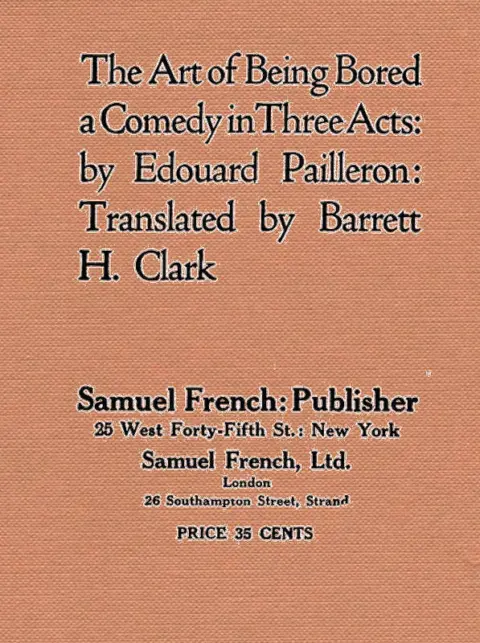
"The Art of Being Bored: A Comedy in Three Acts" by Edouard Pailleron is a play written in the late 19th century. The story is set within the social circles of Parisian life, highlighting the interactions among characters who embody various societal roles and aspirations. The central characters include Paul and Jeanne, a newlywed couple navigating the complexities of social expectations and the artifice of high society. The beginning of the play introduces the audience to a drawing-room at Madame de Céran's château, where the dynamics of social interactions unfold. Paul, a sub-prefect, advises his wife Jeanne on how to comport herself in this influential circle, emphasizing the need for decorum and subtlety. As various guests arrive, including their host and a collection of socialites, themes of political ambition, societal expectations, and the struggle against ennui begin to emerge. The opening sets a humorous yet critical tone toward the superficiality of their interactions, suggesting that the art of being bored is a central concern of the characters' lives.
Introduction adapted from the source catalogue; source summaries may be automatically generated.
Free to read · English · 27,398 words · No account needed
MAKE TIME FOR A GOOD BOOK
On by default. Untick to stop anonymous reading totals. Each page counts after 10 seconds in view. How this works.
Anonymous counting is on unless you have switched it off.
MME. DE CÉRAN. I doubt if you can at this moment. He must be hard at work. (Enter the DUCHESS and ROGER. Aside, looking at these latter) What’s this—and with the Duchess?
ROGER. (To the DUCHESS, greatly agitated) Well, did you hear, Aunt?
DUCHESS. Yes, but I saw nothing.
ROGER. It was certainly a kiss, that time!
DUCHESS. And a good smack! Who is there here who would kiss like that?
ROGER. Who, indeed?
DUCHESS. (Seeing MADAME DE CÉRAN, as she approaches them) Your
mother!
MME. DE CÉRAN. How is this, Roger, aren’t you supposed to be at work?
ROGER. No, Mother, I——
MME. DE CÉRAN. Well, well, what about your Tumuli?
ROGER. I have plenty of time: I can work on it to-night, and later in
the week.
MME. DE CÉRAN. The idea! The Minister is waiting!
ROGER. Let him wait, Mother! (He goes away)
MME. DE CÉRAN. (Stupefied) Duchess, what does this mean?
DUCHESS. Tell me, isn’t someone going to read us some sort of nonsense this evening? Some tragedy——?
MME. DE CÉRAN. Yes.
DUCHESS. Your reading is to be in the next room, isn’t it? Get the people out of here, will you? I shall need this room at once.
MME. DE CÉRAN. Why?
DUCHESS. I’ll tell you during the tragedy.
SERVANT. (Announcing) Monsieur le vicomte de Gaiac! Monsieur des
Millets!
(Enter DE GAIAC and DES MILLETS.)
DUCHESS. Well—I—look at your poet! There he is!
SEVERAL VOICES. The poet!—The young poet!—Where?—Where is he?
GAIAC. Will you ever forgive me, Countess? I was kept at the office. (Aside) I was writing up your soirée!—Monsieur des Millets, my friend the tragic poet, whose talent you will soon have an opportunity of appreciating.
DES MILLETS. (Bowing) Madame la comtesse!
DUCHESS. (To ROGER) So that is the young poet! He’s an odd one!
MME. ARRIÉGO. (Aside to the other ladies) How awful!
BARONESS. He’s gray!
MME. DE SAINT-RÉAULT. Bald!
MME. DE LOUDAN. He has no talent: he’s much too ugly, my dear!
MME. DE CÉRAN. We are very happy, Monsieur, my guests and I, to be
favored with your presence!
MME. DE LOUDAN. (Approaching him) A virgin triumph, Monsieur! How
grateful we are!
DES MILLETS. (Confused) Ah, Madame!
MME. DE CÉRAN. And it is really your first work, Monsieur?
DES MILLETS. Oh, but I have written several poems!
GAIAC. Crowned by the Academy, Madame la comtesse.
JEANNE. (To PAUL, admiringly) Crowned!
PAUL. (To JEANNE) Mediocritas!
Your reading position is saved on this browser. Take it to another device with a library code. Reading pages adapt to text, rather than matching a printed edition.
BEHIND THE BOOK
This eBook is for the use of anyone anywhere in the United States and most other parts of the world at no cost and with almost no restrictions whatsoever. You may copy it, give it away or re-use it under the terms of the Project Gutenberg License included with this eBook or online at www.gutenberg.org. If you are not located in the United States, you will have to check the laws of the country where you are located before using this eBook. Read the source licence.
The original source file, including credits and licence, is retained by this library. Request an original-format copy at no charge. Please include the book title and Project Gutenberg identifier #53334.
KEEP YOUR CURIOSITY GOING
Maurice Baring
W. B. (William Butler) Yeats
Edward Martyn

John Brougham & Charlotte Brontë
Marguerite Merington
Leonid Andreyev