
The lost dirigible
Ralph Henry Barbour
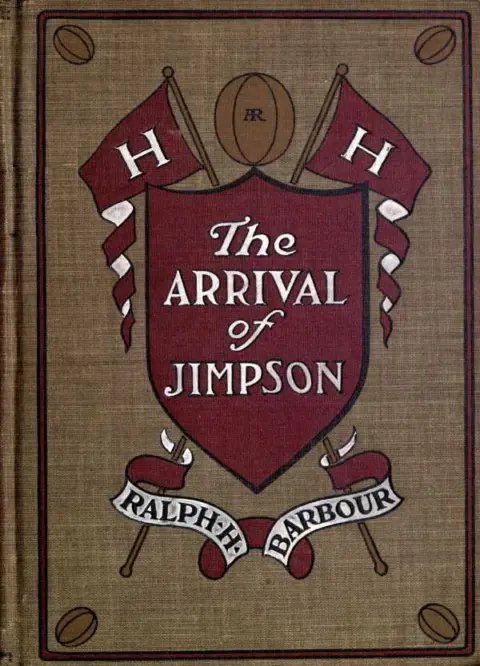
THE CLASSIC COLLECTION · 1904
"The Arrival of Jimpson, and Other Stories for Boys about Boys" by Ralph Henry Barbour is a collection of short stories written in the early 20th century. The book addresses themes relevant to young boys, particularly focusing on school life, sports, and the challenges of adolescence. The opening story features the character Jimpson, who is a freshman football player trying to make his mark amid the excitement and pressures of a college football game. The opening of the book sets the stage for the story of Jimpson and his battle for recognition in a team dominated by more experienced players. Amid a fervent atmosphere filled with cheers and anticipation, the narrative explores Jimpson's feelings of exclusion as he prepares for a pivotal game against Yale. Despite being overlooked by his peers, Jimpson's determination and potential are highlighted, foreshadowing his chance to prove himself. The story captures the spirit of youthful camaraderie, the thrill of competition, and the internal struggles of a young boy seeking acceptance.
Introduction adapted from the source catalogue; source summaries may be automatically generated.
Free to read · English · 47,166 words · No account needed
MAKE TIME FOR A GOOD BOOK
On by default. Untick to stop anonymous reading totals. Each page counts after 10 seconds in view. How this works.
Anonymous counting is on unless you have switched it off.
Greene sustained his reputation, and a tall youth, whom Mr. Robinson was informed was Billings, the left-fielder, made a hit to short-stop and reached first by a bad throw. Harvard filled the bases in that inning and the excitement became intense. A base-hit would bring in the desired two runs. But the Princeton pitcher wound himself into knots and untangled himself abruptly and threw wonderful balls, and the umpire, a short, round, little man with a deep voice, yelled “Strike!” “Strikes!” “Striker’s out!”
“Aw, thunder!” lamented Mr. Robinson’s companion. “That’s two gone. Ain’t that mean?”
Mr. Robinson, sitting on the edge of his seat, clutching his cane desperately with both hands, nodded. Over on the other stands, across the diamond, they were standing up and cheering grimly, imploringly. The Harvard short-stop took up his bat and faced the pitcher. Back of second and third bases the coaches were yelling loudly:
“On your toes, Charlie, on your toes! Go down with his arm! Now you’re off! Whoa-a-a! Look out for second-baseman! All right! He won’t throw it! Whoa-a-a!”
“Strike!” called the umpire.
“Aw, gee!” muttered the boy.
“Now, lively. Watch his arm! Come on, come on! Hi, hi, hi! Look out for passed balls! Now you’re off!”
“Strike two,” called the umpire.
Mr. Robinson thumped the boards with his cane.
Then there came a crack as the batsman found the ball, and the men on bases rushed home. But the arching sphere fell softly into the left-fielder’s hands, and the nines again changed places. Mr. Robinson and his acquaintance exchanged looks of disgust.
“Wasn’t that rotten?” asked the boy with the freckled face.
“Awful!” answered Mr. Robinson.
Nothing happened in either half of the eighth inning, but the suspense and excitement were intense, nevertheless. Princeton reached second once, but that was the end of her chances. Harvard got her first man to first, but the succeeding three struck out. The cheers were hoarse, incessant. The ushers waved hats and arms wildly. And Princeton went to bat for the first of the ninth.
“Now, then, fellows, get together!” Mr. Robinson recognized his son’s voice, cheerful, hopeful, inspiriting. The Hero was trotting to his place at first. “Ginger up, everybody, and shut them out!”
“All right, Cap!” “We’ve got them on the run, Cap!” “Lucky ninth, Rob!” The in-fielders were answering with the same cheerful assumption of confidence. To the right of Mr. Robinson a section of the stand was waving orange and black streamers and flags, and cheering joyously. The Princeton pitcher stepped to the plate.
Your reading position is saved on this browser. Take it to another device with a library code. Reading pages adapt to text, rather than matching a printed edition.
Ralph Henry Barbour
Ralph Henry Barbour

Ralph Henry Barbour

Ralph Henry Barbour
BEHIND THE BOOK
This eBook is for the use of anyone anywhere in the United States and most other parts of the world at no cost and with almost no restrictions whatsoever. You may copy it, give it away or re-use it under the terms of the Project Gutenberg License included with this eBook or online at www.gutenberg.org. If you are not located in the United States, you will have to check the laws of the country where you are located before using this eBook. Read the source licence.
The original source file, including credits and licence, is retained by this library. Request an original-format copy at no charge. Please include the book title and Project Gutenberg identifier #45689.
KEEP YOUR CURIOSITY GOING
Coulson Kernahan

Maurice Baring
Frances Wright
Cécile Tormay

Frederic Jesup Stimson

W. H. P. (William Henry Pope) Jarvis