
The lost dirigible
Ralph Henry Barbour
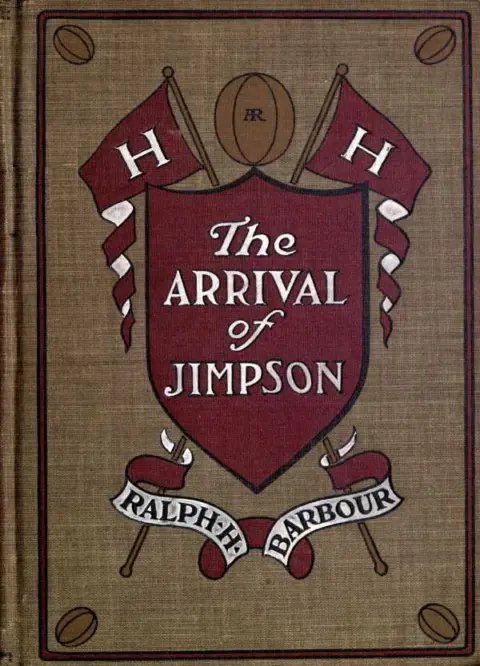
THE CLASSIC COLLECTION · 1904
"The Arrival of Jimpson, and Other Stories for Boys about Boys" by Ralph Henry Barbour is a collection of short stories written in the early 20th century. The book addresses themes relevant to young boys, particularly focusing on school life, sports, and the challenges of adolescence. The opening story features the character Jimpson, who is a freshman football player trying to make his mark amid the excitement and pressures of a college football game. The opening of the book sets the stage for the story of Jimpson and his battle for recognition in a team dominated by more experienced players. Amid a fervent atmosphere filled with cheers and anticipation, the narrative explores Jimpson's feelings of exclusion as he prepares for a pivotal game against Yale. Despite being overlooked by his peers, Jimpson's determination and potential are highlighted, foreshadowing his chance to prove himself. The story captures the spirit of youthful camaraderie, the thrill of competition, and the internal struggles of a young boy seeking acceptance.
Introduction adapted from the source catalogue; source summaries may be automatically generated.
Free to read · English · 47,166 words · No account needed
MAKE TIME FOR A GOOD BOOK
On by default. Untick to stop anonymous reading totals. Each page counts after 10 seconds in view. How this works.
Anonymous counting is on unless you have switched it off.
“I--ah--I was detained,” replied Mr. Robinson. He realized that the boy held him in some contempt, and knew that it would never do to tell the whole truth about it; the other would simply look upon him as a lunatic. Clearly, too, he owed his acquaintance an apology. “I am sorry that I didn’t get here sooner,” he said, “so that you could have seen--ah--more of the contest.”
“So’m I,” was the frank response. Then, “Still, maybe if you’d come before you wouldn’t have taken me in with you?”
“That’s true; maybe I wouldn’t have--ah--noticed you. So perhaps it’s just as well, eh?”
“Yep. Hi-i-i!”
Mr. Robinson gave attention to the game in time to see the second Princeton batter thrown out at first. The stands subsided again, and the ushers waved their hats and the cheering broke out afresh.
“Supposing you tell me who some of the men are,” suggested Mr. Robinson.
“Sure thing. That’s Hanlon pitching. He’s pretty good, but he ain’t as good as Miller, they say. I guess ‘Mill’ must have had an off day. And that’s Morton catching. Say, he’s a peach!”
“Indeed?”
“You bet; a regular top-of-the-basket peacherina! You just keep your
eye on him.”
“Thank you, I will,” answered the listener. “And the small fellow at
first base?”
The boy turned and stared at him, open-eyed and open-mouthed. Then he whistled softly but with emphasis.
“Say!” he exclaimed, finally, “where’ve you been?”
“Well, I--” Mr. Robinson faltered, and the other gave a grunt of
disgust.
“Gee, I thought everybody knew ‘Rob’!”
“Knew----?”
“‘Rob.’ His name’s Robinson; they call him ‘Rob’ for short. He’s the captain, of course. Didn’t you know that?”
“Well, yes, I did, now that you mention it,” answered the man humbly. “Is--is he pretty good?”
“Pretty good! Why, he’s a star! He’s a wonder! He’s--” Words failed him. “Say, you must live in Chelsea!” he said at last.
“Chelsea?” repeated Mr. Robinson. “No, I don’t live there.”
“Anybody’d think you did,” muttered the boy.
The third man went out on a long fly to center field, and Harvard
trotted in to bat.
“If Harvard loses this game,” said the boy, “it’ll break her record. She ain’t lost one this year. That’s Greene going to bat. He ain’t much good at hittin’; he generally strikes out.”
Your reading position is saved on this browser. Take it to another device with a library code. Reading pages adapt to text, rather than matching a printed edition.
Ralph Henry Barbour
Ralph Henry Barbour

Ralph Henry Barbour

Ralph Henry Barbour
BEHIND THE BOOK
This eBook is for the use of anyone anywhere in the United States and most other parts of the world at no cost and with almost no restrictions whatsoever. You may copy it, give it away or re-use it under the terms of the Project Gutenberg License included with this eBook or online at www.gutenberg.org. If you are not located in the United States, you will have to check the laws of the country where you are located before using this eBook. Read the source licence.
The original source file, including credits and licence, is retained by this library. Request an original-format copy at no charge. Please include the book title and Project Gutenberg identifier #45689.
KEEP YOUR CURIOSITY GOING
Coulson Kernahan

Maurice Baring
Frances Wright
Cécile Tormay

Frederic Jesup Stimson

W. H. P. (William Henry Pope) Jarvis