
The lost dirigible
Ralph Henry Barbour
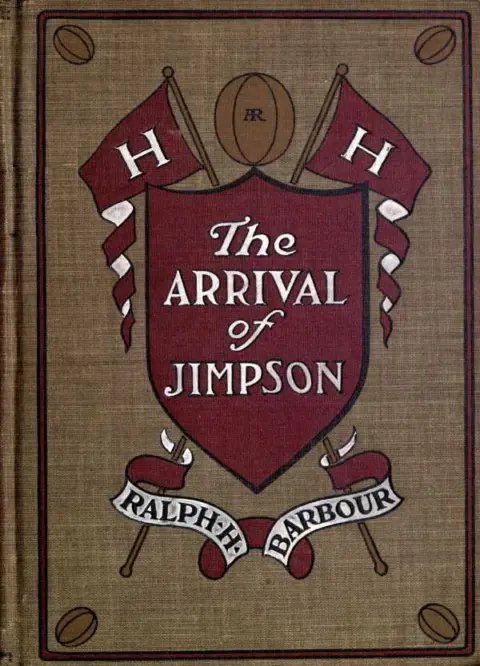
THE CLASSIC COLLECTION · 1904
"The Arrival of Jimpson, and Other Stories for Boys about Boys" by Ralph Henry Barbour is a collection of short stories written in the early 20th century. The book addresses themes relevant to young boys, particularly focusing on school life, sports, and the challenges of adolescence. The opening story features the character Jimpson, who is a freshman football player trying to make his mark amid the excitement and pressures of a college football game. The opening of the book sets the stage for the story of Jimpson and his battle for recognition in a team dominated by more experienced players. Amid a fervent atmosphere filled with cheers and anticipation, the narrative explores Jimpson's feelings of exclusion as he prepares for a pivotal game against Yale. Despite being overlooked by his peers, Jimpson's determination and potential are highlighted, foreshadowing his chance to prove himself. The story captures the spirit of youthful camaraderie, the thrill of competition, and the internal struggles of a young boy seeking acceptance.
Introduction adapted from the source catalogue; source summaries may be automatically generated.
Free to read · English · 47,166 words · No account needed
MAKE TIME FOR A GOOD BOOK
On by default. Untick to stop anonymous reading totals. Each page counts after 10 seconds in view. How this works.
Anonymous counting is on unless you have switched it off.
“Ah,” continued Stowell, drawing one of the heavy blue things on to his hand, “long wrists, I see. That’s fine. Like to see them, Bob?” Hazlett said that he would. Every one was very silent and grave. Reeves, after nodding to Shult, had busied himself with a magazine. Now he leaned over Hazlett’s shoulder and examined the mittens with almost breathless interest. Clinton craned his head forward and Stowell handed the other pair to him for inspection. Shult stood silently by, his embarrassment gone.
“Look as though they’d be very warm,” said Hazlett, in the voice of one hazarding an opinion on a matter of national importance. He looked inquiringly, deferentially, up at Shult.
“Warm as toast,” said the latter.
“Seem well made, too,” said Clinton. Then he colored and glanced apologetically at Stowell. Stowell turned his head.
“Do you get these hereabouts, Shult?” he asked. There was a moment’s
hesitation. Then,
“I--I knit them myself,” said the freshman, quietly.
“Not really!” exclaimed Stowell, in much surprise. “Did you hear that, Clint? He makes them himself. It must be quite a knack, eh?”
“I should say so!” Clinton exclaimed, enthusiastically. “It--it’s an
accomplishment!”
“By Jove!” said Hazlett. They all stared admiringly at Shult.
“But, I say, don’t stand up,” exclaimed Stowell. “‘Chick,’ push that
chair over.”
Shult sat down. He was very grateful to Reeves for not telling what he had seen during his call, and grateful to the others for not laughing at his confession. It had taken quite a deal of courage to make that confession, for he had anticipated ridicule. But instead these immaculately dressed fellows almost appeared to envy him his knowledge of the art of knitting woolen mittens. He was very pleased.
“I wonder--” began Clinton. He glanced doubtfully at his host. “I think I’d like to have some of these myself. Have you--er--any more, Mr. Shult?”
“Oh, yes; I can make a pair an evening, anyhow. I--I didn’t suppose you fellows would care for them.”
“Nonsense,” said Stowell. “They’re just what a chap needs around here. I--I used to wear them when I was a boy; after all, there’s nothing like old-fashioned mitts to keep your hands warm.”
“Nothing!” said Clinton.
“Nothing!” echoed Hazlett.
“Nothing!” murmured Reeves.
“If you could let me have--ah--about two pairs----”
Clinton’s request was firmly interrupted by his host.
“Nonsense, Clint, you’ll need at least four. I’m going to have a couple
more myself.”
“I dare say you’re right. If you could let me have four pairs, Mr. Shult, I--ah--should be very much obliged.”
“And me the same,” said Hazlett.
Your reading position is saved on this browser. Take it to another device with a library code. Reading pages adapt to text, rather than matching a printed edition.
Ralph Henry Barbour
Ralph Henry Barbour

Ralph Henry Barbour

Ralph Henry Barbour
BEHIND THE BOOK
This eBook is for the use of anyone anywhere in the United States and most other parts of the world at no cost and with almost no restrictions whatsoever. You may copy it, give it away or re-use it under the terms of the Project Gutenberg License included with this eBook or online at www.gutenberg.org. If you are not located in the United States, you will have to check the laws of the country where you are located before using this eBook. Read the source licence.
The original source file, including credits and licence, is retained by this library. Request an original-format copy at no charge. Please include the book title and Project Gutenberg identifier #45689.
KEEP YOUR CURIOSITY GOING
Coulson Kernahan

Maurice Baring
Frances Wright
Cécile Tormay

Frederic Jesup Stimson

W. H. P. (William Henry Pope) Jarvis