The ecclesiastical architecture of Scotland from the earliest Christian times to the seventeenth century; vol. 3/3
David MacGibbon & Thomas Ross
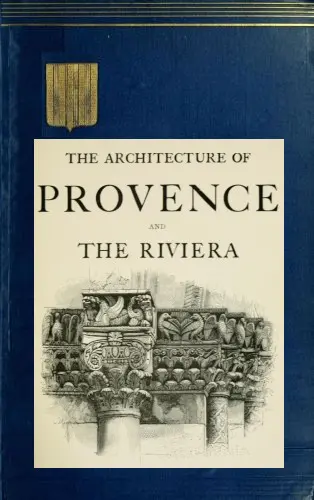
THE CLASSIC COLLECTION · 1888
"The Architecture of Provence and the Riviera" by David MacGibbon is a historical account written in the late 19th century. This work delves into the rich architectural heritage of the Provence and Riviera regions, highlighting their unique styles that evolved from ancient Roman through medieval periods. MacGibbon aims to bring attention to the significant yet often overlooked architectural monuments and treasures of this vibrant area, showcasing their historical and artistic importance. At the start of the book, MacGibbon reflects on his travels between England and the Riviera, noting the extraordinary variety of ancient architectural monuments found in Provence. He emphasizes the region's unique styles of medieval art and its embodiment of architectural developments from the time of the Romans to the medieval period. The opening reveals the intent to educate readers on the historical context that shaped these architectural styles while acknowledging the lesser-known yet significant architectural heritage that warrants recognition and appreciation.
Introduction adapted from the source catalogue; source summaries may be automatically generated.
Free to read · English · 89,178 words · No account needed
MAKE TIME FOR A GOOD BOOK
On by default. Untick to stop anonymous reading totals. Each page counts after 10 seconds in view. How this works.
Anonymous counting is on unless you have switched it off.
“ (from the East), 425
“ Approach to the Town Gate, 426
“ Entrance Gateway to Town, 427
“ Interior of Entrance Gateway, 428
“ House, 429
“ Doorway, 430
LA TURBIE, Outer south Gateway, 430
LA TURBIE, Inner South Gateway, 431
“ Eastern Gateway, 432
“ Houses, 433
MONACO, Ducal Palace, 435
“ “ “ (N. W. Bastion), 436
ROQUEBRUNE, Entrance to Town, 437
“ Font, 438
“ Castle, 439
MENTONE, (from the Harbour), 440
VENTIMIGLIA, West Portal of Cathedral, 442
“ Interior of Cathedral, 443
DOLCE AQUA, Street, 444
“ Castle of the Dorias, 445
“ “ “ (from the S. W.), 446
SAN REMO, Street, 447
“ Houses, 448
“ San Siro (North Doorway), 449
TAGGIA, Gateway and Street, 450
“ Doorway, 451
“ Cloisters, St Christofero, 453
ALASSIO, Church, 454
ALBENGA, Towers and West End of Church, 455
“ (from Railway Station), 456
“ Tower at North-East of Church, 457
GENOA, Cloisters, San Matteo, 459
“ Doorway, Piazza San Matteo, 460
“ Church, Cloisters, etc., 461
“ Campanile, 462
Knocker, Elne Cathedral--Tailpiece, 463
Lamp from Old Church, Monaco, 464
Details from Tomb of Cornelia, Arles Museum, 467
[Illustration] I.
The beautiful buildings of the North of France are as well known to all English lovers of architecture as many of the edifices of our own country, and every one is more or less acquainted with them.
The various styles which have prevailed there--whether Gothic or Renaissance, Ecclesiastical, Castellated or Domestic--have all been fully illustrated and rendered familiar by numerous admirable works, both French and English. Besides, being so near our own shores, and lying as it does, between England and Paris, this part of the country is easily accessible, and is much visited by English tourists and students of architecture.
The various styles of Northern France, too, have many points of resemblance to those on this side of the channel; and there thus exists a feeling of sympathy between the two which renders the study of both, and a comparison of their similarities and differences, particularly interesting to the English observer.
All these circumstances have contributed to make the great cathedrals of Amiens, Beauvais, Rouen, Rheims, and Chartres familiar and attractive; while the picturesque towns of Northern France, with their quaint half-timbered houses, and the no less picturesque costumes of the inhabitants, are constantly brought before us in the charming representations of our artists.
The ancient castles of Normandy and Northern France, such as the Châteaux d’Arques, Gaillard, and Falaise, are as closely connected with English as French history; and as the dwellings of our Plantaganet Kings, and the scene of many important events in their lives, they claim even more attention at our hands than they have yet received.
Your reading position is saved on this browser. Take it to another device with a library code. Reading pages adapt to text, rather than matching a printed edition.
David MacGibbon & Thomas Ross
David MacGibbon & Thomas Ross
David MacGibbon & Thomas Ross
BEHIND THE BOOK
This eBook is for the use of anyone anywhere in the United States and most other parts of the world at no cost and with almost no restrictions whatsoever. You may copy it, give it away or re-use it under the terms of the Project Gutenberg License included with this eBook or online at www.gutenberg.org. If you are not located in the United States, you will have to check the laws of the country where you are located before using this eBook. Read the source licence.
The original source file, including credits and licence, is retained by this library. Request an original-format copy at no charge. Please include the book title and Project Gutenberg identifier #58284.
KEEP YOUR CURIOSITY GOING
Wilfrid Scawen Blunt
Wilfrid Scawen Blunt

E. W. (Edgar Watson) Howe
Cécile Tormay

Moritz Busch
John L. Ransom