
The ecclesiastical architecture of Scotland from the earliest Christian times to the seventeenth century; vol. 3/3
David MacGibbon & Thomas Ross
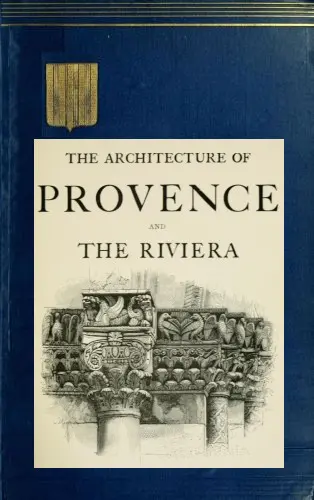
THE CLASSIC COLLECTION · 1888
"The Architecture of Provence and the Riviera" by David MacGibbon is a historical account written in the late 19th century. This work delves into the rich architectural heritage of the Provence and Riviera regions, highlighting their unique styles that evolved from ancient Roman through medieval periods. MacGibbon aims to bring attention to the significant yet often overlooked architectural monuments and treasures of this vibrant area, showcasing their historical and artistic importance. At the start of the book, MacGibbon reflects on his travels between England and the Riviera, noting the extraordinary variety of ancient architectural monuments found in Provence. He emphasizes the region's unique styles of medieval art and its embodiment of architectural developments from the time of the Romans to the medieval period. The opening reveals the intent to educate readers on the historical context that shaped these architectural styles while acknowledging the lesser-known yet significant architectural heritage that warrants recognition and appreciation.
Introduction adapted from the source catalogue; source summaries may be automatically generated.
Free to read · English · 89,178 words · No account needed
MAKE TIME FOR A GOOD BOOK
On by default. Untick to stop anonymous reading totals. Each page counts after 10 seconds in view. How this works.
Anonymous counting is on unless you have switched it off.
Description of Mediæval buildings--Lyons, the Ainay, 121; the cathedral, 122; Vienne, St André-le-Bas, and St Pierre, 124; cathedral, 126; ancient houses, 127; Valence, Maison des Fêtes, 127; castle of Crussol, monastery of Cruas, 128; church of Cruas, 132; Montélimar, Viviers--commencement of Provençal examples, St Paul-trois-châteaux, 134; St Restitut, Pont St Esprit, 136; Courthézon, Avignon, 137; history, 138; Notre Dame des Doms, 139; imitation of Roman work, 141; palace of the Popes, 143; history, 144; description of, 145; walls of town, 148; gates, 151; Pont St Bénezet, 151; tower of Villeneuve, 154; castle of St André, 155; gatehouse, 156; curtains, 161; guard rooms on walls, 162; church of Villeneuve, 163; churches of Avignon, the Beffroi, abbey of St Ruf, Priory of St Veran, 164; Vaison, 165; Carpentras, Venasque, Pernes, Le Thor, Cavaillon, 167; Le clocher de Molléges, 168; Tarascon, history, Ste Marthe, 168; castle, 170; houses, gateway, 172; Beaucaire castle, 173; triangular keep, 176; oratory, 178; Les Baux, 179; the town--the bas-reliefs, 180; account of the family, 181; St Gabriel, 182; Arles, St Trophime, 183; includes examples of all periods of Provençal Architecture--the Cistertian nave, 184; the west portal, 187; the cloisters, 188; the Alyscamps, St Honorat, 191; prosperity of Arles after union to France--Renaissance palaces, 192; Mont-Majour, Hermitage, 194; church, 196; cloister, 199; chapel of Ste Croix, 199; the keep, 203; St Gilles, Abbey church, 204; interrupted by Albigensian crusade, 205; portal, 206; sources of Provençal art, 210; Les Saintes Maries, 212; Marseilles, St Victor, 213; Aix-en-Provence, St Sauveur, 217; cloisters, 219; “Les Villes Mortes du Golfe de Lyon,” 220; Montpellier, Maguelonne, 222; Béziers, 222; St Nazaire, 224; Fountain, 227; house in town, 228; Puisalicon, St Pierre de Reddes, St Martin de Londres, 229; Narbonne, history, 230; cathedral, 231; its fortifications, 232; Archbishop’s palace, 233; the keep, 234; St Paul, the Lagunes, the Pyrenees, Perpignan, 235; the castellet, cathedral, 236; citadel, &c., Elne, 239; cathedral, 240; the unfinished chevet, the campanile, 241; the cloisters, 244; Carcassonne, 244; history, 245; towers of the Visigoths, 246; the porte Narbonnaise--the barbican and its defences, 252; the walls and towers, 254; St Nazaire, 257; Aigues Mortes, 260; Canal, 261; walls and gateways, 264; Porte de Nimes, 266; Tour de Constance, 268; Tour Carbonnière, 269.
Eastwards from Marseilles--Toulon, 270; Hyères, 271; castle, 272; St Paul, 273; examples of Cistertian style, 274; Cannet, 275; abbey of Thoronet, 276; the cloisters, 278; remarkable details, 280; chapter house, 281; St Maximin, 282; Fréjus, cathedral and Bishop’s palace, 281; fortified, 289; baptistery, 291; “Pantheon” at Riez, 293; the cloisters, Fréjus, 296; Brass lamp, 298; doorways in town, 299; district of Les Maures, how to visit, 300; St Tropez, fish market, 301; Grimaud, castle, 302; La Garde Freinet, St Raphaël, the Esterelle mountains, 304; Napoule, 305; St Peyré, Mont St Cassien, 307; Cannes, 308; history, Tour du Chevalier, 310; St Anne, 314; Notre Dame d’Espérance, 317; Iles de Lérins, 319; St Honorat, cloisters, 320; Ste Trinité, 320; St Sauveur, 323; castle of St Honorat, 324; style of lower cloister, 330; style of upper cloister, 334; additions, 340; Ste Marguérite, 343; Vallauris, 344; Le Cannet, 347; Mougins, Notre Dame des Vie, 348; Auribeau, 350; Grasse, 351; cathedral, 353; keep tower, 354; Renaissance, 357; l’Oratoire, 357; St Césaire, 359; château de Tournon, 363; Montauroux and Callian, 364; Le Bar, 366; Gourdon, 367; Tourettes, 369; Antibes, 371; two keep towers, 373; Cagnes, castle, 376; castle of Villeneuve-Loubet, 378; history, 381; tower of La Trinité, 382; Biot, 387; St Paul-du-Var, 392; approach to, 393; Architecture of shops and houses, 395; staircase, 397; gateway, 398; church, 400; remarkable keep-tower, 401; Vence, 407; cathedral, 409; keep towers, 411; column, 413; commandery of St Martin, 414; destruction of the Templars, 417; Nice, history, 418; Cimiès Cross, 421; castle of St André, 422; Villefranche, Eza, 422; La Turbie, 428; gateways, 430; Monaco, 432; history, 433; Ducal Palace, 434; Roquebrune, 437; Mentone, 438; Gorbio, Ste Agnes, Castellar, 441; boundary of Provençal Architecture, 441; Ventimiglia, 445; Dolce Aqua, 445; Pigna, 448; San Remo, 449; Taggia, 450; Bussana, Oneglia, &c, 451; Albenga, 452; Genoa, 455.
Your reading position is saved on this browser. Take it to another device with a library code. Reading pages adapt to text, rather than matching a printed edition.
David MacGibbon & Thomas Ross

David MacGibbon & Thomas Ross

David MacGibbon & Thomas Ross
BEHIND THE BOOK
This eBook is for the use of anyone anywhere in the United States and most other parts of the world at no cost and with almost no restrictions whatsoever. You may copy it, give it away or re-use it under the terms of the Project Gutenberg License included with this eBook or online at www.gutenberg.org. If you are not located in the United States, you will have to check the laws of the country where you are located before using this eBook. Read the source licence.
The original source file, including credits and licence, is retained by this library. Request an original-format copy at no charge. Please include the book title and Project Gutenberg identifier #58284.
KEEP YOUR CURIOSITY GOING
Wilfrid Scawen Blunt
Wilfrid Scawen Blunt

E. W. (Edgar Watson) Howe
Cécile Tormay

Moritz Busch
John L. Ransom