THE CLASSIC COLLECTION✦A dead man’s diaryCLASSIC FREE BOOKS
A dead man’s diary
Coulson Kernahan
THE CLASSIC COLLECTION · 1878
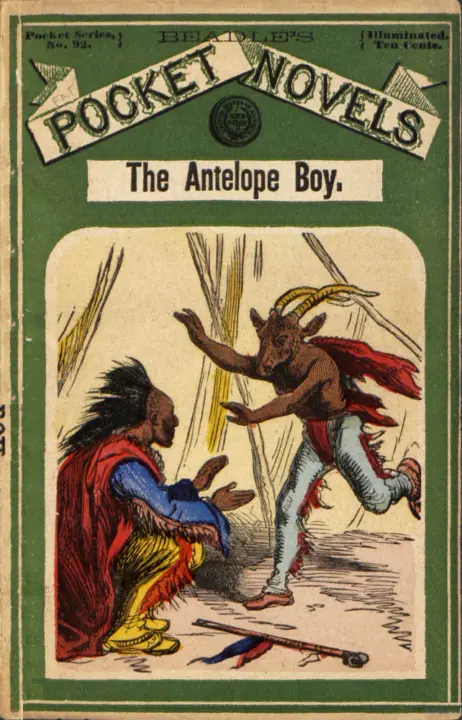
"The Antelope Boy; or, Smoholler the Medicine Man" by George L. Aiken is a novel written in the early 19th century. The story presents a thrilling Indian adventure that unfolds in the American West, primarily following two boys, Percy Vere and Percy Cute, who are on a quest to find Vere's missing father, a rather eccentric man. They find themselves entangled in a conflict with Native Americans, led by the enigmatic Prophet Smoholler, and confront various challenges and supernatural elements in their pursuit. At the start of the novel, the surveying party, which includes two surveyors and American soldiers, is camped near the Columbia River. The two Percys, introduced as chain-bearers of the expedition, are characterized by their contrasting personalities, with Percy Vere being skilled and earnest, while Percy Cute provides comic relief and mischief. The camp is lively and infused with danger, as they receive a dire warning from an arrow message sent by Smoholler. The chapter sets the stage for a supernatural encounter, blending humor, adventure, and suspense, as the boys prepare to venture into the potential conflict with the Native Americans, quaking between their quest for the truth about Vere's father and the unpredictability of their surroundings.
Introduction adapted from the source catalogue; source summaries may be automatically generated.
Free to read · English · 32,855 words · No account needed
MAKE TIME FOR A GOOD BOOK
On by default. Untick to stop anonymous reading totals. Each page counts after 10 seconds in view. How this works.
Anonymous counting is on unless you have switched it off.
“I do not wonder that you love this strange man,” he answered. “I am more and more impressed by the evidences of his power that I have seen. Let him pass on—we can overtake him—you know the way?”
“Oh, yes; these scenes are familiar to me. I have often been here
before.”
“Yonder cliff is a favorite haunt of the Prophet’s, I suppose?”
“Yes.”
“You have been in this Mystic Cavern, as you call it?” continued Percy, pursuing his inquiries, curiously.
“Repeatedly.”
“And have you never feared the demons who inhabit it?”
Oneotah glanced cautiously before her, as if seeking for the Prophet’s tall form, but he had disappeared in the gathering gloom. It was evident that she feared to speak of the cavern and its mysteries in his hearing.
Percy understood the look, and answered to it.
“He is out of sight—he can not hear you,” he said. “It appears that you fear this man as well as love him.”
“No, I do not fear him; but I would do nothing to displease him.”
“Is he easily angered?”
“Oh, no; he has never uttered an angry word to me yet.”
Percy smiled.
“It may be because you have been so submissive to his wishes,” he rejoined. “You appear to me to have a very amiable temper.”
Oneotah laughed, in her musical manner.
“That is why the demons never seek to injure me, I suppose,” she
answered.
“Have you ever seen any of these demons?” he cried, quickly.
“Yes—one.”
“The Black Fiend that appeared to us that night upon the cliff?”
“Yes.”
“And he did not seek to injure you?”
“No; why should he?”
Percy shrugged his shoulders; he had a shrewd suspicion of the cause of this immunity, but he did not reveal that suspicion to her.
“True; it must be a fiend indeed that would seek to injure you,” he
said.
She turned suddenly upon him.
“You like me?” she exclaimed, vivaciously.
“Very much!”
She gave him her hand with frank impulsiveness, crying:
“And I like you!”
“But not so well as Multuomah?” he rejoined, roguishly.
“Multuomah is a great chief!” she replied, sententiously.
“And an Indian of taste!” he added, impressively.
His words bewildered her, for she did not catch his meaning.
“Of taste?” she repeated, in a questioning manner.
“Decidedly!”
“What makes you think so?”
“Don’t you?”
She was puzzled again.
“I don’t know what you mean,” she answered, simply.
He smiled, but, instead of explaining himself, changed the conversation
abruptly by asking her:
“You have also seen the White Spirit?”
“I have.”
“She is very beautiful!”
“The red-men think her so.”
Your reading position is saved on this browser. Take it to another device with a library code. Reading pages adapt to text, rather than matching a printed edition.
BEHIND THE BOOK
This eBook is for the use of anyone anywhere in the United States and most other parts of the world at no cost and with almost no restrictions whatsoever. You may copy it, give it away or re-use it under the terms of the Project Gutenberg License included with this eBook or online at www.gutenberg.org. If you are not located in the United States, you will have to check the laws of the country where you are located before using this eBook. Read the source licence.
The original source file, including credits and licence, is retained by this library. Request an original-format copy at no charge. Please include the book title and Project Gutenberg identifier #66190.
KEEP YOUR CURIOSITY GOING
Coulson Kernahan

Maurice Baring
Frances Wright
Cécile Tormay

Frederic Jesup Stimson

W. H. P. (William Henry Pope) Jarvis