THE CLASSIC COLLECTION✦A dead man’s diaryCLASSIC FREE BOOKS
A dead man’s diary
Coulson Kernahan
THE CLASSIC COLLECTION · 1878
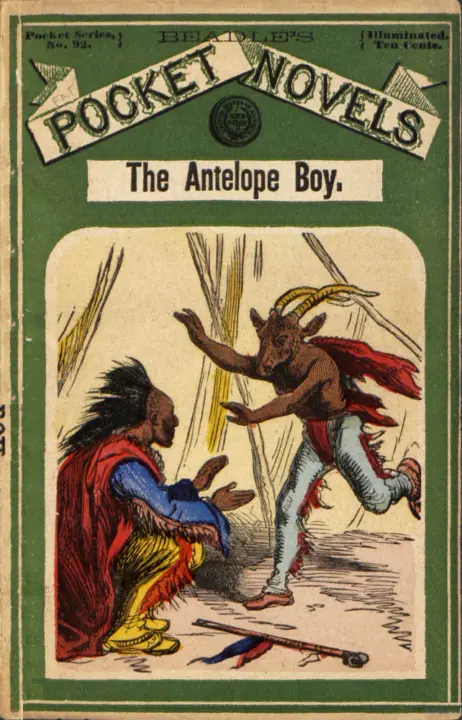
"The Antelope Boy; or, Smoholler the Medicine Man" by George L. Aiken is a novel written in the early 19th century. The story presents a thrilling Indian adventure that unfolds in the American West, primarily following two boys, Percy Vere and Percy Cute, who are on a quest to find Vere's missing father, a rather eccentric man. They find themselves entangled in a conflict with Native Americans, led by the enigmatic Prophet Smoholler, and confront various challenges and supernatural elements in their pursuit. At the start of the novel, the surveying party, which includes two surveyors and American soldiers, is camped near the Columbia River. The two Percys, introduced as chain-bearers of the expedition, are characterized by their contrasting personalities, with Percy Vere being skilled and earnest, while Percy Cute provides comic relief and mischief. The camp is lively and infused with danger, as they receive a dire warning from an arrow message sent by Smoholler. The chapter sets the stage for a supernatural encounter, blending humor, adventure, and suspense, as the boys prepare to venture into the potential conflict with the Native Americans, quaking between their quest for the truth about Vere's father and the unpredictability of their surroundings.
Introduction adapted from the source catalogue; source summaries may be automatically generated.
Free to read · English · 32,855 words · No account needed
MAKE TIME FOR A GOOD BOOK
On by default. Untick to stop anonymous reading totals. Each page counts after 10 seconds in view. How this works.
Anonymous counting is on unless you have switched it off.
“He don’t like the idea of the railroad going through this territory. These are the surveyors, Multuomah, Mister Blaikie and Mister Robbins, and this is Lieutenant Gardiner, from Fort Walla Walla.”
The young chieftain shook hands cordially with all three, as they were
introduced to him.
“How many braves has Smoholler with him?” he asked, continuing the conversation with Glyndon.
“Nigh on to fifty, as near as I can calculate from their trail; but me and the boys sent a few of ’em under.”
“How was that?”
Glyndon briefly described his scout and skirmish with Smoholler’s party.
“The Prophet’s men fight bravely, I have been told,” rejoined Multuomah.
“You have never had any brush with them?”
“No.”
“Then you have got a chance now.”
Multuomah shook his head gravely.
“I doubt if my braves will fight against the Prophet,” he said; “though I have brought them here for that very purpose.”
These words greatly excited the interest of his hearers.
“Then your men believe in the mystical power of this red Prophet?” asked Lieutenant Gardiner.
“Yes; few Indians in this country doubt the power of Smoholler,” replied Multuomah. “They dread the spirits that come at his bidding.”
“But you—what do you think?”
Multuomah shrugged his shoulders in a dubious manner.
“I do not know what to think,” he responded.
“Ah! I see; you would like to doubt him, but can not exactly divest your mind of a certain belief in his supernatural powers. That is not to be wondered at, for he has shown us some astonishing sights since we have been here. I think it’s all trickery, but I can’t tell how it is done.”
Multuomah looked troubled.
“You have seen his spirits?” he asked.
“Yes; black and white. Why should he choose those colors, when he is
red?”
“One is the Spirit of Evil; the other the Spirit of Good.”
“Have you ever seen them?”
“Never; but I have been told by those who have. It is by means of these spirits that he has gained so great a power. His followers come from all tribes, and their belief in him is great. If I was to attack him, and he should make his spirits appear before my braves, they would fly in terror; and yet there are no braver warriors in all my nation.”
The four white men, who were listening to him, exchanged glances.
“This complicates the situation,” remarked Blaikie. “I don’t see as this reinforcement will, under the circumstances, be of much use to us.”
Gardiner and Robbins were of his opinion; but Glyndon took a more
favorable view of the matter.
Your reading position is saved on this browser. Take it to another device with a library code. Reading pages adapt to text, rather than matching a printed edition.
BEHIND THE BOOK
This eBook is for the use of anyone anywhere in the United States and most other parts of the world at no cost and with almost no restrictions whatsoever. You may copy it, give it away or re-use it under the terms of the Project Gutenberg License included with this eBook or online at www.gutenberg.org. If you are not located in the United States, you will have to check the laws of the country where you are located before using this eBook. Read the source licence.
The original source file, including credits and licence, is retained by this library. Request an original-format copy at no charge. Please include the book title and Project Gutenberg identifier #66190.
KEEP YOUR CURIOSITY GOING
Coulson Kernahan

Maurice Baring
Frances Wright
Cécile Tormay

Frederic Jesup Stimson

W. H. P. (William Henry Pope) Jarvis