
Last letters from the living dead man
David Patterson (Spirit) Hatch
THE CLASSIC COLLECTION · 1907
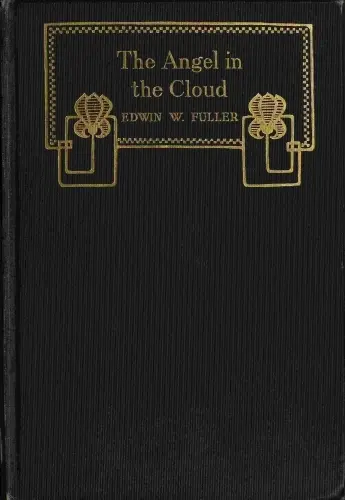
"The Angel in the Cloud" by Edwin W. Fuller is a poetic work written in the early 20th century. This volume invites readers into a deeply reflective exploration of human existence, intertwining themes of nature, spirituality, and the searching for meaning through powerful imagery and allegorical elements. The opening sets the stage for a journey both outward and inward, where the author contemplates the complexity of life and the divine. At the start of this work, the narrator experiences a day overwhelmed by oppressive heat, prompting an escape into nature. Through the vivid descriptions of the setting—a stifling summer day giving way to an enchanting park—the narrator reflects on nature's beauty and its contrasting injustices, expressing thoughts on providence and fate. A shift occurs as the narrator embarks on a dreamlike vision that takes him on a cosmic journey, encountering an angel and ultimately leading to insights about the divine and the human condition. The opening serves to evoke a sense of wonder while posing profound questions about the balance of joy and suffering in existence.
Introduction adapted from the source catalogue; source summaries may be automatically generated.
Free to read · English · 30,009 words · No account needed
MAKE TIME FOR A GOOD BOOK
On by default. Untick to stop anonymous reading totals. Each page counts after 10 seconds in view. How this works.
Anonymous counting is on unless you have switched it off.
April, 1867.
LINES SUGGESTED BY OBSERVING GEN. PETTIGREW’S NAME OMITTED IN MRS. DOWNING’S “MEMORIAL FLOWERS” AND IN THE “SOUTHERN BOUQUET”
When poets cull memorial flowers,
With which our martyrs’ graves to strew,
They choose no one in Nature’s bowers
For Pettigrew.
Yet there is one, and only one,
Which truly represents his name;
A flower that revels in the sun,
And drinks his flame.
A flower that opens when, all red,
The sun hath kissed the eastern skies;
But westward turned, it droops its head
And proudly dies.
Thus when the sun of victory sheared
Its gory way o’er clouds of war,
This flower’s tow’ring crest appeared
A beacon star.
And in its gorgeous, glorious rays,
This flower basked, and only bowed
When coming conquest’s bloody haze
That sun did shroud.
Crushed flower, with thy broken stem,
I’ll keep thee near to typify
The fallen form; the hero’s fame
Can never die.
June 19th, 1867.
The bell the knell of evening lecture tolls,
The thronging students pour from every door;
The tutor gathers up his notes and rolls,
And homeward wends his weary way once more.
The noisy crowd is gone, there is a pause, And hushed is all the busy hum and whirl, Save where from yonder room breaks loud applause That welcomes some professor’s parting “curl.”
Save that from yonder plain, the lower lawn, Some base-ball novice makes harsh rhyms to psalm, Because a veteran, with his hands of horn, Has “pitched” too “hot” a ball for his soft palm.
Beneath those balconies, along those rows, Where sinks the wall in many a jail-like cell, Each wrapped in silence now and in repose, The minstrels of the “Calathump” do dwell.
The whispered call of evil-masking night, The signal whistle of the well-known crew, The bumping bang of “blowers” beat with might, Will often rouse the “Nippers of Peru.”
For them in vain for hours their hearts will burn, While busy housewives tremble at their noise, And frightened children to their fathers turn, Too badly scared to think of play or toys.
Oft has th’ rotunda echoed to their songs, In dulcet strains that on the still air broke; Oft has the lawn resounded with their gongs, That roared and rattled ’neath their sturdy stroke.
Let not their victims mock th’ infernal din, Coal-scuttle drums, and clarion paper trump; But let them hear with a sardonic “grin,” The hideous clamor of a “Calathump.”
Your reading position is saved on this browser. Take it to another device with a library code. Reading pages adapt to text, rather than matching a printed edition.
BEHIND THE BOOK
This eBook is for the use of anyone anywhere in the United States and most other parts of the world at no cost and with almost no restrictions whatsoever. You may copy it, give it away or re-use it under the terms of the Project Gutenberg License included with this eBook or online at www.gutenberg.org. If you are not located in the United States, you will have to check the laws of the country where you are located before using this eBook. Read the source licence.
The original source file, including credits and licence, is retained by this library. Request an original-format copy at no charge. Please include the book title and Project Gutenberg identifier #57504.
KEEP YOUR CURIOSITY GOING
David Patterson (Spirit) Hatch

David Patterson (Spirit) Hatch

David Patterson (Spirit) Hatch

Edwin Abbott Abbott

Richard Watson
T. G. (Theophilus Gould) Steward