
Last letters from the living dead man
David Patterson (Spirit) Hatch
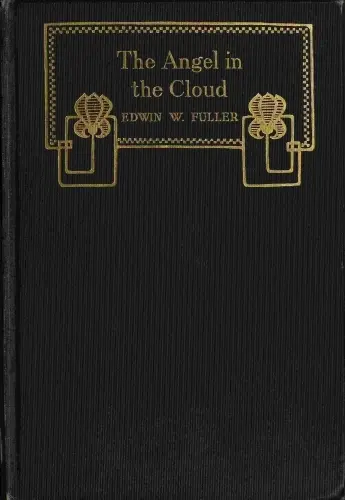
THE CLASSIC COLLECTION · 1907
"The Angel in the Cloud" by Edwin W. Fuller is a poetic work written in the early 20th century. This volume invites readers into a deeply reflective exploration of human existence, intertwining themes of nature, spirituality, and the searching for meaning through powerful imagery and allegorical elements. The opening sets the stage for a journey both outward and inward, where the author contemplates the complexity of life and the divine. At the start of this work, the narrator experiences a day overwhelmed by oppressive heat, prompting an escape into nature. Through the vivid descriptions of the setting—a stifling summer day giving way to an enchanting park—the narrator reflects on nature's beauty and its contrasting injustices, expressing thoughts on providence and fate. A shift occurs as the narrator embarks on a dreamlike vision that takes him on a cosmic journey, encountering an angel and ultimately leading to insights about the divine and the human condition. The opening serves to evoke a sense of wonder while posing profound questions about the balance of joy and suffering in existence.
Introduction adapted from the source catalogue; source summaries may be automatically generated.
Free to read · English · 30,009 words · No account needed
MAKE TIME FOR A GOOD BOOK
On by default. Untick to stop anonymous reading totals. Each page counts after 10 seconds in view. How this works.
Anonymous counting is on unless you have switched it off.
The marriage over, from the train
Of watching seraphs, one long strain
Of gratulation broke.
And then were still the rustling wings,
And fingers hushed the throbbing strings,
While thus an angel spoke:
“Who’ll go to earth to bless this pair
With angel child, beneath their care
Be trained for bliss or woe?”
He ceased, and from the throng sprang three,
Faith, Love, and spotless Purity.
These knelt, and said “We’ll go.”
Dear cousins, to you these are sent,
Three spirits in one being blent.
It is a jewel rare.
Oh! keep her pure as when first given,
Guide her faith from Earth to Heaven,
Guard her love with care.
May, 1867.
To her who sent me the Valentine with the cutting irony, “Don’t I look pretty in church?” these lines are respectfully inscribed. Not knowing her name, I will call her “Taters,” as she drew her elegant and tasty simile from that vegetable.
The Devil was sitting one morning below, And he seemed much perplexed as to what he must do, For his dark brows would knit, and he’d stamp on the ground, And flap his great wings till floating around Were the ashes and feathers. At last with an air Of resolve he threw himself back in his chair, Lit a brimstone cigar, and touched a small bell. An imp appeared, bowed, and on his face fell. “Cloven-foot,” said the D----, “what’s the news from the fire?” “My liege, the great ape has ceased to inspire The victims with terror; they fear him no more, And continually crawl from the flames to the shore.” “Well, Cloven-foot, I had most certainly thought When from Africa’s wilds that baboon you brought, He’d prove such a guard for the great Sulphur Lake The wretches would ne’er cease before him to quake. Now go up to earth, and search till you find Something uglier far, then quick seize and bind And bring it to me; and if it beats the baboon I’ll reward you. Be sure to return just as soon As ’tis possible, and above all things to choose An object whose countenance never will lose Its hideous novelty.” The imp bowed and withdrew, And swiftly to earth on his errand he flew; But in vain did he search where the gorillas roam, Or the jungles of Bengal, the fierce tiger’s home. In vain throughout Europe he searched every place; Nowhere could he find the requisite face. Frustrated and weary, with deep despair frantic, He was skimming the waves of the tossing Atlantic. A few pinion strokes, and he stood on the shore Of the New World, and through it began to explore. But all was in vain, till he chanced to alight In a sweet little village, one smiling morn bright. Disguising himself, he attended the church, Not hoping to find the object of search, But just for the fun. As he stood with the throng That were watching the College girls marching along, He caught a slight glimpse of Miss “Tater’s” sweet face; He sprang to her side, clasped her in embrace, And as he plunged downward he said to himself, “Here’s one will compete with the African elf.” He soon furled his wing on the Plutonian shore, And to his dark ruler his fair burden bore. As the Valentine sender came into sight The Devil himself started back with affright. “Whew! whew!” whistled he, “she’ll do, I declare! Go bring the baboon, and let them compare.” The imp disappeared, then returned with the ape, A creature most frightful in feature and shape. His head was oblong and perfectly bald, Running back from his eyes--no forehead at all; His eyeballs were white, their sockets deep red; His long, glistening teeth strung with human-flesh shred, The gore of his victims from his fingers’ ends flowed; And round his lank limbs candescent chains glowed, In front of Miss “Taters” this creature was led; He gave a look, yelled, and fainted stone dead. “By my tongs,” quoth the Devil, “she’s rather too hard For the old fellow; she’ll make a capital guard. Take her down to the fire.” The imp led the way And far down they went from the clear light of day, Down, down, till the air was all smoky and red, Till the tumult of hell seemed bursting her head; Down, down, till the piteous wails and the moans Of the tortured but echoed the jeers and the groans Of the fiends. Down, down, till they came to the lake That scorches and scalds, but never will slake The thirst of its victims. Far out on its breast It would heave them anon on the red foaming crest Of a billow, then plunge them far deeper beneath Its boiling bosom, in torture to seethe. Along the hot shore the poor creatures would crawl, To pant and to rest from their terrible thrall. From their bodies all smoking the lava would stream, While the shriveled flesh peeled from each quiv’ring limb, And their heart-piercing shrieks rose higher and higher, As the tongue of each wave licked them back in the fire. But as soon as Miss “Taters” had come where they were Every noise was hushed, not a sound could you hear. ’Twas a wonder indeed, and the wonder increased, When the billows of crimson their torture surge ceased. When the imp had examined more closely, he found The victims had fainted, the fire gone down. He hurried her back to his master and said, “The fires are out, and the wretches are dead.” “What, the fires extinguished! those fires of old! Take her back! I begin e’en myself to feel cold! She’ll ruin us all with her terrible face; She’s rather hard-favored for even this place.”
Your reading position is saved on this browser. Take it to another device with a library code. Reading pages adapt to text, rather than matching a printed edition.
BEHIND THE BOOK
This eBook is for the use of anyone anywhere in the United States and most other parts of the world at no cost and with almost no restrictions whatsoever. You may copy it, give it away or re-use it under the terms of the Project Gutenberg License included with this eBook or online at www.gutenberg.org. If you are not located in the United States, you will have to check the laws of the country where you are located before using this eBook. Read the source licence.
The original source file, including credits and licence, is retained by this library. Request an original-format copy at no charge. Please include the book title and Project Gutenberg identifier #57504.
KEEP YOUR CURIOSITY GOING
David Patterson (Spirit) Hatch

David Patterson (Spirit) Hatch

David Patterson (Spirit) Hatch

Edwin Abbott Abbott

Richard Watson
T. G. (Theophilus Gould) Steward