THE CLASSIC COLLECTION✦Hawthorne (English Men of Letters Series)CLASSIC FREE BOOKS
Hawthorne (English Men of Letters Series)
Henry James
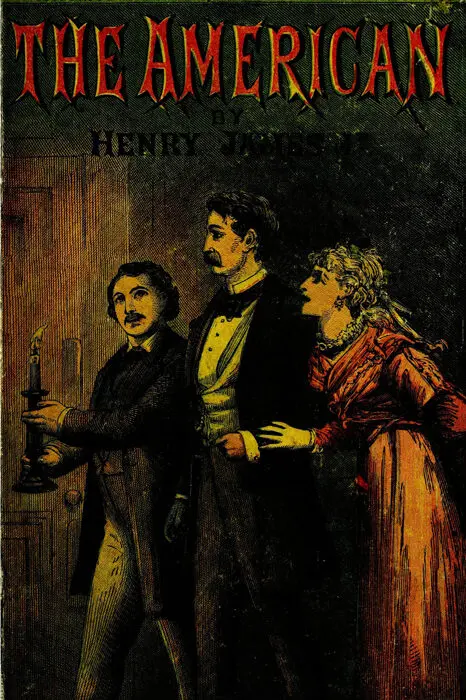
THE CLASSIC COLLECTION · 1877
"The American" by Henry James is a novel published in 1877. Christopher Newman, a wealthy American businessman, travels to Europe seeking culture and a refined wife. He falls for Claire de Cintré, a young widow from an aristocratic Parisian family. But Newman's honest American spirit collides with Old World class prejudices and dark family secrets. As romance blooms and complications mount, he must navigate the treacherous divide between New World optimism and European sophistication in this tale of international manners and mismatched worlds.
Introduction adapted from the source catalogue; source summaries may be automatically generated.
Free to read · English · 136,560 words · No account needed
MAKE TIME FOR A GOOD BOOK
On by default. Untick to stop anonymous reading totals. Each page counts after 10 seconds in view. How this works.
Anonymous counting is on unless you have switched it off.
Here Mrs. Bread paused again, and the most artistic of romancers could not have been more effective. Newman made a movement as if he were turning over the page of a novel. “So he was dead!” he exclaimed.
“Three days afterwards he was in his grave,” said Mrs. Bread, sententiously. “In a little while I went away to the front of the house and looked out into the court, and there, before long, I saw Mr. Urbain ride in alone. I waited a bit, to hear him come upstairs with his mother, but they stayed below, and I went back to the marquis’s room. I went to the bed and held up the light to him, but I don’t know why I didn’t let the candlestick fall. The marquis’s eyes were open—open wide! they were staring at me. I knelt down beside him and took his hands, and begged him to tell me, in the name of wonder, whether he was alive or dead. Still he looked at me a long time, and then he made me a sign to put my ear close to him: ‘I am dead,’ he said, ‘I am dead. The marquise has killed me.’ I was all in a tremble; I didn’t understand him. He seemed both a man and a corpse, if you can fancy, sir. ‘But you’ll get well now, sir,’ I said. And then he whispered again, ever so weak; ‘I wouldn’t get well for a kingdom. I wouldn’t be that woman’s husband again.’ And then he said more; he said she had murdered him. I asked him what she had done to him, but he only replied, ‘Murder, murder. And she’ll kill my daughter,’ he said; ‘my poor unhappy child.’ And he begged me to prevent that, and then he said that he was dying, that he was dead. I was afraid to move or to leave him; I was almost dead myself. All of a sudden he asked me to get a pencil and write for him; and then I had to tell him that I couldn’t manage a pencil. He asked me to hold him up in bed while he wrote himself, and I said he could never, never do such a thing. But he seemed to have a kind of terror that gave him strength. I found a pencil in the room and a piece of paper and a book, and I put the paper on the book and the pencil into his hand, and moved the candle near him. You will think all this very strange, sir; and very strange it was. The strangest part of it was that I believed he was dying, and that I was eager to help him to write. I sat on the bed and put my arm round him, and held him up. I felt very strong; I believe I could have lifted him and carried him. It was a wonder how he wrote, but he did write, in a big scratching hand; he almost covered one side of the paper. It seemed a long time; I suppose it was three or four minutes. He was groaning, terribly, all the while. Then he said it was ended, and I let him down upon his pillows and he gave me the paper and told me to fold it, and hide it, and give it to those who would act upon it. ‘Whom do you mean?’ I said. ‘Who are those who will act upon it?’ But he only groaned, for an answer; he couldn’t speak, for weakness. In a few minutes he told me to go and look at the bottle on the chimney-piece. I knew the bottle he meant; the white stuff that was good for his stomach. I went and looked at it, but it was empty. When I came back his eyes were open and he was staring at me; but soon he closed them and he said no more. I hid the paper in my dress; I didn’t look at what was written upon it, though I can read very well, sir, if I haven’t any handwriting. I sat down near the bed, but it was nearly half an hour before my lady and the count came in. The marquis looked as he did when they left him, and I never said a word about his having been otherwise. Mr. Urbain said that the doctor had been called to a person in childbirth, but that he promised to set out for Fleurières immediately. In another half hour he arrived, and as soon as he had examined the marquis he said that we had had a false alarm. The poor gentleman was very low, but he was still living. I watched my lady and her son when he said this, to see if they looked at each other, and I am obliged to admit that they didn’t. The doctor said there was no reason he should die; he had been going on so well. And then he wanted to know how he had suddenly fallen off; he had left him so very hearty. My lady told her little story again—what she had told Mr. Urbain and me—and the doctor looked at her and said nothing. He stayed all the next day at the château, and hardly left the marquis. I was always there. Mademoiselle and Mr. Valentin came and looked at their father, but he never stirred. It was a strange, deathly stupor. My lady was always about; her face was as white as her husband’s, and she looked very proud, as I had seen her look when her orders or her wishes had been disobeyed. It was as if the poor marquis had defied her; and the way she took it made me afraid of her. The apothecary from Poitiers kept the marquis along through the day, and we waited for the other doctor from Paris, who, as I told you, had been staying at Fleurières. They had telegraphed for him early in the morning, and in the evening he arrived. He talked a bit outside with the doctor from Poitiers, and then they came in to see the marquis together. I was with him, and so was Mr. Urbain. My lady had been to receive the doctor from Paris, and she didn’t come back with him into the room. He sat down by the marquis; I can see him there now, with his hand on the marquis’s wrist, and Mr. Urbain watching him with a little looking-glass in his hand. ‘I’m sure he’s better,’ said the little doctor from Poitiers; ‘I’m sure he’ll come back.’ A few moments after he had said this the marquis opened his eyes, as if he were waking up, and looked at us, from one to the other. I saw him look at me very softly, as you’d say. At the same moment my lady came in on tiptoe; she came up to the bed and put in her head between me and the count. The marquis saw her and gave a long, most wonderful moan. He said something we couldn’t understand, and he seemed to have a kind of spasm. He shook all over and then closed his eyes, and the doctor jumped up and took hold of my lady. He held her for a moment a bit roughly. The marquis was stone dead! This time there were those there that knew.”
Your reading position is saved on this browser. Take it to another device with a library code. Reading pages adapt to text, rather than matching a printed edition.
Henry James
Henry James
Henry James

Henry James
BEHIND THE BOOK
This eBook is for the use of anyone anywhere in the United States and most other parts of the world at no cost and with almost no restrictions whatsoever. You may copy it, give it away or re-use it under the terms of the Project Gutenberg License included with this eBook or online at www.gutenberg.org. If you are not located in the United States, you will have to check the laws of the country where you are located before using this eBook. Read the source licence.
The original source file, including credits and licence, is retained by this library. Request an original-format copy at no charge. Please include the book title and Project Gutenberg identifier #177.
KEEP YOUR CURIOSITY GOING
Coulson Kernahan

Maurice Baring
Frances Wright
Cécile Tormay

Frederic Jesup Stimson

W. H. P. (William Henry Pope) Jarvis