THE CLASSIC COLLECTION✦Hawthorne (English Men of Letters Series)CLASSIC FREE BOOKS
Hawthorne (English Men of Letters Series)
Henry James
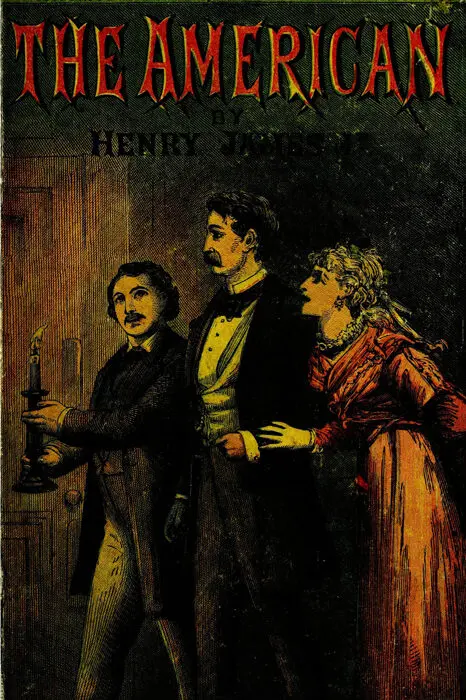
THE CLASSIC COLLECTION · 1877
"The American" by Henry James is a novel published in 1877. Christopher Newman, a wealthy American businessman, travels to Europe seeking culture and a refined wife. He falls for Claire de Cintré, a young widow from an aristocratic Parisian family. But Newman's honest American spirit collides with Old World class prejudices and dark family secrets. As romance blooms and complications mount, he must navigate the treacherous divide between New World optimism and European sophistication in this tale of international manners and mismatched worlds.
Introduction adapted from the source catalogue; source summaries may be automatically generated.
Free to read · English · 136,560 words · No account needed
MAKE TIME FOR A GOOD BOOK
On by default. Untick to stop anonymous reading totals. Each page counts after 10 seconds in view. How this works.
Anonymous counting is on unless you have switched it off.
Mrs. Bread gave a weary sigh. “We are using dreadful words, sir, but I don’t care now. I see you have your idea, and I have no will of my own. My will was the will of my children, as I called them; but I have lost my children now. They are dead—I may say it of both of them; and what should I care for the living? What is anyone in the house to me now—what am I to them? My lady objects to me—she has objected to me these thirty years. I should have been glad to be something to young Madame de Bellegarde, though I never was nurse to the present marquis. When he was a baby I was too young; they wouldn’t trust me with him. But his wife told her own maid, Mamselle Clarisse, the opinion she had of me. Perhaps you would like to hear it, sir.”
“Oh, immensely,” said Newman.
“She said that if I would sit in her children’s schoolroom I should do very well for a penwiper! When things have come to that I don’t think I need stand upon ceremony.”
“Decidedly not,” said Newman. “Go on, Mrs. Bread.”
Mrs. Bread, however, relapsed again into troubled dumbness, and all Newman could do was to fold his arms and wait. But at last she appeared to have set her memories in order. “It was when the late marquis was an old man and his eldest son had been two years married. It was when the time came on for marrying Mademoiselle Claire; that’s the way they talk of it here, you know, sir. The marquis’s health was bad; he was very much broken down. My lady had picked out M. de Cintré, for no good reason that I could see. But there are reasons, I very well know, that are beyond me, and you must be high in the world to understand them. Old M. de Cintré was very high, and my lady thought him almost as good as herself; that’s saying a good deal. Mr. Urbain took sides with his mother, as he always did. The trouble, I believe, was that my lady would give very little money, and all the other gentlemen asked more. It was only M. de Cintré that was satisfied. The Lord willed it he should have that one soft spot; it was the only one he had. He may have been very grand in his birth, and he certainly was very grand in his bows and speeches; but that was all the grandeur he had. I think he was like what I have heard of comedians; not that I have ever seen one. But I know he painted his face. He might paint it all he would; he could never make me like it! The marquis couldn’t abide him, and declared that sooner than take such a husband as that Mademoiselle Claire should take none at all. He and my lady had a great scene; it came even to our ears in the servants’ hall. It was not their first quarrel, if the truth must be told. They were not a loving couple, but they didn’t often come to words, because, I think, neither of them thought the other’s doings worth the trouble. My lady had long ago got over her jealousy, and she had taken to indifference. In this, I must say, they were well matched. The marquis was very easy-going; he had a most gentlemanly temper. He got angry only once a year, but then it was very bad. He always took to bed directly afterwards. This time I speak of he took to bed as usual, but he never got up again. I’m afraid the poor gentleman was paying for his dissipation; isn’t it true they mostly do, sir, when they get old? My lady and Mr. Urbain kept quiet, but I know my lady wrote letters to M. de Cintré. The marquis got worse and the doctors gave him up. My lady, she gave him up too, and if the truth must be told, she gave him up gladly. When once he was out of the way she could do what she pleased with her daughter, and it was all arranged that my poor innocent child should be handed over to M. de Cintré. You don’t know what Mademoiselle was in those days, sir; she was the sweetest young creature in France, and knew as little of what was going on around her as the lamb does of the butcher. I used to nurse the marquis, and I was always in his room. It was here at Fleurières, in the autumn. We had a doctor from Paris, who came and stayed two or three weeks in the house. Then there came two others, and there was a consultation, and these two others, as I said, declared that the marquis couldn’t be saved. After this they went off, pocketing their fees, but the other one stayed and did what he could. The marquis himself kept crying out that he wouldn’t die, that he didn’t want to die, that he would live and look after his daughter. Mademoiselle Claire and the viscount—that was Mr. Valentin, you know—were both in the house. The doctor was a clever man,—that I could see myself,—and I think he believed that the marquis might get well. We took good care of him, he and I, between us, and one day, when my lady had almost ordered her mourning, my patient suddenly began to mend. He got better and better, till the doctor said he was out of danger. What was killing him was the dreadful fits of pain in his stomach. But little by little they stopped, and the poor marquis began to make his jokes again. The doctor found something that gave him great comfort—some white stuff that we kept in a great bottle on the chimney-piece. I used to give it to the marquis through a glass tube; it always made him easier. Then the doctor went away, after telling me to keep on giving him the mixture whenever he was bad. After that there was a little doctor from Poitiers, who came every day. So we were alone in the house—my lady and her poor husband and their three children. Young Madame de Bellegarde had gone away, with her little girl, to her mothers. You know she is very lively, and her maid told me that she didn’t like to be where people were dying.” Mrs. Bread paused a moment, and then she went on with the same quiet consistency. “I think you have guessed, sir, that when the marquis began to turn my lady was disappointed.” And she paused again, bending upon Newman a face which seemed to grow whiter as the darkness settled down upon them.
Your reading position is saved on this browser. Take it to another device with a library code. Reading pages adapt to text, rather than matching a printed edition.
Henry James
Henry James
Henry James

Henry James
BEHIND THE BOOK
This eBook is for the use of anyone anywhere in the United States and most other parts of the world at no cost and with almost no restrictions whatsoever. You may copy it, give it away or re-use it under the terms of the Project Gutenberg License included with this eBook or online at www.gutenberg.org. If you are not located in the United States, you will have to check the laws of the country where you are located before using this eBook. Read the source licence.
The original source file, including credits and licence, is retained by this library. Request an original-format copy at no charge. Please include the book title and Project Gutenberg identifier #177.
KEEP YOUR CURIOSITY GOING
Coulson Kernahan

Maurice Baring
Frances Wright
Cécile Tormay

Frederic Jesup Stimson

W. H. P. (William Henry Pope) Jarvis