THE CLASSIC COLLECTION✦Hawthorne (English Men of Letters Series)CLASSIC FREE BOOKS
Hawthorne (English Men of Letters Series)
Henry James
THE CLASSIC COLLECTION · 1877
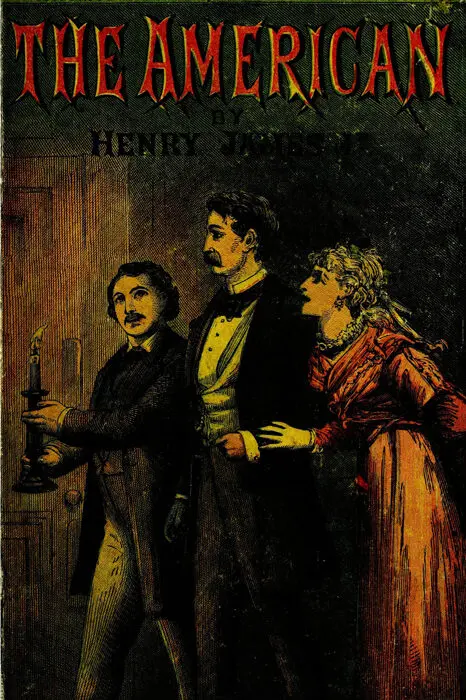
"The American" by Henry James is a novel published in 1877. Christopher Newman, a wealthy American businessman, travels to Europe seeking culture and a refined wife. He falls for Claire de Cintré, a young widow from an aristocratic Parisian family. But Newman's honest American spirit collides with Old World class prejudices and dark family secrets. As romance blooms and complications mount, he must navigate the treacherous divide between New World optimism and European sophistication in this tale of international manners and mismatched worlds.
Introduction adapted from the source catalogue; source summaries may be automatically generated.
Free to read · English · 136,560 words · No account needed
MAKE TIME FOR A GOOD BOOK
On by default. Untick to stop anonymous reading totals. Each page counts after 10 seconds in view. How this works.
Anonymous counting is on unless you have switched it off.
“I came here on purpose to see you,” said Newman in his bad French, offering to shake hands. And then, like a good American, he introduced Valentin formally: “Allow me to make you acquainted with the Comte Valentin de Bellegarde.”
Valentin made a bow which must have seemed to Mademoiselle Noémie quite in harmony with the impressiveness of his title, but the graceful brevity of her own response made no concession to underbred surprise. She turned to Newman, putting up her hands to her hair and smoothing its delicately-felt roughness. Then, rapidly, she turned the canvas that was on her easel over upon its face. “You have not forgotten me?” she asked.
“I shall never forget you,” said Newman. “You may be sure of that.”
“Oh,” said the young girl, “there are a great many different ways of remembering a person.” And she looked straight at Valentin de Bellegarde, who was looking at her as a gentleman may when a “verdict” is expected of him.
“Have you painted anything for me?” said Newman. “Have you been
industrious?”
“No, I have done nothing.” And taking up her palette, she began to mix
her colors at hazard.
“But your father tells me you have come here constantly.”
“I have nowhere else to go! Here, all summer, it was cool, at least.”
“Being here, then,” said Newman, “you might have tried something.”
“I told you before,” she answered, softly, “that I don’t know how to
paint.”
“But you have something charming on your easel, now,” said Valentin, “if you would only let me see it.”
She spread out her two hands, with the fingers expanded, over the back of the canvas—those hands which Newman had called pretty, and which, in spite of several paint-stains, Valentin could now admire. “My painting is not charming,” she said.
“It is the only thing about you that is not, then, mademoiselle,” quoth
Valentin, gallantly.
She took up her little canvas and silently passed it to him. He looked at it, and in a moment she said, “I am sure you are a judge.”
“Yes,” he answered, “I am.”
“You know, then, that that is very bad.”
“Mon Dieu,” said Valentin, shrugging his shoulders “let us
distinguish.”
“You know that I ought not to attempt to paint,” the young girl
continued.
“Frankly, then, mademoiselle, I think you ought not.”
Your reading position is saved on this browser. Take it to another device with a library code. Reading pages adapt to text, rather than matching a printed edition.
Henry James
Henry James
Henry James

Henry James
BEHIND THE BOOK
This eBook is for the use of anyone anywhere in the United States and most other parts of the world at no cost and with almost no restrictions whatsoever. You may copy it, give it away or re-use it under the terms of the Project Gutenberg License included with this eBook or online at www.gutenberg.org. If you are not located in the United States, you will have to check the laws of the country where you are located before using this eBook. Read the source licence.
The original source file, including credits and licence, is retained by this library. Request an original-format copy at no charge. Please include the book title and Project Gutenberg identifier #177.
KEEP YOUR CURIOSITY GOING
Coulson Kernahan

Maurice Baring
Frances Wright
Cécile Tormay

Frederic Jesup Stimson

W. H. P. (William Henry Pope) Jarvis