THE CLASSIC COLLECTION✦Hawthorne (English Men of Letters Series)CLASSIC FREE BOOKS
Hawthorne (English Men of Letters Series)
Henry James
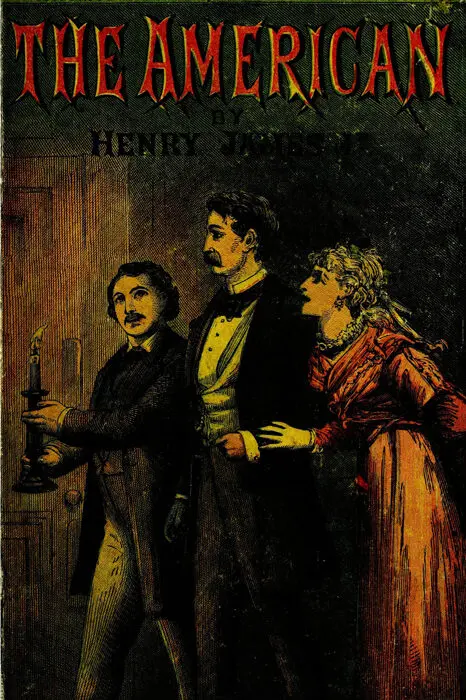
THE CLASSIC COLLECTION · 1877
"The American" by Henry James is a novel published in 1877. Christopher Newman, a wealthy American businessman, travels to Europe seeking culture and a refined wife. He falls for Claire de Cintré, a young widow from an aristocratic Parisian family. But Newman's honest American spirit collides with Old World class prejudices and dark family secrets. As romance blooms and complications mount, he must navigate the treacherous divide between New World optimism and European sophistication in this tale of international manners and mismatched worlds.
Introduction adapted from the source catalogue; source summaries may be automatically generated.
Free to read · English · 136,560 words · No account needed
MAKE TIME FOR A GOOD BOOK
On by default. Untick to stop anonymous reading totals. Each page counts after 10 seconds in view. How this works.
Anonymous counting is on unless you have switched it off.
“You are very wrong,” she said, simply. And with another look at her back in the mirror she turned away.
“Do you like Paris?” asked the old lady, who was apparently wondering what was the proper way to talk to an American.
“Yes, rather,” said Newman. And then he added with a friendly
intonation, “Don’t you?”
“I can’t say I know it. I know my house—I know my friends—I don’t know
Paris.”
“Oh, you lose a great deal,” said Newman, sympathetically.
Madame de Bellegarde stared; it was presumably the first time she had been condoled with on her losses.
“I am content with what I have,” she said with dignity.
Newman’s eyes, at this moment, were wandering round the room, which struck him as rather sad and shabby; passing from the high casements, with their small, thickly-framed panes, to the sallow tints of two or three portraits in pastel, of the last century, which hung between them. He ought, obviously, to have answered that the contentment of his hostess was quite natural—she had a great deal; but the idea did not occur to him during the pause of some moments which followed.
“Well, my dear mother,” said Valentin, coming and leaning against the chimney-piece, “what do you think of my dear friend Newman? Is he not the excellent fellow I told you?”
“My acquaintance with Mr. Newman has not gone very far,” said Madame de Bellegarde. “I can as yet only appreciate his great politeness.”
“My mother is a great judge of these matters,” said Valentin to Newman. “If you have satisfied her, it is a triumph.”
“I hope I shall satisfy you, some day,” said Newman, looking at the old lady. “I have done nothing yet.”
“You must not listen to my son; he will bring you into trouble. He is a
sad scatterbrain.”
“Oh, I like him—I like him,” said Newman, genially.
“He amuses you, eh?”
“Yes, perfectly.”
“Do you hear that, Valentin?” said Madame de Bellegarde. “You amuse Mr.
Newman.”
“Perhaps we shall all come to that!” Valentin exclaimed.
“You must see my other son,” said Madame de Bellegarde. “He is much better than this one. But he will not amuse you.”
“I don’t know—I don’t know!” murmured Valentin, reflectively. “But we shall very soon see. Here comes Monsieur mon frère.”
Your reading position is saved on this browser. Take it to another device with a library code. Reading pages adapt to text, rather than matching a printed edition.
Henry James
Henry James
Henry James

Henry James
BEHIND THE BOOK
This eBook is for the use of anyone anywhere in the United States and most other parts of the world at no cost and with almost no restrictions whatsoever. You may copy it, give it away or re-use it under the terms of the Project Gutenberg License included with this eBook or online at www.gutenberg.org. If you are not located in the United States, you will have to check the laws of the country where you are located before using this eBook. Read the source licence.
The original source file, including credits and licence, is retained by this library. Request an original-format copy at no charge. Please include the book title and Project Gutenberg identifier #177.
KEEP YOUR CURIOSITY GOING
Coulson Kernahan

Maurice Baring
Frances Wright
Cécile Tormay

Frederic Jesup Stimson

W. H. P. (William Henry Pope) Jarvis