THE CLASSIC COLLECTION✦The Life and Letters of Walter H. Page, Volume IICLASSIC FREE BOOKS
The Life and Letters of Walter H. Page, Volume II
Burton Jesse Hendrick
THE CLASSIC COLLECTION · 1919
"The Age of Big Business: A Chronicle of the Captains of Industry" by Burton J. Hendrick is a historical account written in the early 20th century. The book explores the significant economic transformation in the United States after the Civil War, focusing on the rise of large-scale industries and the influential figures, or "captains of industry," who shaped modern capitalism. The opening of the book sets the stage for this exploration by reflecting on the state of America in 1865, immediately following the Civil War. Hendrick paints a picture of a nation that, at the time, lacked many modern conveniences and industrial structures, such as railroads and electric lighting. He discusses how the economic landscape was primarily characterized by small-scale production and competition rather than the monopolistic trusts that would come to define American industry. The narrative foregrounds the remarkable changes that occurred in the subsequent fifty years, emphasizing the vast resources available in the United States and the entrepreneurial spirit that would eventually lead to the establishment of powerful corporations like Standard Oil and U.S. Steel.
Introduction adapted from the source catalogue; source summaries may be automatically generated.
Free to read · English · 37,261 words · No account needed
MAKE TIME FOR A GOOD BOOK
On by default. Untick to stop anonymous reading totals. Each page counts after 10 seconds in view. How this works.
Anonymous counting is on unless you have switched it off.
The very year that Bissell had organized his petroleum company a boy of sixteen had obtained his first job in a produce commission office on a dock in Cleveland. As the curtain rises on the career of John D. Rockefeller, we see him perched upon a high stool, adding up figures and casting accounts, faithfully doing every odd office job that came his way, earning his employer's respect for his industry, his sobriety, and his unmistakable talents for business. Nor does this picture inadequately visualize Rockefeller's whole after-life, and explain the business qualities that made possible his unexampled success. It is, indeed, the scene to which Mr. Rockefeller himself most frequently reverts when, in his famous autobiographical discourses to his Cleveland Sunday School, he calls our attention to the rules that inevitably lead to industrial prosperity. "Thrift, thrift, Horatio," is the one idea upon which the great captain of the oil business has always insisted. Many have detected in these habits of mind only the cheese-paring activities of a naturally narrow spirit. Rockefeller's old Cleveland associates remember him as the greatest bargainer they had ever known, as a man who had an eye for infinite details and an unquenchable patience and resource in making economies. Yet Rockefeller was clearly more than a pertinacious haggler over trifles. Certainly such a diagnosis does not explain a man who has built up one of the world's greatest organizations and accumulated the largest fortune which has ever been placed at the disposal of one man. Indeed, Rockefeller displayed unusual business ability even before he entered the oil business. A young man who, at the age of nineteen, could start a commission house and do a business of nearly five hundred thousand the first year must have had commercial capacity to an extraordinary degree.
Fate had placed Rockefeller in Cleveland in the days when the oil business had got well under way. In the early sixties a score or so of refineries had started in this town, many of which were making large profits. It is not surprising that Rockefeller, gazing at these black and evil-smelling buildings from the vantage point of his commission office, should have felt an impulse to join in the gamble. He plunged into this new activity at the age of twenty-three. He possessed two great advantages over most of his adventurous competitors; one was a heavy bank account, representing his earnings in the commission business, and the other a partner, Samuel Andrews, who was generally regarded as a mechanical genius in the production of illuminating oil. At the beginning, therefore, Rockefeller had the two essentials which largely explain his subsequent career; an adequate liquid capital and high technical resources. In the first few years the Rockefeller houses--he rapidly organized three, one after another--competed with a large number of other units in the oil business on somewhat more than even terms. At this time Rockefeller was merely one of a large number of successful oil refiners, yet during these early days a grandiose scheme was taking shape in that quiet, insinuating, far-reaching brain. He said nothing about it, even to his closest associates, yet it filled his every waking hour. For this young man was taking a comprehensive sweep of the world and he saw millions of people, in the Americas, in Europe, and in Asia, whose need for the article in which he dealt would grow more insistent every day. He saw that he was handling a product which was becoming as much a necessity of life as the air itself. The young man reached out to grasp this business. "All of it," we can picture Rockefeller saying to himself, "all of it shall be mine." Any study of Rockefeller's career must lead to the conclusion that, before he had reached his thirtieth year, he had determined to monopolize this growing necessity. The mere fact that this young man could form such a stupendous plan indicates that in him we are meeting for the first time a new type of industrial leader. At that time monopolies were unknown in the United States. That certain old English Kings had frequently granted exclusive trading privileges to favored merchants most educated Americans knew; and their knowledge of monopolies extended little further than this. Yet about 1868 John D. Rockefeller started consciously to revive this ancient practice, and to bring under one ownership the magnificent industry to which Drake's sensational discovery had given rise.
Your reading position is saved on this browser. Take it to another device with a library code. Reading pages adapt to text, rather than matching a printed edition.
Burton Jesse Hendrick
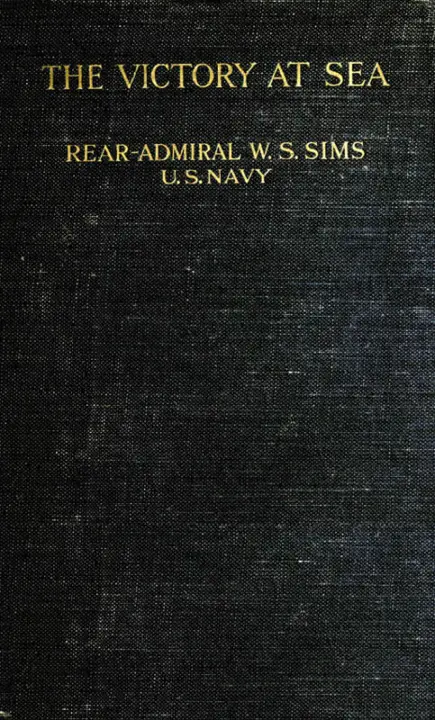
William Sowden Sims & Burton Jesse Hendrick
BEHIND THE BOOK
This eBook is for the use of anyone anywhere in the United States and most other parts of the world at no cost and with almost no restrictions whatsoever. You may copy it, give it away or re-use it under the terms of the Project Gutenberg License included with this eBook or online at www.gutenberg.org. If you are not located in the United States, you will have to check the laws of the country where you are located before using this eBook. Read the source licence.
The original source file, including credits and licence, is retained by this library. Request an original-format copy at no charge. Please include the book title and Project Gutenberg identifier #3037.
KEEP YOUR CURIOSITY GOING
Cécile Tormay

Moritz Busch
John L. Ransom
Frances Wright
Cécile Tormay

Mabel Potter Daggett