THE CLASSIC COLLECTION✦The Life and Letters of Walter H. Page, Volume IICLASSIC FREE BOOKS
The Life and Letters of Walter H. Page, Volume II
Burton Jesse Hendrick
THE CLASSIC COLLECTION · 1919
"The Age of Big Business: A Chronicle of the Captains of Industry" by Burton J. Hendrick is a historical account written in the early 20th century. The book explores the significant economic transformation in the United States after the Civil War, focusing on the rise of large-scale industries and the influential figures, or "captains of industry," who shaped modern capitalism. The opening of the book sets the stage for this exploration by reflecting on the state of America in 1865, immediately following the Civil War. Hendrick paints a picture of a nation that, at the time, lacked many modern conveniences and industrial structures, such as railroads and electric lighting. He discusses how the economic landscape was primarily characterized by small-scale production and competition rather than the monopolistic trusts that would come to define American industry. The narrative foregrounds the remarkable changes that occurred in the subsequent fifty years, emphasizing the vast resources available in the United States and the entrepreneurial spirit that would eventually lead to the establishment of powerful corporations like Standard Oil and U.S. Steel.
Introduction adapted from the source catalogue; source summaries may be automatically generated.
Free to read · English · 37,261 words · No account needed
MAKE TIME FOR A GOOD BOOK
On by default. Untick to stop anonymous reading totals. Each page counts after 10 seconds in view. How this works.
Anonymous counting is on unless you have switched it off.
In the late fifties Mr. George H. Bissell had become interested in rock oil, not as an embrocation and as a cure for most human ills, but as a light-giving material. A professor at Dartmouth had performed certain experiments with this substance which had sunk deeply into Bissell's imagination. So convinced was this young man that he could introduce petroleum commercially that he leased certain fields in western Pennsylvania and sent a specimen of the oil to Benjamin Silliman, Jr., Professor of Chemistry at Yale. Professor Silliman gave the product a more complete analysis than it had ever previously received and submitted a report which is still the great classic in the scientific literature of petroleum. This report informed Bissell that the substance, could be refined cheaply and easily, and that, when refined, it made a splendid illuminant, besides yielding certain byproducts, such as paraffin and naphtha, which had a great commercial value. So far, Bissell's enterprise seemed to promise success, yet the great problem still remained: how could he obtain this rock oil in amounts large enough to make his enterprise a practical one? A chance glimpse of Kier's label, with its picture of an artesian well, supplied Bissell with his answer. He at once sent E. L. Drake into the oil-fields with a complete drilling equipment, to look, not for saltwater, but for oil. Nothing seems quite so obvious today as drilling a well into the rock to discover oil, yet so strange was the idea in Drake's time that the people of Titusville, where he started work, regarded him as a lunatic and manifested a hostility to his enterprise that delayed operations for several months. Yet one day in August, 1859, the coveted liquid began flowing from "Drake's folly" at the rate of twenty-five barrels a day.
Because of this performance Drake has gone down to fame as the man who "discovered oil." In the sense that his operation made petroleum available to the uses of mankind, Drake was its discoverer, and his achievement seems really a greater one than that of the men who first made apparent our beds of coal, iron, copper, or even gold. For Drake really uncovered an entirely new substance. And the country responded spontaneously to Drake's success. For anything approaching the sudden rush to the oil-fields we shall have to go to the discovery of gold in California ten years before. Men flocked into western Pennsylvania by the thousands; fortunes were made and lost almost instantaneously. Oil flowed so plentifully in this region that it frequently ran upon the ground, and the "gusher," which threw a stream of the precious liquid sometimes a hundred feet and more into the air, became an almost every-day occurrence. The discovery took the whole section by surprise; there were no towns, no railways, and no wagon roads except a few almost impassable lumber trails. Yet, almost in a twinkling, the whole situation changed; towns sprang up overnight, roads were built, over which teamsters could carry the oil to the nearest shipping points, and the great trunk lines began to extend branches into the regions. The one thing, next to Drake's well, that made the oil available, was the discovery, which was made by Samuel Van Syckel, that a two-inch pipe, starting at the well, could convey the oil for several miles to the nearest railway station. In a few years the whole oil region of Venango County was an inextricable tangle of these primitive pipelines. Thus, before the Civil war had ended, the western Pennsylvania wilderness had been transformed into the busy headquarters of a new industry. Companies had been formed, many of them the wildest stock-jobbing operations, refineries had been started, in a few years the whalers of New England had almost lost their occupation, but millions of American homes, that had hitherto had to spend the long winter evenings almost in darkness, suddenly found themselves flooded with light. In Cleveland, in Pittsburgh, in Philadelphia, in New York, and in the oil regions, the business of refining and selling petroleum had reached extensive proportions. Europe, although it had great undeveloped oil-fields of its own, drew upon this new American enterprise to such an extent that, eleven years after Drake's "discovery," petroleum had taken fourth place among our exported articles.
Your reading position is saved on this browser. Take it to another device with a library code. Reading pages adapt to text, rather than matching a printed edition.
Burton Jesse Hendrick
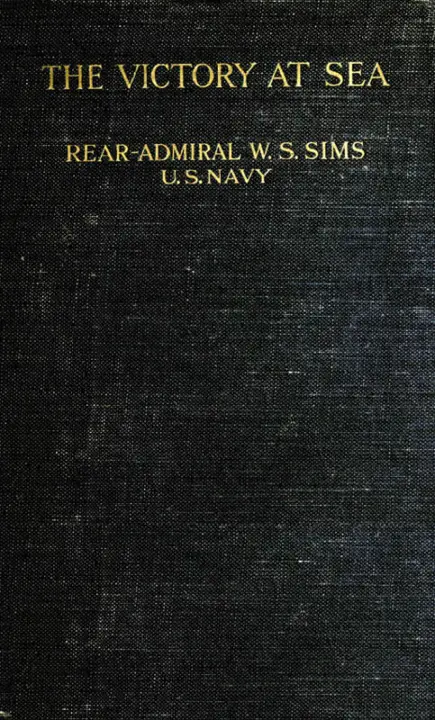
William Sowden Sims & Burton Jesse Hendrick
BEHIND THE BOOK
This eBook is for the use of anyone anywhere in the United States and most other parts of the world at no cost and with almost no restrictions whatsoever. You may copy it, give it away or re-use it under the terms of the Project Gutenberg License included with this eBook or online at www.gutenberg.org. If you are not located in the United States, you will have to check the laws of the country where you are located before using this eBook. Read the source licence.
The original source file, including credits and licence, is retained by this library. Request an original-format copy at no charge. Please include the book title and Project Gutenberg identifier #3037.
KEEP YOUR CURIOSITY GOING
Cécile Tormay

Moritz Busch
John L. Ransom
Frances Wright
Cécile Tormay

Mabel Potter Daggett