THE CLASSIC COLLECTION✦The queen of the isleCLASSIC FREE BOOKS
The queen of the isle
May Agnes Fleming
THE CLASSIC COLLECTION · 1885
"The Actress' Daughter: A Novel" by May Agnes Fleming is a fictional narrative written in the late 19th century. This novel revolves around themes of family, loss, and resilience, primarily focusing on a young girl named Georgia, the titular character, and her journey through hardship after the death of her mother. The story begins on Christmas Eve, setting a tone of both festivity and foreboding as it introduces the stark contrast between Georgia's vibrant spirit and the grim circumstances surrounding her life. The opening of the novel depicts a fierce winter storm and introduces Miss Jerusha Skamp, a cantankerous spinster, who, despite her hardened exterior, finds herself drawn to the plight of those suffering in the storm. Witnessing a boy knocking on her door seeking help for his sick mother, she initially turns him away, showcasing her gruff nature. However, as the narrative unfolds, she is compelled by her conscience to venture into the storm to help, leading to her discovery of Georgia and her deceased mother in an abandoned cottage. This sets the stage for Georgia's tumultuous transition from her old life to living with Jerusha, further complicating her emotional landscape as she mourns her mother while attempting to embrace her new circumstances.
Introduction adapted from the source catalogue; source summaries may be automatically generated.
Free to read · English · 110,625 words · No account needed
MAKE TIME FOR A GOOD BOOK
On by default. Untick to stop anonymous reading totals. Each page counts after 10 seconds in view. How this works.
Anonymous counting is on unless you have switched it off.
"Ye-es, she's not bad-looking--for a governess," drawled Miss Felice. "They are generally so frightfully ugly. She's a great deal too pale though, and too solemn looking; it gives me the dismals to look at her; and she's ever so much too tall" (Miss Felice, be it known, was rather on the dumpy pattern than otherwise), "and too slight for her size, and her forehead's too high, and her--"
"Oh, Felice, stop! You'll try to make out she's as ugly as sin directly. Did you ever see such splendid eyes?"
"I don't like black eyes," said Miss Felice, in a dissatisfied tone; "they are too sharp and fiery. They do well enough for men, but I don't approve of them at all for women."
"Dear me, what a pity!" said Miss Maggie, sarcastically; "but you can't call hers fiery--they're dreadfully melancholy, I'm sure. Now ain't they, mamma?"
"What dear?" said Mrs. Leonard, not catching the whispered question.
"Hasn't Miss Randall got lovely melancholy black eyes?"
"Oh, bother her melancholy black eyes!" said Miss Felice, impatiently. "What a time you do make about people, Mag. And she only a governess, too. I should think you would be ashamed."
"Well, I ain't ashamed--not the least," said Maggie; "and no matter whether she's a governess or not, she looks like a lady. I'm sure she's very clever, too. I wonder who she's in black for."
"Ask her," said Miss Felice, shortly, as she picked up a French novel, and, placing her feet on the fender, sat down to read.
Miss Felice was blessed with a temper much shorter than sweet, and Miss Maggie, who was rather good-natured, took her curt replies as a matter of course, and, going over to Georgia, said pleasantly:
"Miss Randall, if you wish to go up to your room, I will be your cicerone for the occasion. Perhaps you would like to brush your hair before tea."
"Thank you," said Georgia, rising languidly, and following Miss Maggie
from the room.
"This is to be your sanctum sanctorum, Miss Randall," said Maggie, opening the door of a small and plainly but neatly furnished bedroom, rendered cheerful by red drapery and a redder fire. "It's not very gorgeous, you perceive; but it's the one the governess always uses here. Our last one--Miss Fitzgerald, an Irish young lady--went and precipitated herself into the awful gulf of----"
"What?" said Georgia, with a slight start, caused by Miss Maggie's
awe-struck manner.
Your reading position is saved on this browser. Take it to another device with a library code. Reading pages adapt to text, rather than matching a printed edition.
May Agnes Fleming
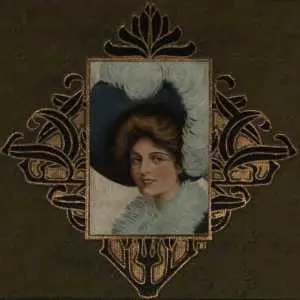
May Agnes Fleming
May Agnes Fleming
May Agnes Fleming
BEHIND THE BOOK
This eBook is for the use of anyone anywhere in the United States and most other parts of the world at no cost and with almost no restrictions whatsoever. You may copy it, give it away or re-use it under the terms of the Project Gutenberg License included with this eBook or online at www.gutenberg.org. If you are not located in the United States, you will have to check the laws of the country where you are located before using this eBook. Read the source licence.
The original source file, including credits and licence, is retained by this library. Request an original-format copy at no charge. Please include the book title and Project Gutenberg identifier #35035.
KEEP YOUR CURIOSITY GOING
Coulson Kernahan

Maurice Baring
Frances Wright
Cécile Tormay

Frederic Jesup Stimson

W. H. P. (William Henry Pope) Jarvis