The castaways
James Otis
THE CLASSIC COLLECTION · 1895
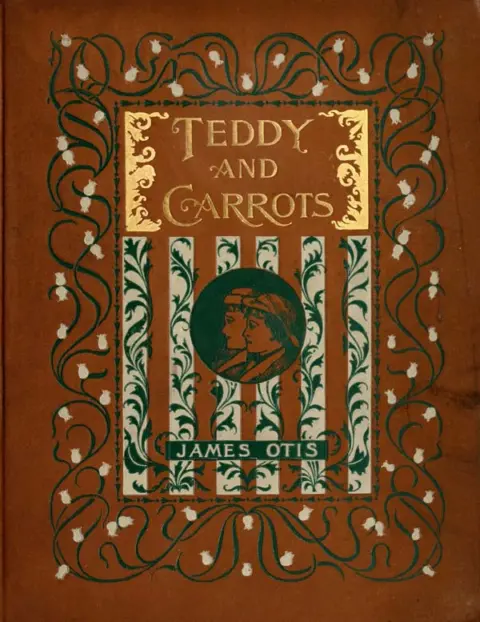
"Teddy and Carrots: Two Merchants of Newspaper Row" by James Otis is a fictional novel likely written in the late 19th century. The story centers around two young boys, Teddy Thurston and Joseph "Carrots" Williams, navigating the challenges of selling newspapers in New York City, where they confront bullies, form friendships, and seek to establish their place amid the rough streets. The narrative captures the struggles and resilience of youth in an urban environment, evoking themes of camaraderie and perseverance. At the start of the book, the reader meets Teddy, a newcomer to the city, who is eager to make a living selling newspapers. He quickly encounters trouble when confronted by Skip Jellison, a local bully, who attacks him and causes chaos in his attempts to sell papers. The scene unfolds as Teddy tries to defend himself, while Carrots, a bootblack and potential ally, observes the conflict and decides to help Teddy. Carrots’ initiative sets the stage for their burgeoning friendship and the larger challenges they will face together in the cutthroat world of newspaper selling, with the ever-present threat of conflict with Skip looming large.
Introduction adapted from the source catalogue; source summaries may be automatically generated.
Free to read · English · 46,209 words · No account needed
MAKE TIME FOR A GOOD BOOK
On by default. Untick to stop anonymous reading totals. Each page counts after 10 seconds in view. How this works.
Anonymous counting is on unless you have switched it off.
"I thought I did; but these chaps here made sure there must be some
mistake about it."
The boy gazed critically at those who were surrounding him, and then
replied:
"Well, 'cordin' to the looks of the whole crowd, I should think you might be s'prised to see a fellow wash his face an' comb his hair."
"Now, don't get too fresh," Sid said, threateningly, as he stepped forward to Skip's side. "We didn't come here to git the 'pinion of any country jay."
"Then why did you want er know?"
"'Cause. Say, you'd better mind your eye, young feller, if you count on stayin' 'round this city very long. There was a chap jest like you come down here last week tryin' to put on airs: an' his folks are huntin' for him now."
"Well, you needn't be worried anybody'll be lookin' for me, 'cause there's nobody wants to know where I am. So go ahead, if I've been doin' anything you perfessors don't like."
Sid apparently decided that it was hardly advisable for him to make too many threatening gestures, because the stranger was not at all disturbed by them, and even seemed disposed to court the possibly dreadful encounter.
He finished brushing his clothes, and then packed his "valise," by rolling the different articles carefully in the newspaper. Then, instead of going away, as Skip and his friends seemed to think he should have done as soon as they arrived, he stood with his hands on his hips, as if waiting for them to take their departure. For a minute no one spoke, and the silence was really painful.
The newsboys were mentally taking the measure of this stranger who appeared ready to defy them; and the latter finally asked, impatiently: "Well, what're you fellers countin' on doin'? I reckon I'm no great sight for you to stand lookin' at."
"Do you live here?" Skip asked.
"I'm goin' to now. Had it tough enough gettin' here, an' don't feel like leavin' till I've found out what there is in this city."
"Where did you come from?"
"Up Saranac way."
"Rode down in a parlor-car, I s'pose."
"Then you s'pose wrong, 'cause I walked."
"You don't look it." And once more Skip scrutinised the stranger
carefully.
"I don't reckon I do. I count on keepin' myself kind er decent. It doesn't cost anything for a feller to wash his face, comb his hair, or have his clothes clean, an' there's many a time when it'll put him through in great shape."
"Goin' to live on the interest of your money, I s'pose?"
Your reading position is saved on this browser. Take it to another device with a library code. Reading pages adapt to text, rather than matching a printed edition.
BEHIND THE BOOK
This eBook is for the use of anyone anywhere in the United States and most other parts of the world at no cost and with almost no restrictions whatsoever. You may copy it, give it away or re-use it under the terms of the Project Gutenberg License included with this eBook or online at www.gutenberg.org. If you are not located in the United States, you will have to check the laws of the country where you are located before using this eBook. Read the source licence.
The original source file, including credits and licence, is retained by this library. Request an original-format copy at no charge. Please include the book title and Project Gutenberg identifier #35046.
KEEP YOUR CURIOSITY GOING
Coulson Kernahan

Maurice Baring
Frances Wright
Cécile Tormay

Frederic Jesup Stimson

W. H. P. (William Henry Pope) Jarvis