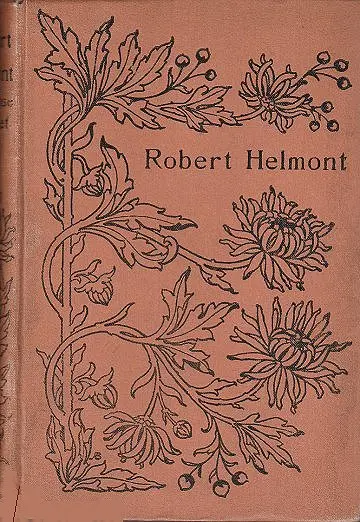
Robert Helmont: Diary of a Recluse, 1870-1871
Alphonse Daudet
THE CLASSIC COLLECTION · 1887
"Tartarin on the Alps" by Alphonse Daudet is a humorous novel written in the late 19th century. This work follows the adventures of Tartarin, a larger-than-life character who embodies the spirit of his hometown, Tarascon, known for its imaginative and boastful inhabitants. The story begins with Tartarin's misadventures in the Swiss Alps, highlighting themes of bravado and the clash between reality and fantasy as he engages with fellow tourists and prepares for an ascent. The opening of the novel introduces readers to a fog-shrouded evening at the Rigi-Kulm hotel, where tourists gather for dinner, fixated on the novelty of their surroundings. Among them is Tartarin, a rotund man cloaked in the garb of an Alpinist, who becomes the center of attention due to his unusual attire and exuberant demeanor. While he attempts to fit in and navigate the challenges of dining and engaging with other guests, he is met with a mix of confusion and disdain. The scene unfolds with comedic interactions that set the tone for Tartarin's escapades, while his aspirations to conquer the Alps ignite a humorous exploration of his character and existential musings on fame, identity, and recognition in a foreign land.
Introduction adapted from the source catalogue; source summaries may be automatically generated.
Free to read · English · 50,490 words · No account needed
MAKE TIME FOR A GOOD BOOK
On by default. Untick to stop anonymous reading totals. Each page counts after 10 seconds in view. How this works.
Anonymous counting is on unless you have switched it off.
The innkeeper took the advance, and the Taras-conese presently saw him far up the height, waving his arms and throwing stones, no doubt to rouse the chamois. They rejoined him with much pain and difficulty over that rocky slope, hard especially to persons who had just been eating and were as little used to climbing as these good Alpinists of Tarascon. The air was heavy, moreover, with a tempest breath that was slowly rolling the clouds along the summits above their heads.
“Boufre!” groaned Bravida.
Excourbaniès growled: “Outre!”
“What shall I be made to say!” added the gentle, bleating Pascalon.
But the guide having, by a violent gesture, ordered them to hold their tongues, and not to stir, Tartarin remarked, “Never speak under arms,” with a sternness that rebuked every one, although the president alone had a weapon. They stood stock still, holding their breaths. Suddenly, Pas-calon cried out:
“Vé the chamois, vé..”
About three hundred feet above them, the upright horns, the light buff coat and the four feet gathered together of the pretty creature stood defined like a carved image at the edge of the rock, looking at them fearlessly. Tartarin brought his piece to his shoulder methodically, as his habit was, and was just about to fire when the chamois disappeared.
“It is your fault,” said the Commander to Pascalon... “you whistled... and that frightened him.”
“I whistled!.. I?”
“Then it was Spiridion...”
“Ah, vaï! never in my life.”
Nevertheless, they had all heard a whistle, strident, prolonged. The president settled the question by relating how the chamois, at the approach of enemies, gives a sharp danger signal through the nostrils. That devil of a Tartarin knew everything about this kind of hunt, as about all others!
At the call of their guide they started again; but the acclivity became steeper and steeper, the rocks more ragged, with bogs between them to right and left. Tartarin kept the lead, turning constantly to help the delegates, holding out his hand or his carbine: “Your hand, your hand, if you don’t mind,” cried honest Bravida, who was very much afraid of loaded weapons.
Another sign of the guide, another stop of the delegation, their noses
in the air.
“I felt a drop!” murmured the Commander, very uneasy. At the same instant the thunder growled, but louder than the thunder roared the voice of Excourbaniès: “Fire, Tartarin!” and the chamois bounded past them, crossing the ravine like a golden flash, too quickly for Tartarin to take aim, but not so fast that they did not hear that whistle of his nostrils.
Your reading position is saved on this browser. Take it to another device with a library code. Reading pages adapt to text, rather than matching a printed edition.
Alphonse Daudet
Alphonse Daudet
Alphonse Daudet
Alphonse Daudet
BEHIND THE BOOK
This eBook is for the use of anyone anywhere in the United States and most other parts of the world at no cost and with almost no restrictions whatsoever. You may copy it, give it away or re-use it under the terms of the Project Gutenberg License included with this eBook or online at www.gutenberg.org. If you are not located in the United States, you will have to check the laws of the country where you are located before using this eBook. Read the source licence.
The original source file, including credits and licence, is retained by this library. Request an original-format copy at no charge. Please include the book title and Project Gutenberg identifier #25768.
KEEP YOUR CURIOSITY GOING
Coulson Kernahan

Maurice Baring
Frances Wright
Cécile Tormay

Frederic Jesup Stimson

W. H. P. (William Henry Pope) Jarvis