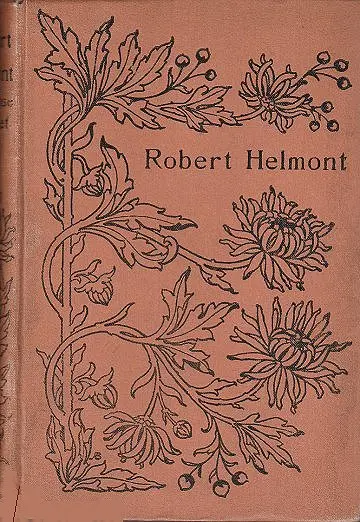
Robert Helmont: Diary of a Recluse, 1870-1871
Alphonse Daudet
THE CLASSIC COLLECTION · 1887
"Tartarin on the Alps" by Alphonse Daudet is a humorous novel written in the late 19th century. This work follows the adventures of Tartarin, a larger-than-life character who embodies the spirit of his hometown, Tarascon, known for its imaginative and boastful inhabitants. The story begins with Tartarin's misadventures in the Swiss Alps, highlighting themes of bravado and the clash between reality and fantasy as he engages with fellow tourists and prepares for an ascent. The opening of the novel introduces readers to a fog-shrouded evening at the Rigi-Kulm hotel, where tourists gather for dinner, fixated on the novelty of their surroundings. Among them is Tartarin, a rotund man cloaked in the garb of an Alpinist, who becomes the center of attention due to his unusual attire and exuberant demeanor. While he attempts to fit in and navigate the challenges of dining and engaging with other guests, he is met with a mix of confusion and disdain. The scene unfolds with comedic interactions that set the tone for Tartarin's escapades, while his aspirations to conquer the Alps ignite a humorous exploration of his character and existential musings on fame, identity, and recognition in a foreign land.
Introduction adapted from the source catalogue; source summaries may be automatically generated.
Free to read · English · 50,490 words · No account needed
MAKE TIME FOR A GOOD BOOK
On by default. Untick to stop anonymous reading totals. Each page counts after 10 seconds in view. How this works.
Anonymous counting is on unless you have switched it off.
“That is nothing, as yet... wait till you see the Jungfrau,” said the P. C. A., who enjoyed their amazement and felt himself magnified in their eyes.
At the same time, as if to brighten the scene and humanize its solemn note, cavalcades went by them, great landaus going at full speed, with veils floating from the doorways where curious heads leaned out to look at the delegation pressing round its president. From point to point along the roadside were booths spread with knick-knacks of carved wood, while young girls, stiff in their laced bodices, their striped skirts and broad-brimmed straw hats, were offering bunches of strawberries and edelweiss. Occasionally, an Alpine horn sent among the mountains its melancholy ritornello, swelling, echoing from gorge to gorge, and slowly diminishing, like a cloud that dissolves into vapour.
“‘T is fine, ‘t is like an organ,” murmured Pascalon, his eyes moist, in ecstasy, like the stained-glass saint of a church window. Excourbaniès roared, undiscouraged, and the echoes repeated, till sight and sound were lost, his Tarasconese intonations: “Ha! ha! ha! fen dé brut!”
But people grow weary after marching for two hours through the same sort of decorative scene, however well it may be organized, green on blue, glaciers in the distance, and all things sonorous as a musical clock. The dash of the torrents, the singers in triplets, the sellers of carved objects, the little flower-girls, soon became intolerable to our friends,--above all, the dampness, the steam rising in this species of tunnel, the soaked soil full of water-plants, where never had the sun penetrated.
“It is enough to give one a pleurisy,” said Bravida, turning up the collar of his coat. Then weariness set in, hunger, ill-humour. They could find no inn; and presently Excourbaniès and Bravida, having stuffed themselves with strawberries, began to suffer cruelly. Pascalon himself, that angel, bearing not only the banner, but the ice-axe, the knapsack, the alpenstock, of which the others had rid themselves basely upon him, even Pascalon had lost his gayety and ceased his lively gambolling.
At a turn of the road, after they had just crossed the Lutschine by one of those covered bridges that are found in regions of deep snow, a loud blast on a horn greeted them.
“Ah! vaï, enough!.. enough!” howled the exasperated delegation.
The man, a giant, ensconced by the roadside, let go an enormous trumpet of pine wood reaching to the ground and ending there in a percussion-box, which gave to this prehistoric instrument the sonorousness of a piece of artillery.
Your reading position is saved on this browser. Take it to another device with a library code. Reading pages adapt to text, rather than matching a printed edition.
Alphonse Daudet
Alphonse Daudet
Alphonse Daudet
Alphonse Daudet
BEHIND THE BOOK
This eBook is for the use of anyone anywhere in the United States and most other parts of the world at no cost and with almost no restrictions whatsoever. You may copy it, give it away or re-use it under the terms of the Project Gutenberg License included with this eBook or online at www.gutenberg.org. If you are not located in the United States, you will have to check the laws of the country where you are located before using this eBook. Read the source licence.
The original source file, including credits and licence, is retained by this library. Request an original-format copy at no charge. Please include the book title and Project Gutenberg identifier #25768.
KEEP YOUR CURIOSITY GOING
Coulson Kernahan

Maurice Baring
Frances Wright
Cécile Tormay

Frederic Jesup Stimson

W. H. P. (William Henry Pope) Jarvis