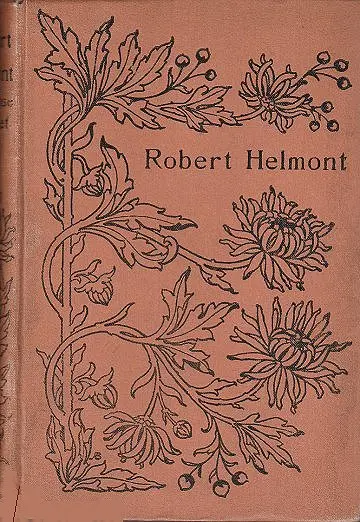
Robert Helmont: Diary of a Recluse, 1870-1871
Alphonse Daudet
THE CLASSIC COLLECTION · 1887
"Tartarin on the Alps" by Alphonse Daudet is a humorous novel written in the late 19th century. This work follows the adventures of Tartarin, a larger-than-life character who embodies the spirit of his hometown, Tarascon, known for its imaginative and boastful inhabitants. The story begins with Tartarin's misadventures in the Swiss Alps, highlighting themes of bravado and the clash between reality and fantasy as he engages with fellow tourists and prepares for an ascent. The opening of the novel introduces readers to a fog-shrouded evening at the Rigi-Kulm hotel, where tourists gather for dinner, fixated on the novelty of their surroundings. Among them is Tartarin, a rotund man cloaked in the garb of an Alpinist, who becomes the center of attention due to his unusual attire and exuberant demeanor. While he attempts to fit in and navigate the challenges of dining and engaging with other guests, he is met with a mix of confusion and disdain. The scene unfolds with comedic interactions that set the tone for Tartarin's escapades, while his aspirations to conquer the Alps ignite a humorous exploration of his character and existential musings on fame, identity, and recognition in a foreign land.
Introduction adapted from the source catalogue; source summaries may be automatically generated.
Free to read · English · 50,490 words · No account needed
MAKE TIME FOR A GOOD BOOK
On by default. Untick to stop anonymous reading totals. Each page counts after 10 seconds in view. How this works.
Anonymous counting is on unless you have switched it off.
“You know me, Gonzague...” and nothing can ever render the effusion, the caressing charm with which he uttered that troubadouresque Christian name of the courier. It was like one way of pressing his hands, of coming nearer to his heart... “You know me, que! You know if I balked when the question came up of marching upon the lion; and during the war, when we organized together the defences of the Club...”
Bompard nodded his head with terrible emphasis; he thought he was there
still.
“Well, my good fellow, what the lions, what the Krupp cannon could never do, the Alps have accomplished... I am afraid.”
“Don’t say that, Tartarin!”
“Why not?” said the hero, with great gentleness... “I say it, because it
is so...”
And tranquilly, without posing, he acknowledged the impression made upon him by Doré’s drawing of that catastrophe on the Matterhorn, which was ever before his eyes. He feared those perils, and being told of an extraordinary guide, capable of avoiding them, he resolved to seek him out and confide in him.
Then, in a tone more natural, he added: “You have never been a guide,
have you, Gonzague?”
“Hé! yes,” replied Bompard, smiling... “Only, I never did all that I
related.”
“That’s understood,” assented Tartarin.
And the other added in a whisper:--
“Let us go out on the road; we can talk more freely there.”
It was getting dark; a warm damp breeze was rolling up black clouds upon the sky, where the setting sun had left behind it a vague gray mist.
They went along the shore in the direction of Fluelen, crossing the mute shadows of hungry tourists returning to the hotel; shadows themselves, and not speaking until they reached a tunnel through which the road is cut, opening at intervals to little terraces overhanging the lake.
“Let us stop here,” pealed forth the hollow voice of Bompard, which resounded under the vaulted roof like a cannon-shot. There, seated on the parapet, they contemplated that admirable view of the lake, the downward rush of the fir-trees and beeches pressing blackly together in the foreground, and farther on, the higher mountains with waving summits, and farther still, others of a bluish-gray confusion as of clouds, in the midst of which lay, though scarcely visible, the long white trail of a glacier, winding through the hollows and suddenly illumined with irised fire, yellow, red, and green. They were exhibiting the mountain with Bengal lights!
From Fluelen the rockets rose, scattering their multicoloured stars; Venetian lanterns went and came in boats that remained invisible while bearing bands of music and pleasure-seekers.
Your reading position is saved on this browser. Take it to another device with a library code. Reading pages adapt to text, rather than matching a printed edition.
Alphonse Daudet
Alphonse Daudet
Alphonse Daudet
Alphonse Daudet
BEHIND THE BOOK
This eBook is for the use of anyone anywhere in the United States and most other parts of the world at no cost and with almost no restrictions whatsoever. You may copy it, give it away or re-use it under the terms of the Project Gutenberg License included with this eBook or online at www.gutenberg.org. If you are not located in the United States, you will have to check the laws of the country where you are located before using this eBook. Read the source licence.
The original source file, including credits and licence, is retained by this library. Request an original-format copy at no charge. Please include the book title and Project Gutenberg identifier #25768.
KEEP YOUR CURIOSITY GOING
Coulson Kernahan

Maurice Baring
Frances Wright
Cécile Tormay

Frederic Jesup Stimson

W. H. P. (William Henry Pope) Jarvis