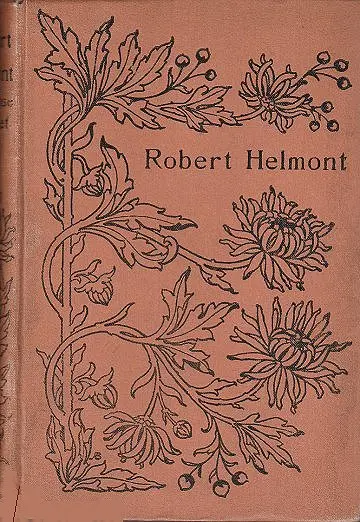
Robert Helmont: Diary of a Recluse, 1870-1871
Alphonse Daudet
THE CLASSIC COLLECTION · 1887
"Tartarin on the Alps" by Alphonse Daudet is a humorous novel written in the late 19th century. This work follows the adventures of Tartarin, a larger-than-life character who embodies the spirit of his hometown, Tarascon, known for its imaginative and boastful inhabitants. The story begins with Tartarin's misadventures in the Swiss Alps, highlighting themes of bravado and the clash between reality and fantasy as he engages with fellow tourists and prepares for an ascent. The opening of the novel introduces readers to a fog-shrouded evening at the Rigi-Kulm hotel, where tourists gather for dinner, fixated on the novelty of their surroundings. Among them is Tartarin, a rotund man cloaked in the garb of an Alpinist, who becomes the center of attention due to his unusual attire and exuberant demeanor. While he attempts to fit in and navigate the challenges of dining and engaging with other guests, he is met with a mix of confusion and disdain. The scene unfolds with comedic interactions that set the tone for Tartarin's escapades, while his aspirations to conquer the Alps ignite a humorous exploration of his character and existential musings on fame, identity, and recognition in a foreign land.
Introduction adapted from the source catalogue; source summaries may be automatically generated.
Free to read · English · 50,490 words · No account needed
MAKE TIME FOR A GOOD BOOK
On by default. Untick to stop anonymous reading totals. Each page counts after 10 seconds in view. How this works.
Anonymous counting is on unless you have switched it off.
Talk of Tarascon indeed! There’s a tarasconade for you, the like of which was never invented down there!
His good-humour quite restored, Tartarin in a few sturdy strides struck the highroad to Fluelen, at the side of which the Hôtel Tellsplatte spreads out its long façade. While awaiting the dinner-bell the guests were walking about in front of a cascade over rock-work on the gullied road, where landaus were drawn up, their poles on the ground among puddles of water in which was reflected a copper-coloured sun.
Tartarin inquired for his man. They told him he was dining. “Then take me to him, zou!” and this was said with such authority that in spite of the respectful repugnance shown to disturbing so important a personage, a maid-servant conducted the Alpinist through the whole hotel, where his advent created some amazement, to the invaluable courier who was dining alone in a little room that looked upon the court-yard.
“Monsieur,” said Tartarin as he entered, his ice-axe on his shoulder,
“excuse me if...”
He stopped stupefied, and the courier, tall, lank, his napkin at his
chin, in the savoury steam of a plateful of hot soup, let fall his
spoon.
“Vé! Monsieur Tartarin...”
“Té! Bompard.”
It was Bompard, former manager of the Club, a good fellow, but afflicted with a fabulous imagination which rendered him incapable of telling a word of truth, and had caused him to be nicknamed in Tarascon “The Impostor.”
Called an impostor in Tarascon! you can judge what he must have been. And this was the incomparable guide, the climber of the Alps, the Himalayas, the Mountains of the Moon.
“Oh! now, then, I understand,” ejaculated Tartarin, rather nonplussed; but, even so, joyful to see a face from home and to hear once more that dear, delicious accent of the Cours.
“Différemment, Monsieur Tartarin, you ‘ll dine with me, qué?”
Tartarin hastened to accept, delighted at the pleasure of sitting down at a private table opposite to a friend, without the very smallest litigious compote-dish between them, to be able to hobnob, to talk as he ate, and to eat good things, carefully cooked and fresh; for couriers are admirably treated by innkeepers, and served apart with all the best wines and the extra dainties.
Many were the au mouains, pas mouains, and différemments.
“Then, my dear fellow, it was really you I heard last night, up there,
on the platform?..”
“Hey! parfaitemain... I was making those young ladies admire... Fine, isn’t it, sunrise on the Alps?”
Your reading position is saved on this browser. Take it to another device with a library code. Reading pages adapt to text, rather than matching a printed edition.
Alphonse Daudet
Alphonse Daudet
Alphonse Daudet
Alphonse Daudet
BEHIND THE BOOK
This eBook is for the use of anyone anywhere in the United States and most other parts of the world at no cost and with almost no restrictions whatsoever. You may copy it, give it away or re-use it under the terms of the Project Gutenberg License included with this eBook or online at www.gutenberg.org. If you are not located in the United States, you will have to check the laws of the country where you are located before using this eBook. Read the source licence.
The original source file, including credits and licence, is retained by this library. Request an original-format copy at no charge. Please include the book title and Project Gutenberg identifier #25768.
KEEP YOUR CURIOSITY GOING
Coulson Kernahan

Maurice Baring
Frances Wright
Cécile Tormay

Frederic Jesup Stimson

W. H. P. (William Henry Pope) Jarvis