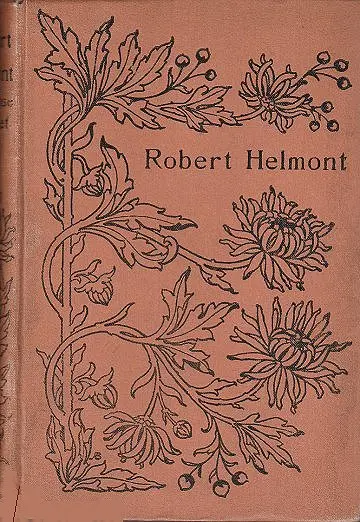
Robert Helmont: Diary of a Recluse, 1870-1871
Alphonse Daudet
THE CLASSIC COLLECTION · 1887
"Tartarin on the Alps" by Alphonse Daudet is a humorous novel written in the late 19th century. This work follows the adventures of Tartarin, a larger-than-life character who embodies the spirit of his hometown, Tarascon, known for its imaginative and boastful inhabitants. The story begins with Tartarin's misadventures in the Swiss Alps, highlighting themes of bravado and the clash between reality and fantasy as he engages with fellow tourists and prepares for an ascent. The opening of the novel introduces readers to a fog-shrouded evening at the Rigi-Kulm hotel, where tourists gather for dinner, fixated on the novelty of their surroundings. Among them is Tartarin, a rotund man cloaked in the garb of an Alpinist, who becomes the center of attention due to his unusual attire and exuberant demeanor. While he attempts to fit in and navigate the challenges of dining and engaging with other guests, he is met with a mix of confusion and disdain. The scene unfolds with comedic interactions that set the tone for Tartarin's escapades, while his aspirations to conquer the Alps ignite a humorous exploration of his character and existential musings on fame, identity, and recognition in a foreign land.
Introduction adapted from the source catalogue; source summaries may be automatically generated.
Free to read · English · 50,490 words · No account needed
MAKE TIME FOR A GOOD BOOK
On by default. Untick to stop anonymous reading totals. Each page counts after 10 seconds in view. How this works.
Anonymous counting is on unless you have switched it off.
Rice and Prunes, I tell you. There you have the explanation of the gloomy silence weighing upon this dinner at the Rigi-Kulm, which, considering the number and international variety of the guests, ought to have been lively, tumultuous, such as we imagine the repasts at the foot of the Tower of Babel to have been.
The Alpinist entered the room, a little overcome by this refectory of monks, apparently doing penance beneath the glare of chandeliers; he coughed noisily without any one taking notice of him, and seated himself in his place of last-comer at the end of the room. Divested of his accoutrements, he was now a tourist like any other, but of aspect more amiable, bald, barrel-bellied, his beard pointed and bunchy, his nose majestic, his eyebrows thick and ferocious, overhanging the glance of a downright good fellow.
Rice or Prunes? No one knew as yet.
Hardly was he installed before he became uneasy, and leaving his place with an alarming bound: “Ouf! what a draught!” he said aloud, as he sprang to an empty chair with its back laid over on the table.
He was stopped by the Swiss maid on duty--from the canton of Uri, that one--silver chains and white muslin chemisette.
“Monsieur, this place is engaged...”
Then a young lady, seated next to the chair, of whom the Alpinist could see only her blond hair rising from the whiteness of virgin snows, said, without turning round, and with a foreign accent:
“That place is free; my brother is ill, and will not be down.”
“Ill?..” said the Alpinist, seating himself, with an anxious, almost affectionate manner... “Ill? Not dangerously, au moins.”
He said au mouain, and the word recurred in all his remarks, with other vocable parasites, such as hé, que, téy zou, vé, vaï, et autrement, différemment, etc., still further emphasized by a Southern accent, displeasing, apparently, to the young lady, for she answered with a glacial glance of a black blue, the blue of an abyss.
His neighbour on the right had nothing encouraging about him either; this was the Italian tenor, a gay bird with a low forehead, oily pupils, and the moustache of a matador, which he twirled with nervous fingers at being thus separated from his pretty neighbour. But the good Alpinist had a habit of talking as he ate; it was necessary for his health.
“Vé! the pretty buttons...” he said to himself, aloud, eying the cuffs of his neighbour. “Notes of music, inlaid in jasper--why, the effect is charmain!..”
His metallic voice rang on the silence, but found no echo.
“Surely monsieur is a singer, que?”
“Non capisco,” growled the Italian into his moustache.
Your reading position is saved on this browser. Take it to another device with a library code. Reading pages adapt to text, rather than matching a printed edition.
Alphonse Daudet
Alphonse Daudet
Alphonse Daudet
Alphonse Daudet
BEHIND THE BOOK
This eBook is for the use of anyone anywhere in the United States and most other parts of the world at no cost and with almost no restrictions whatsoever. You may copy it, give it away or re-use it under the terms of the Project Gutenberg License included with this eBook or online at www.gutenberg.org. If you are not located in the United States, you will have to check the laws of the country where you are located before using this eBook. Read the source licence.
The original source file, including credits and licence, is retained by this library. Request an original-format copy at no charge. Please include the book title and Project Gutenberg identifier #25768.
KEEP YOUR CURIOSITY GOING
Coulson Kernahan

Maurice Baring
Frances Wright
Cécile Tormay

Frederic Jesup Stimson

W. H. P. (William Henry Pope) Jarvis