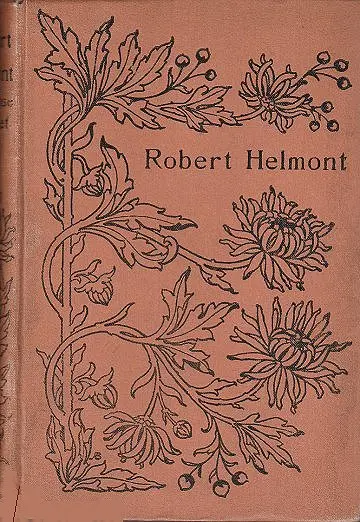
Robert Helmont: Diary of a Recluse, 1870-1871
Alphonse Daudet
THE CLASSIC COLLECTION · 1887
"Tartarin on the Alps" by Alphonse Daudet is a humorous novel written in the late 19th century. This work follows the adventures of Tartarin, a larger-than-life character who embodies the spirit of his hometown, Tarascon, known for its imaginative and boastful inhabitants. The story begins with Tartarin's misadventures in the Swiss Alps, highlighting themes of bravado and the clash between reality and fantasy as he engages with fellow tourists and prepares for an ascent. The opening of the novel introduces readers to a fog-shrouded evening at the Rigi-Kulm hotel, where tourists gather for dinner, fixated on the novelty of their surroundings. Among them is Tartarin, a rotund man cloaked in the garb of an Alpinist, who becomes the center of attention due to his unusual attire and exuberant demeanor. While he attempts to fit in and navigate the challenges of dining and engaging with other guests, he is met with a mix of confusion and disdain. The scene unfolds with comedic interactions that set the tone for Tartarin's escapades, while his aspirations to conquer the Alps ignite a humorous exploration of his character and existential musings on fame, identity, and recognition in a foreign land.
Introduction adapted from the source catalogue; source summaries may be automatically generated.
Free to read · English · 50,490 words · No account needed
MAKE TIME FOR A GOOD BOOK
On by default. Untick to stop anonymous reading totals. Each page counts after 10 seconds in view. How this works.
Anonymous counting is on unless you have switched it off.
“I’m coming,” she said, and turning to Tartarin, whose eyes, now accustomed to the darkness, could distinguish her pale and pretty face beneath her mantle, she added, this time seriously:--
“You have undertaken a dangerous enterprise, my good man... take care you do not leave your bones here.”
So saying, she instantly disappeared in the darkness with her
companions.
Later, the threatening intonation that emphasized those words was fated to trouble the imagination of the Southerner; but now, he was simply vexed at the term “good man,” cast upon his elderly embonpoint, and also at the abrupt departure of the young girl just at the moment when he was about to name himself, and enjoy her stupefaction.
He made a few steps in the direction the group had taken, hearing a confused murmur, with coughs and sneezes, of the clustering tourists waiting impatiently for the rising of the sun, the most vigorous among them having climbed to a little belvedere, the steps of which, wadded with snow, could be whitely distinguished in the vanishing darkness.
A gleam was beginning to light the Orient, saluted by a fresh blast from the Alpine horn, and that “Ah!!” of relief, always heard in theatres when the third bell raises the curtain.
Slight as a ray through a shutter, this gleam, nevertheless, enlarged the horizon, but, at the same moment a fog, opaque and yellow, rose from the valley, a steam that grew more thick, more penetrating as the day advanced. ‘T was a veil between the scene and the spectators.
All hope was now renounced of the gigantic effects predicted in the guide-books. On the other hand, the heteroclite array of the dancers of the night before, torn from their slumbers, appeared in fantastic and ridiculous outline like the shades of a magic lantern; shawls, rugs, and even bed-quilts wrapped around them. Under varied headgear, nightcaps of silk or cotton, broad-brimmed female hats, turbans, fur caps with ear-pads, were haggard faces, swollen faces, heads of shipwrecked beings cast upon a desert island in mid-ocean, watching for a sail in the offing with staring eyes.
But nothing--everlastingly nothing!
Nevertheless, certain among them strove, in a gush of good-will, to distinguish the surrounding summits, and, on the top of the belvedere could be heard the clucking of the Peruvian family, pressing around a big devil, wrapped to his feet in a checked ulster, who was pointing out imperturbably, the invisible panorama of the Bernese Alps, naming in a loud voice the peaks that were lost in the fog.
Your reading position is saved on this browser. Take it to another device with a library code. Reading pages adapt to text, rather than matching a printed edition.
Alphonse Daudet
Alphonse Daudet
Alphonse Daudet
Alphonse Daudet
BEHIND THE BOOK
This eBook is for the use of anyone anywhere in the United States and most other parts of the world at no cost and with almost no restrictions whatsoever. You may copy it, give it away or re-use it under the terms of the Project Gutenberg License included with this eBook or online at www.gutenberg.org. If you are not located in the United States, you will have to check the laws of the country where you are located before using this eBook. Read the source licence.
The original source file, including credits and licence, is retained by this library. Request an original-format copy at no charge. Please include the book title and Project Gutenberg identifier #25768.
KEEP YOUR CURIOSITY GOING
Coulson Kernahan

Maurice Baring
Frances Wright
Cécile Tormay

Frederic Jesup Stimson

W. H. P. (William Henry Pope) Jarvis