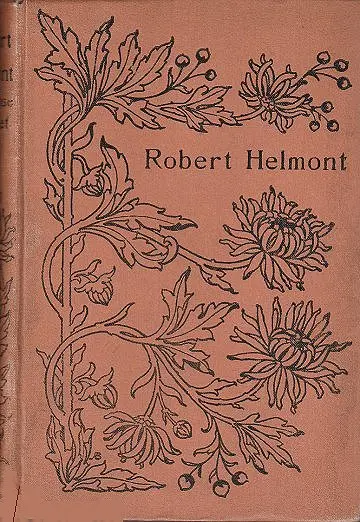
Robert Helmont: Diary of a Recluse, 1870-1871
Alphonse Daudet
THE CLASSIC COLLECTION · 1887
"Tartarin on the Alps" by Alphonse Daudet is a humorous novel written in the late 19th century. This work follows the adventures of Tartarin, a larger-than-life character who embodies the spirit of his hometown, Tarascon, known for its imaginative and boastful inhabitants. The story begins with Tartarin's misadventures in the Swiss Alps, highlighting themes of bravado and the clash between reality and fantasy as he engages with fellow tourists and prepares for an ascent. The opening of the novel introduces readers to a fog-shrouded evening at the Rigi-Kulm hotel, where tourists gather for dinner, fixated on the novelty of their surroundings. Among them is Tartarin, a rotund man cloaked in the garb of an Alpinist, who becomes the center of attention due to his unusual attire and exuberant demeanor. While he attempts to fit in and navigate the challenges of dining and engaging with other guests, he is met with a mix of confusion and disdain. The scene unfolds with comedic interactions that set the tone for Tartarin's escapades, while his aspirations to conquer the Alps ignite a humorous exploration of his character and existential musings on fame, identity, and recognition in a foreign land.
Introduction adapted from the source catalogue; source summaries may be automatically generated.
Free to read · English · 50,490 words · No account needed
MAKE TIME FOR A GOOD BOOK
On by default. Untick to stop anonymous reading totals. Each page counts after 10 seconds in view. How this works.
Anonymous counting is on unless you have switched it off.
“Don’t ever speak to me of that wretch,” interrupted the P. C. A.; then, seized with a sudden attack of wrath, he shouted: “Coquin de bon sorti it is, all the same, rather vexing...” He stopped, at a terrified gesture from Bompard, “Ah! yes, true... the sérac;” and, forced to lower his tone and mutter his rage, poor Tartarin continued his imprecations in a whisper, with a comical and amazing dislocation of the mouth,--“yes, vexing to die in the flower of one’s age through the fault of a scoundrel who at this very moment is taking his coffee on the Promenade!..”
But while he thus fulminated, a clear spot began to show itself, little by little, in the sky. It snowed no more, it blew no more; and blue dashes tore away the gray of the sky. Quick, quick, en route; and once more fastened to the same rope, Tartarin, who took the lead as before, turned round, put a finger on his lips, and said:--
“You know, Gonzague, that all we have just been saying is between
ourselves.”
“Té! pardi...”
Full of ardour, they started, plunging to their knees in the fresh snow, which had buried in its immaculate cotton-wool all the traces of the caravan; consequently Tartarin was forced to consult his compass every five minutes. But that Taras-conese compass, accustomed to warm climates, had been numb with cold ever since its arrival in Switzerland. The needle whirled to all four quarters, agitated, hesitating; therefore they determined to march straight before them, expecting to see the black rocks of the Grands-Mulets rise suddenly from the uniform silent whiteness of the slope, the peaks, the turrets, and aiguilles that surrounded, dazzled, and also terrified them, for who knew what dangerous crevasses it concealed beneath their feet?
“Keep cool, Gonzague, keep cool!”
“That ‘s just what I can’t do,” responded Bom-pard, in a lamentable voice. And he moaned: “Aïe, my foot!.. aïe, my leg!.. we are lost; never shall we get there...”
They had walked for over two hours when, about the middle of a field of snow very difficult to climb, Bompard called out, quite terrified:--
“Tartarin, we are going up!”
“Eh! parbleu! I know that well enough,” returned the P. C. A., almost
losing his serenity.
“But according to my ideas, we ought to be going down.”
“Be! yes! but how can I help it? Let’s go on to the top, at any rate; it may go down on the other side.”
Your reading position is saved on this browser. Take it to another device with a library code. Reading pages adapt to text, rather than matching a printed edition.
Alphonse Daudet
Alphonse Daudet
Alphonse Daudet
Alphonse Daudet
BEHIND THE BOOK
This eBook is for the use of anyone anywhere in the United States and most other parts of the world at no cost and with almost no restrictions whatsoever. You may copy it, give it away or re-use it under the terms of the Project Gutenberg License included with this eBook or online at www.gutenberg.org. If you are not located in the United States, you will have to check the laws of the country where you are located before using this eBook. Read the source licence.
The original source file, including credits and licence, is retained by this library. Request an original-format copy at no charge. Please include the book title and Project Gutenberg identifier #25768.
KEEP YOUR CURIOSITY GOING
Coulson Kernahan

Maurice Baring
Frances Wright
Cécile Tormay

Frederic Jesup Stimson

W. H. P. (William Henry Pope) Jarvis