THE CLASSIC COLLECTION✦The stratagem, and other storiesCLASSIC FREE BOOKS
The stratagem, and other stories
Aleister Crowley
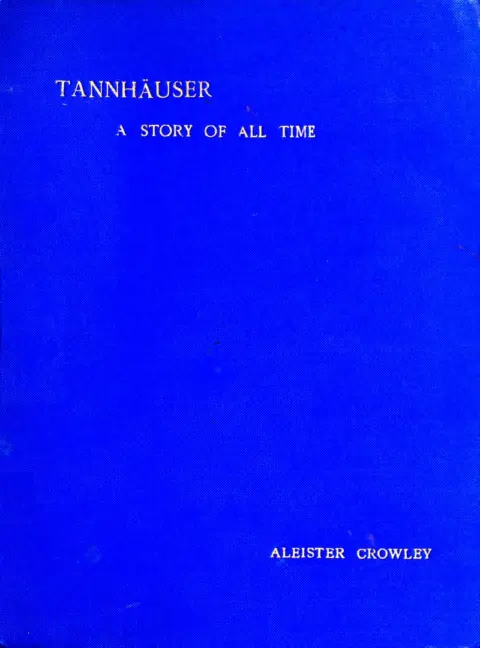
THE CLASSIC COLLECTION · 1907
"Tannhäuser: A Story of All Time" by Aleister Crowley is a poetic drama written in the early 20th century. This work explores profound themes of love, spirituality, and the complex nature of existence, centering around the character Tannhäuser—a seeker of truth and harmony who traverses various realms of love and consciousness. The work reflects Crowley's fascination with mysticism and the interplay of earthly desire and divine inspiration. The opening of "Tannhäuser" introduces readers to the titular character as he embarks on a quest through a desolate landscape, contemplating the nature of existence and his pursuit of higher meaning. He expresses a longing for enlightenment and grapples with existential questions about love, destiny, and the divine. Through Tannhäuser's reflections, the narrative sets the stage for the exploration of complex themes, such as the clash between earthly passions and spiritual aspirations, foreshadowing the conflicts and transformations he will experience throughout the story.
Introduction adapted from the source catalogue; source summaries may be automatically generated.
Free to read · English · 19,606 words · No account needed
MAKE TIME FOR A GOOD BOOK
On by default. Untick to stop anonymous reading totals. Each page counts after 10 seconds in view. How this works.
Anonymous counting is on unless you have switched it off.
“But a moment’s thought is passion’s passing bell.” —KEATS, Lamia.
In Venusberg.
VENUS.
Sweet, sweet are May and June, dear,
The loves of lambent spring,
Our lamp the drooping moon, dear,
Our roof, the stars that sing;
The bed, of moss and roses;
The night, as long as death!
Still, breath!
Life wakens and reposes,
Love ever quickeneth!
Sweet, sweet, when Lion and Maiden,
The motley months of gold,
Swoop down with sunlight laden,
And eyes are bright and bold.
Life-swelling breasts uncover
Their warm involving deep—
Love, sleep!—
And lover lies with lover
On air’s substantial steep.
TANNHÄUSER.
Ah! sweeter was September—
The amber rain of leaves,
The harvest to remember,
The load of sunny sheaves.
In gardens deeply scented,
In orchards heavily hung,
Love flung
Away the days demented
With lips that curled and clung.
Ah! Sweeter still October,
When russet leaves go grey,
And sombre loves and sober
Make twilight of the day.
Dark dreams and shadows tenser
Throb through the vital scroll,
Man’s soul,
Lift, shake the subtle censer
That hides the cruel coal!
Still sweeter when the Bowman
His silky shaft of frost
Lets loose on earth, that no man
May linger nor be lost.
The barren woods, deserted,
Lose echo of our sighs—
Love—dies?—
Love lives—in granite skirted,
And under oaken skies.
But best is grim December,
The Goatish God his power;
The Satyr blows the ember,
And pain is passion’s flower;
When blood drips over kisses,
And madness sobs through wine:—
Ah, mine!—
The snake starts up and hisses
And strikes and—I am thine!
VENUS.
Those are thy true joys? Cruelty for love?
TANNHÄUSER.
And death in kissing. How I have despised,
Riding through meadows of the rushing Rhine,
To watch the gentle foresters of spring
Crush dainty violets in their dalliance,
Laughing in chorus with the birds; and then
(Coming at harvest time upon my tracks)
See these same lovers in the golden sheaves
Under the sun. The same, the fuller fruit,
Say you? But somehow, nearer to the end,
Lost the old sense of mystery, and lost
That curious reverence in sacrilege
With Wonder—the child’s faculty! Less joy,
Less laughter, yes! that symptom I approve;
Yet is that subtle fading-out of smiles
Rather the coming of a dull despair,
And not at all that keen despair, that sharp
Maddening pain that should torment a man
With deadliest delight, the self-same hour
That he unveils the Isis of desire.
These little lovers strip their maidens bare,
And find them—naked! Poor and pitiful!
Look at our love instead! I raised Thy veil,
Nay, tore Thy vesture from Thee, and behold!
Then only did I see what mystery,
What ninefold forest, shade impassible,
Surrounds Thy heart, as with a core of light
Shut in the mystery of a dead world.
Thou formless sense of gloom and terror! Thou
Upas, new tree of life—by sinister
Cherubim with averted faces kept!
Nay! This one secret I suspect, and gloat
Over the solemn purport of the dream
With subtle shuddering of joy,—and that
Keener delight, a sense of deadly fear!
This secret: Thou art darkness in Thyself,
And evil wrapped in light, and ugliness
Vested in beauty! Therefore is my love
No petty passion like these country-folk’s:
No fertile glory (as the Love of God):
But vast and barren as the winter sea,
Holding I know not what enormous soul
In its salt bitter bosom, underneath
The iron waters and the serpent foam;
Below, where sight and sound are set no more,
But only the intolerable weight
Of its own gloomy selfhood. This am I:
This passion, lion-mouthed and adder-eyed.
A mass compressed, a glowing central core,
Like molten metal in the crucible!
Death’s secret is some sweetness ultimate,
Sweeter than poison. Ah! My very words,
Chance phrases, ravel out the tale for me—
Sweetness and death—poison and love. Consider
How this same striving to the Infinite,
Which I intend by “love,” is likest to
That journey’s wonder to the womb of death:
Because no soul of man has ever crossed
Again that River—the old fable’s wrong;
Æneas came never to the ghostly side!
Was not the boat weighed with his body still?
Felt he the keen emotions of the dead?
Could he, the mortal and the warrior,
Converse with Them, and understand? Believe!
No soul has crossed in utter sympathy
And yet returned; because of this decree:
No man can look upon the face of God!
Yet Moses looked upon His hinder parts,
And I—yes, goddess! in this passionate
Life in our secret mountain, well I know
Thy beauty, and Thy love, (although they be
Infinite, far beyond the mortal mind,
Body, or soul to touch, to comprehend,
And dwell in) that the utter intimate
Knowledge of Thee, if once I ravelled out
Thy secret, laid Thee naked to the bone—
Nay, to the marrow! were to come, aware,
Face to face full with deity itself.
And this I strive at! Therefore is my love
Wholly in tune with that concealed desire
Bred in each mortal, though he never know,
(Few do know) to transcend the bound of things,
And find in Death the purpose of this life.
Your reading position is saved on this browser. Take it to another device with a library code. Reading pages adapt to text, rather than matching a printed edition.
BEHIND THE BOOK
This eBook is for the use of anyone anywhere in the United States and most other parts of the world at no cost and with almost no restrictions whatsoever. You may copy it, give it away or re-use it under the terms of the Project Gutenberg License included with this eBook or online at www.gutenberg.org. If you are not located in the United States, you will have to check the laws of the country where you are located before using this eBook. Read the source licence.
The original source file, including credits and licence, is retained by this library. Request an original-format copy at no charge. Please include the book title and Project Gutenberg identifier #70261.
KEEP YOUR CURIOSITY GOING
Maurice Baring
Eric Mackay
Edmund Gosse
Sophia Margaretta Hensley
Gilbert Parker
George MacDonald