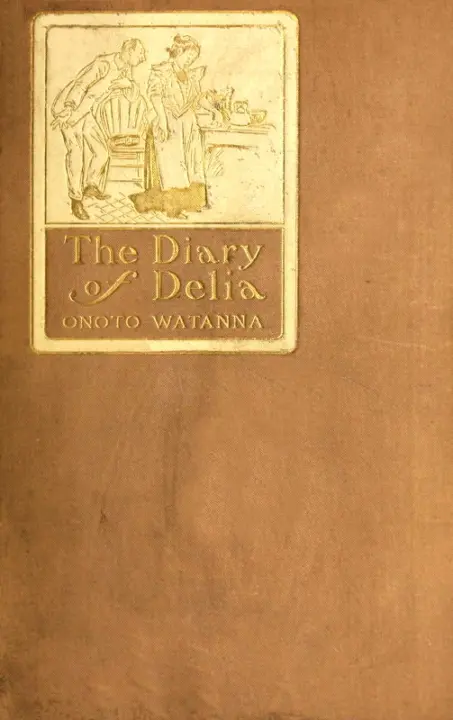
The diary of Delia : Being a veracious chronicle of the kitchen, with some side-lights on the parlour
Onoto Watanna
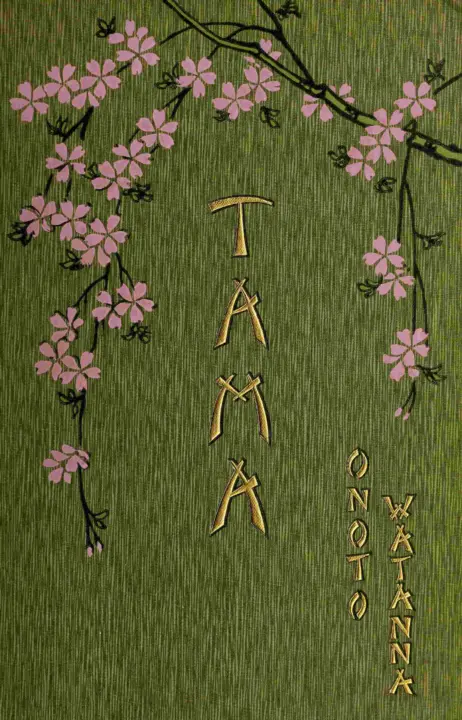
THE CLASSIC COLLECTION · 1910
"Tama" by Onoto Watanna is a novel written in the early 20th century. The story unfolds in Fukui, Japan, and centers around the themes of cultural clash, mystery, and the supernatural, particularly through the character of the enigmatic Fox-Woman. The book delves into Japanese mythology and folklore, exploring the complex relationships between Western and Japanese characters as they navigate a world filled with both charm and danger. At the start of the novel, Fukui anticipates the arrival of a foreign professor, referred to as the "Tojin-san," stirring excitement and apprehension among its citizens. While preparations unfold for his welcome—complete with tales of his dietary needs and the mysterious Fox-Woman stalking the region—whispers of superstition and fear permeate the community. As the Tojin-san struggles against the cultural superstitions surrounding him, he becomes increasingly intrigued by the legend of the Fox-Woman. The opening vividly describes the bustling atmosphere of a transitioning Japan and sets the stage for a tale that intertwines folklore, personal struggle, and the search for understanding across cultural divides.
Introduction adapted from the source catalogue; source summaries may be automatically generated.
Free to read · English · 30,243 words · No account needed
MAKE TIME FOR A GOOD BOOK
On by default. Untick to stop anonymous reading totals. Each page counts after 10 seconds in view. How this works.
Anonymous counting is on unless you have switched it off.
“I hear—those sound!” she said, her head uplifted.
Only a lazy breeze was stirring, and moving the wind-bells to and fro. Suddenly he saw the silhouetted shadow on the shoji wall. It moved silently, cautiously. Then the screens were slid soundlessly open, and the student Junzo appeared. For a moment he remained staring down upon them, his young face becoming gray and stern.
“Sensei! Then it is true!” he burst out, and the look of despair on his
face deepened.
The Tojin-san arose to his full gigantic height. His hand fell like a heavy weight upon the shoulder of the youth. His voice was rough, commanding.
“Look at this child, Takemoto Junzo. What is there you see in her to
fear—to hate?”
“Ah, you, beloved sensei,” cried the boy passionately, “are bewitched, enchanted. Do I not see with my honorable eyes the change that has befallen you? It is spoken of all over Fukui that you are in the toils of this siren. I could not longer bear it, and, against my honorable parent’s stern command, I came here to see for myself. Alas, it is too true! You are bewitched, obsessed!”
The Tojin-san curbed his temper. His voice, though stern, was calm, as though he sought to humor the boy.
“What is the change you observe in me then?”
“Your eyes are weak and soft like the dove’s. There is a melting, tender look unfit for man upon your face. Your voice is gentle, like unto a woman’s. It is as if—as if—the enamored weakness of a love possessed you!”
“A love!” repeated the Tojin-san, as though the very word were new to him. Suddenly a look of anguish came into his face, giving it a poignant, withering expression.
The fox-woman had crept softly across the room. Now she leaned upon the farthest shoji, her head lifted in a dreaming trance.
“Leave this accursed place with me to-day,” urged the boy entreatingly. “My honorable father will gladly receive you as our honored guest. Throw off the burden of this foul witch of the mountains. She can only soil your excellency, and Fukui is prepared to mete out to her at last her proper fate.”
“I am a white man,” said the Tojin-san slowly, in a deadly voice, and never had his student seen such an expression upon his face before. “As such I protect, not abandon, the women of my race. It will not be well for Fukui if harm comes to either me, your guest and teacher, or to her, whom I choose to befriend.”
“Sayonara, then, excellent sensei,” said the boy brokenly, “I have done
my best.”
Your reading position is saved on this browser. Take it to another device with a library code. Reading pages adapt to text, rather than matching a printed edition.
Onoto Watanna
Onoto Watanna
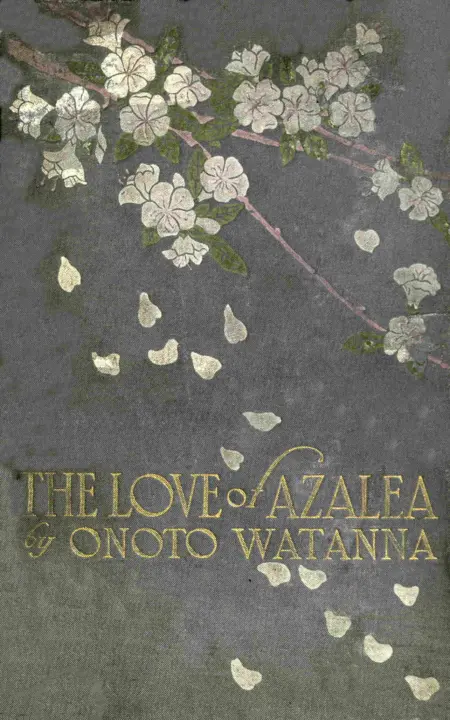
Onoto Watanna
Onoto Watanna
BEHIND THE BOOK
This eBook is for the use of anyone anywhere in the United States and most other parts of the world at no cost and with almost no restrictions whatsoever. You may copy it, give it away or re-use it under the terms of the Project Gutenberg License included with this eBook or online at www.gutenberg.org. If you are not located in the United States, you will have to check the laws of the country where you are located before using this eBook. Read the source licence.
The original source file, including credits and licence, is retained by this library. Request an original-format copy at no charge. Please include the book title and Project Gutenberg identifier #63681.
KEEP YOUR CURIOSITY GOING
Coulson Kernahan

Maurice Baring
Frances Wright
Cécile Tormay
Francis Greenleaf Allinson & Anne C. E. (Anne Crosby Emery) Allinson

Frederic Jesup Stimson