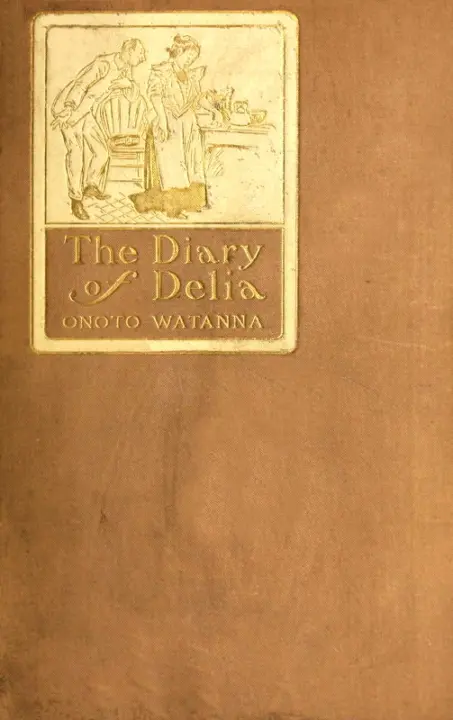
The diary of Delia : Being a veracious chronicle of the kitchen, with some side-lights on the parlour
Onoto Watanna
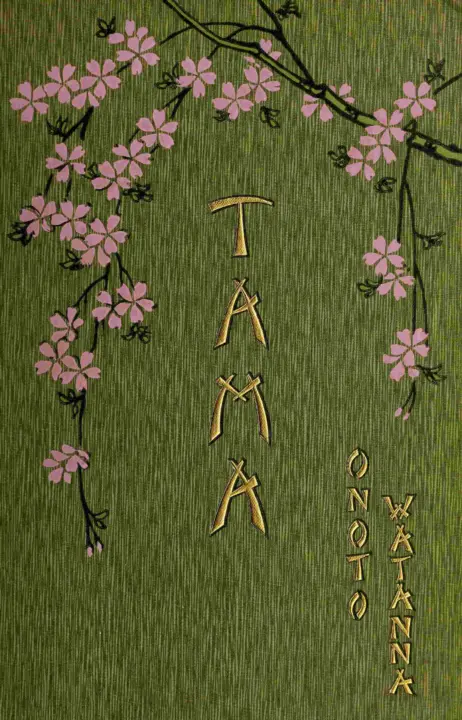
THE CLASSIC COLLECTION · 1910
"Tama" by Onoto Watanna is a novel written in the early 20th century. The story unfolds in Fukui, Japan, and centers around the themes of cultural clash, mystery, and the supernatural, particularly through the character of the enigmatic Fox-Woman. The book delves into Japanese mythology and folklore, exploring the complex relationships between Western and Japanese characters as they navigate a world filled with both charm and danger. At the start of the novel, Fukui anticipates the arrival of a foreign professor, referred to as the "Tojin-san," stirring excitement and apprehension among its citizens. While preparations unfold for his welcome—complete with tales of his dietary needs and the mysterious Fox-Woman stalking the region—whispers of superstition and fear permeate the community. As the Tojin-san struggles against the cultural superstitions surrounding him, he becomes increasingly intrigued by the legend of the Fox-Woman. The opening vividly describes the bustling atmosphere of a transitioning Japan and sets the stage for a tale that intertwines folklore, personal struggle, and the search for understanding across cultural divides.
Introduction adapted from the source catalogue; source summaries may be automatically generated.
Free to read · English · 30,243 words · No account needed
MAKE TIME FOR A GOOD BOOK
On by default. Untick to stop anonymous reading totals. Each page counts after 10 seconds in view. How this works.
Anonymous counting is on unless you have switched it off.
“Higo, just what is this notice? Translate it for me, will you not?” for the three youths accompanying him spoke the English language with fluency.
Higo replied with a slight flush of embarrassment:
“It simply refers to the Criminal God, your excellency.”
“The Criminal God? You are very vague.”
“Condescend to pardon the allusion, honored sensei,” said the boy, apologetically. “To-day, we are ready to repel all such unworthy references to your exalted nation’s faith.”
“Indeed,” put in earnest-eyed Junzo, “we are not prepared to name any religion or god criminal. Our august Emperor has set us a divine example, since he has honorably thrown open the doors to any and all sects, however odious.”
“And for my part,” contributed Nunuki in his brusque and somewhat surly manner, “I agree with our ancient philosopher: ‘Dogma is a box in which small minds are kept.’”
“Dogma is a form of superstition,” said Junzo, “and superstition awakens the meaner, crueler passions. Do you not agree with me, honored sensei?”
But the latter, his brows drawn in puzzled wonderment, was examining something which had been cut into the wood of the board on which the notice appeared.
“What—” he began, when in a singsong voice, after a slight shrug of his shoulders, Higo began translating the text:
“It reads thus, honored teacher: ‘The evil sect called Christians is strictly prohibited. Suspicious persons should be reported to proper officers and rewards given,’ but be not afraid,” he added hastily, “for it is an old law, and even if still in force to-day your excellency is exempt.”
“I am trying to decipher what is written under it—in English!” said the Tojin-san slowly. He took out and applied a magnifying glass to the board.
A swift, oblique look passed from one student to the other; but when the American turned toward them for enlightenment, their faces were as impassive as their feudal ancestors.
“It appears to me,” said he, thoughtfully, “as though some one had cut words into the woodwork, and that—there are marks as if an attempt had been made to blot out the words. Now let us see: ‘On—this—Thomas Mor—18—’ Why, it is recent—within the last ten years!”
He turned about in a state of intense excitement. Something in the averted faces of his companions increased his curiosity and suspicions. Ere he could frame another question, Nunuki spoke up abruptly:
“It is well you should know the truth, Mr. Teacher. A Guai-koku-jin [outside countryman] lived in Fukui before your time.”
“Recently?” demanded the Tojin-san eagerly.
“Seven years since,” said the boy shortly.
The Tojin-san drew a great breath. His eyes kindled. He looked
wonderfully pleased.
Your reading position is saved on this browser. Take it to another device with a library code. Reading pages adapt to text, rather than matching a printed edition.
Onoto Watanna

Onoto Watanna
Onoto Watanna
Onoto Watanna
BEHIND THE BOOK
This eBook is for the use of anyone anywhere in the United States and most other parts of the world at no cost and with almost no restrictions whatsoever. You may copy it, give it away or re-use it under the terms of the Project Gutenberg License included with this eBook or online at www.gutenberg.org. If you are not located in the United States, you will have to check the laws of the country where you are located before using this eBook. Read the source licence.
The original source file, including credits and licence, is retained by this library. Request an original-format copy at no charge. Please include the book title and Project Gutenberg identifier #63681.
KEEP YOUR CURIOSITY GOING
Coulson Kernahan

Maurice Baring
Frances Wright
Cécile Tormay
Francis Greenleaf Allinson & Anne C. E. (Anne Crosby Emery) Allinson

Frederic Jesup Stimson