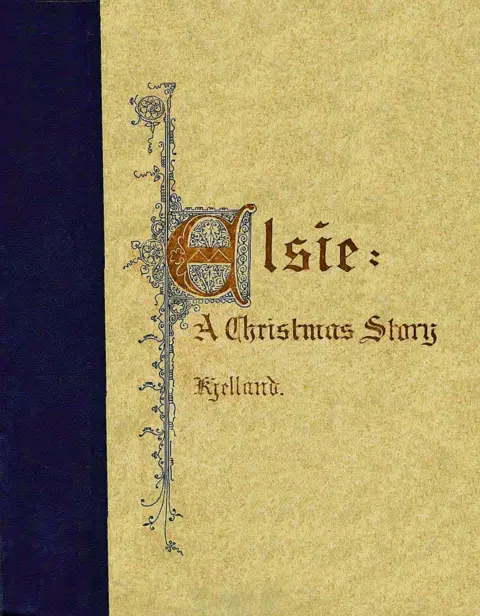
Elsie
Alexander Lange Kielland
THE CLASSIC COLLECTION · 1891
"Tales of Two Countries" by Alexander Lange Kielland is a collection of short stories written during the late 19th century. The narratives explore a diverse range of characters and situations, likely reflecting on social issues, human experiences, and moral dilemmas through the lens of life in Norway and France. With an introduction hinting at a deeper social commentary, the tales aim to bridge cultures while examining themes of love, aspiration, and the contrasting realities of different social classes. The opening of the book establishes a foundation for its thematic explorations, beginning with a close look at Alexander Kielland himself, highlighting his intellectual promise, transformation into a respected author, and his ability to blend elegant writing with social critique. The stories are introduced with references to various characters whose lives are marked by social challenges and personal conflicts. The first tale, "Pharaoh," focuses on a young woman's struggles with her past and her unsettling feelings about her wealthy life juxtaposed against the poverty and despair she has escaped. As she attends a ball, memories surge, exposing the inner tumult of someone torn between societal status and her connections to a painful history. This story sets a tone of introspection and reveals Kielland's deft handling of social commentary, indicating that the subsequent stories will similarly tackle the intricate web of human emotions and class distinctions.
Introduction adapted from the source catalogue; source summaries may be automatically generated.
Free to read · English · 44,363 words · No account needed
MAKE TIME FOR A GOOD BOOK
On by default. Untick to stop anonymous reading totals. Each page counts after 10 seconds in view. How this works.
Anonymous counting is on unless you have switched it off.
“Yes, an hour ago I; too, could not have believed it possible,” answered Mrs. Warden, “But when you’ve been on the spot yourself, and seen with your own eyes--”
“Good heavens, Emily, how could you venture into such a place!”
“I am glad I did, and still more glad of the happy chance that brought the inspector on the scene just at the right time. For if it is ennobling to bring succor to the virtuous poor who live clean and frugal lives in their humble sphere, it would be unpardonable to help such people as these to gratify their vile proclivities.”
“Yes, you’re quite right, Emily! What I can’t understand is how people in a Christian community--people who have been baptized and confirmed--can sink into such a state! Have they not every day--or, at any rate, every Sunday--the opportunity of listening to powerful and impressive sermons? And Bibles, I am told, are to be had for an incredibly trifling sum.”
“Yes, and only to think,” added Mrs. Warden, “that not even the heathen, who are without all these blessings--that not even they have any excuse for evil-doing; for they have conscience to guide them.”
“And I’m sure conscience speaks clearly enough to every one who has the will to listen,” Mrs. Abel exclaimed, with emphasis.
“Yes, heaven knows it does,” answered Mrs. Warden, gazing straight before her with a serious smile.
When the friends parted, they exchanged warm embraces.
Mrs. Warden grasped the ivory handle, entered the carriage, and drew her train after her. Then she closed the carriage door--not with a slam, but slowly and carefully.
“To Madame Labiche’s!” she called to the coachman; then, turning to her friend who had accompanied her right down to the garden gate, she said, with a quiet smile: “Now, thank heaven, I can order my silk dress with a good conscience.”
“Yes, indeed you can!” exclaimed Mrs. Abel, watching her with tears in her eyes. Then she hastened in-doors.
“Just you get married as soon as you can,” said Mrs. Olsen.
“Yes, I can’t understand why it shouldn’t be this very autumn,” exclaimed the elder Miss Ludvigsen, who was an enthusiast for ideal love.
“Oh, yes!” cried Miss Louisa, who was certain to be one of the
bridesmaids.
“But Sören says he can’t afford it,” answered the bride elect, somewhat
timidly.
Your reading position is saved on this browser. Take it to another device with a library code. Reading pages adapt to text, rather than matching a printed edition.
Alexander Lange Kielland
Alexander Lange Kielland
Alexander Lange Kielland
BEHIND THE BOOK
This eBook is for the use of anyone anywhere in the United States and most other parts of the world at no cost and with almost no restrictions whatsoever. You may copy it, give it away or re-use it under the terms of the Project Gutenberg License included with this eBook or online at www.gutenberg.org. If you are not located in the United States, you will have to check the laws of the country where you are located before using this eBook. Read the source licence.
The original source file, including credits and licence, is retained by this library. Request an original-format copy at no charge. Please include the book title and Project Gutenberg identifier #8663.
KEEP YOUR CURIOSITY GOING
Coulson Kernahan

Maurice Baring
Frances Wright
Cécile Tormay

Frederic Jesup Stimson

W. H. P. (William Henry Pope) Jarvis