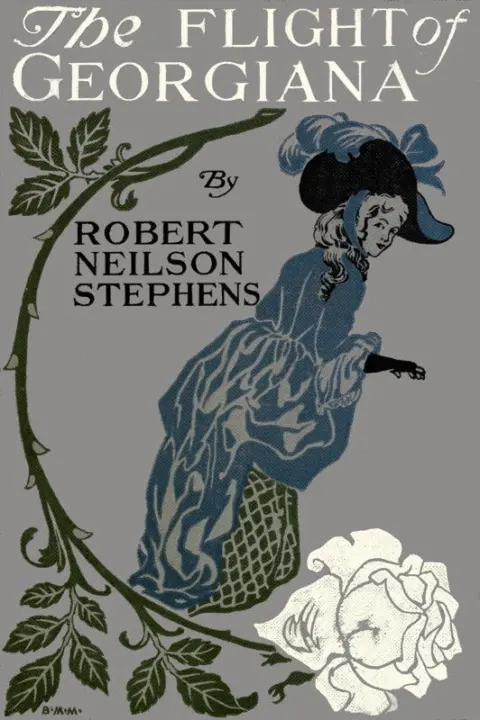
The Flight of Georgiana: A Story of Love and Peril in England in 1746
Robert Neilson Stephens
THE CLASSIC COLLECTION · 1908
"Tales from Bohemia" by Robert Neilson Stephens is a collection of short stories written in the late 19th century. The narratives explore the lives, struggles, and friendships of individuals within a close-knit community of aspiring writers and artists, primarily centered around Stephens himself and those he encountered in the literary world. This tapestry of stories captures the spirit of bohemian life, delving into themes of love, ambition, and the hardships of the creative process. The opening portion introduces readers to a pivotal friendship formed between the narrator and Robert Neilson Stephens, a young private secretary with literary aspirations. Their camaraderie develops against the backdrop of a newspaper office where they share their ambitions and thoughts on the literary scene of their time. As they engage in discussions about writers and artistic influences, the narrative hints at the tales to come, drawing on their experiences and the colorful personalities that populate their world. This engaging introduction sets the stage for a journey filled with humor, nostalgia, and the essence of artistic endeavor.
Introduction adapted from the source catalogue; source summaries may be automatically generated.
Free to read · English · 54,865 words · No account needed
MAKE TIME FOR A GOOD BOOK
On by default. Untick to stop anonymous reading totals. Each page counts after 10 seconds in view. How this works.
Anonymous counting is on unless you have switched it off.
One day, as Tommy was aiding himself along the main street of Rearward by means of a hickory stick, a frightful thought came to him. He turned cold.
What if his own heirs should neglect to mark his own grave?
“I'll hurry home at once, and put the money for it in a stocking foot,” thought Tommy, and his knees bent more than usually as he accelerated his pace.
But as he tied a knot in the stocking, came the fear that even this money might be misapplied; even his will might be ignored, through repeated postponement and the law's indifference.
Who, save old Billy Skidmore, would care whether old Tommy McGuffy's last resting-place were designated or not? Once let the worms begin operations upon this antique morsel, what would it matter to Rearward folks where the banquet was taking place?
Tommy now underwent a second attack of horror, from which he came victorious, a gleeful smile momentarily lifting the dimness from his excessively lachrymal eyes.
“I'll fix 'em,” he said to himself. “I'll go to-day to Ricketts, the marble-cutter, and order my own tombstone.”
Three months thereafter, Ricketts, the marble-cutter, untied the knot in the stocking that had been Billy's and deposited the contents in the local savings-bank.
In the cemetery stood a monument very lofty and elaborate. Around it was an iron fence. Within the enclosure there was no grave as yet.
“Here,” said the monument, in deep-cut-letters, but bad English, “lies all that remains of Thomas McGuffy, born in Rearward, November 11, 1820; died----. Gone whither the wicked cease from troubling and the weary are at rest.”
This supplementary information was framed in the words of Tommy's favourite passage in his favourite hymn. His liking for this was mainly on account of its tune.
He had left the date of his death to be inserted by the marble cutter
after its occurrence.
Rearward folks were amused at sight of the monument, and they ascribed the placing of it there to the eccentricity of a taciturn old man.
Tommy seemed to derive much pleasure from visiting his tombstone on mild days. He spent many hours contemplating it. He would enter the iron enclosure, lock the gate after him, and sit upon the ground that was intended some day to cover his body.
He was a familiar sight to people riding or walking past the graveyard,--this thin old man leaning upon his cane, contentedly pondering over the inscription on his own tombstone.
He undoubtedly found much innocent pleasure in it.
One afternoon, as he was so engaged, he was assailed by a new
apprehension.
Your reading position is saved on this browser. Take it to another device with a library code. Reading pages adapt to text, rather than matching a printed edition.
Robert Neilson Stephens
Robert Neilson Stephens
Robert Neilson Stephens
Robert Neilson Stephens
BEHIND THE BOOK
This eBook is for the use of anyone anywhere in the United States and most other parts of the world at no cost and with almost no restrictions whatsoever. You may copy it, give it away or re-use it under the terms of the Project Gutenberg License included with this eBook or online at www.gutenberg.org. If you are not located in the United States, you will have to check the laws of the country where you are located before using this eBook. Read the source licence.
The original source file, including credits and licence, is retained by this library. Request an original-format copy at no charge. Please include the book title and Project Gutenberg identifier #8869.
KEEP YOUR CURIOSITY GOING
Coulson Kernahan

Maurice Baring
Frances Wright
Cécile Tormay

Frederic Jesup Stimson

W. H. P. (William Henry Pope) Jarvis