THE CLASSIC COLLECTION✦An outlaw’s diary: the CommuneCLASSIC FREE BOOKS
An outlaw’s diary: the Commune
Cécile Tormay
THE CLASSIC COLLECTION · 1918
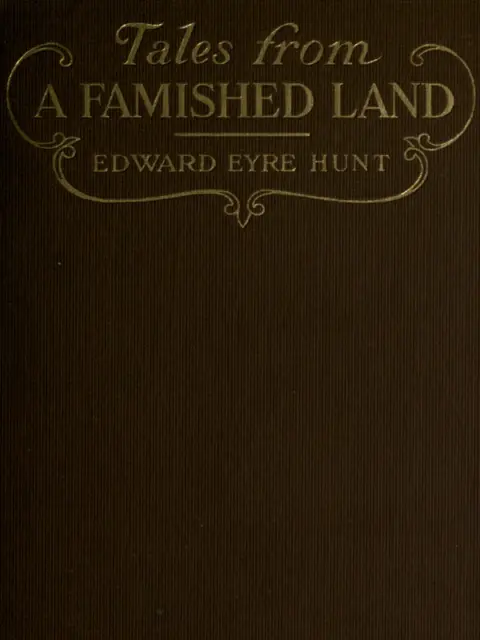
"Tales from a Famished Land" by Edward E. Hunt is a collection of narratives written during the early 20th century. The book explores the human condition amidst the backdrop of World War I, centering on intimate glimpses into the lives of people affected by the war in Belgium. The stories are characterized by their blend of reality and fiction, capturing a range of emotions and experiences faced by both the inhabitants and those providing relief during these trying times. The opening of the book introduces readers to the juxtaposition of normalcy and despair amid the war, beginning with a scene set in a peaceful countryside punctuated by the distant sounds of cannon fire. A traveler on the road encounters a local farmer and his family, who reflect the toll the conflict has taken on their lives. Through the lens of the protagonist, readers are introduced to the brave yet challenging tasks carried out by relief workers, underscoring the resilience of the human spirit in a "famished land." The initial chapters weave together elements of hope, madness, and the supernatural, setting the tone for a poignant exploration of love, loss, and determination in the face of adversity.
Introduction adapted from the source catalogue; source summaries may be automatically generated.
Free to read · English · 30,994 words · No account needed
MAKE TIME FOR A GOOD BOOK
On by default. Untick to stop anonymous reading totals. Each page counts after 10 seconds in view. How this works.
Anonymous counting is on unless you have switched it off.
She came slowly from the cottage, a wisp of lace in her white hair, wearing the ceremonial black frock which a peasant woman puts on for such feast days as the Feast of the Assumption, a white apron, and leather shoes. “You are welcome, gentlemen, you are welcome,” she said, with the grace of a chatelaine.
“But aren’t those graves?” I asked, pointing to the beds of nasturtiums, geraniums, and marigolds which covered three long mounds at the end of the garden, taking up almost half of the room available for vegetables and fruits. “Madame, aren’t those graves?”
“Oh, yes, mynheer,” she said.
“They have not been here long, madame?” I was looking at the transplanted geraniums, well rooted in the mud, but not yet wholly at home, and the raw, muddy rim about the edges of the three mounds.
“Since April, mynheer. I tend them myself,” she added proudly.
I turned to the Commissaire. “None of those is her grandson’s grave?” I asked in a low voice.
“Oh, no,” he muttered. “Her grandson died in Germany. He was taken prisoner at Liége in August, 1914. Madame,” he said to her, “the gentleman asks if he may look at your graves.”
“Oh, yes, mynheeren.” She fluttered down before us, bent rheumatically at the first mound, and pulled at a weed which the rain had freshened.
“‘Pray for the soul of Franz Mueller,’” I read in breathless
amazement. “A Boche?”
“A Boche, of course!” said the Commissaire.
“And the other two--they are Boches also? ‘Pray for the soul of Max Edelsheim’ and ‘Pray for the soul of Erich Schneider,’” I read aloud. The neat wooden crosses bore also the regimental numbers of the men and the date of their death.
“Boches, too. It happens that they were killed in this garden on a
reconnaissance.”
“But why don’t you remove them? You can put them somewhere else, and then this poor old woman can use all her garden. I should think she could hardly raise enough to eat from all this little plot, let alone from half of it.”
We had spoken in French, and of course the old proprietress had not understood. The Commissaire now turned to her, speaking the rhythmic, metrical Flemish of west Flanders. “Madame, the mynheer says that we should take up these bodies and place them in the churchyard. Do you wish it done so?”
At first she did not seem to understand, and bent inquiringly toward the Commissaire, her little gray eyes screwed up in bewilderment at his words. “What is it, mynheer?” she asked.
“Mynheer says that we should remove the three Germans and let you
have your garden.”
Your reading position is saved on this browser. Take it to another device with a library code. Reading pages adapt to text, rather than matching a printed edition.
BEHIND THE BOOK
This eBook is for the use of anyone anywhere in the United States and most other parts of the world at no cost and with almost no restrictions whatsoever. You may copy it, give it away or re-use it under the terms of the Project Gutenberg License included with this eBook or online at www.gutenberg.org. If you are not located in the United States, you will have to check the laws of the country where you are located before using this eBook. Read the source licence.
The original source file, including credits and licence, is retained by this library. Request an original-format copy at no charge. Please include the book title and Project Gutenberg identifier #49709.
KEEP YOUR CURIOSITY GOING
Cécile Tormay

Moritz Busch
Coulson Kernahan
John L. Ransom

Maurice Baring
Frances Wright