THE CLASSIC COLLECTION✦An outlaw’s diary: the CommuneCLASSIC FREE BOOKS
An outlaw’s diary: the Commune
Cécile Tormay
THE CLASSIC COLLECTION · 1918
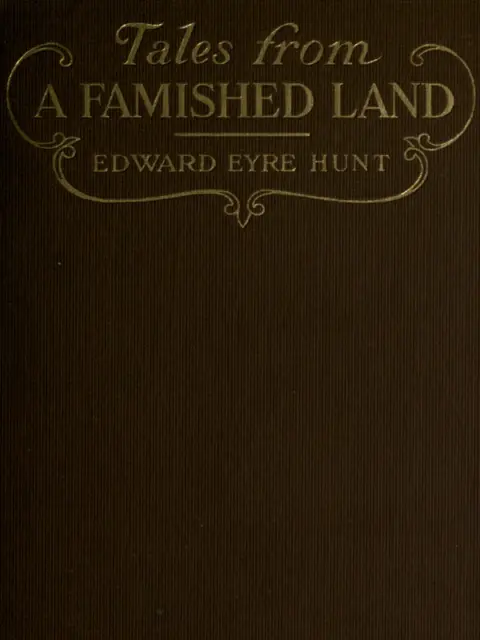
"Tales from a Famished Land" by Edward E. Hunt is a collection of narratives written during the early 20th century. The book explores the human condition amidst the backdrop of World War I, centering on intimate glimpses into the lives of people affected by the war in Belgium. The stories are characterized by their blend of reality and fiction, capturing a range of emotions and experiences faced by both the inhabitants and those providing relief during these trying times. The opening of the book introduces readers to the juxtaposition of normalcy and despair amid the war, beginning with a scene set in a peaceful countryside punctuated by the distant sounds of cannon fire. A traveler on the road encounters a local farmer and his family, who reflect the toll the conflict has taken on their lives. Through the lens of the protagonist, readers are introduced to the brave yet challenging tasks carried out by relief workers, underscoring the resilience of the human spirit in a "famished land." The initial chapters weave together elements of hope, madness, and the supernatural, setting the tone for a poignant exploration of love, loss, and determination in the face of adversity.
Introduction adapted from the source catalogue; source summaries may be automatically generated.
Free to read · English · 30,994 words · No account needed
MAKE TIME FOR A GOOD BOOK
On by default. Untick to stop anonymous reading totals. Each page counts after 10 seconds in view. How this works.
Anonymous counting is on unless you have switched it off.
The poet finished his recitation and resumed his cigarette, waiting
for our applause.
“It is a man absolutely extraordinary,” murmured the dancing-master across the table at my left, under cover of the hand-clapping. “He is the greatest poet of Belgium, monsieur. Verhaeren, Cammaerts, Maeterlinck--they are nothing. If you bring him an album--presto! he writes you an ode in it.”
In the tight little supper-room over the Café de la Toison d’Or we were sweltering and dining at the expense of McTeague. It was a night in August, and the heat of noon had not yet died out of the boulevards and streets of Brussels, ville basse. The cheap cotton curtains at the two windows fronting on the avenue waved languidly to and fro, and the air of the room reeked with cigarette smoke and the odours of Belgian cooking.
McTeague sat at the table’s head--a huge, lonely, unsophisticated American, with a mop of gray hair topping a face like a child’s, tired eyes, slightly Roman nose, and what once was a rose-bud mouth. At his right was Yvette, the dancer of the Scala; pretty, of course, the big, muscular, operatic-soprano type of beauty rather than the petite beings we usually think of in the dance; sleek, serpentine, appraising the world about her. Next her was I; then Yvette’s husband, the poet; then Guilbert, her dancing-master.
“Thanks! thanks! I thank you infinitely, monsieur. Bravo! Bis, bis!” said McTeague, in his heavy Scotian French.
“No, no, monsieur,” the poet answered gloomily, shaking his head. “I demand pardon, but no.”
“Ah, it is the war, then! You feel such a sadness that you cannot
be gay, monsieur?”
“No, it is not the war. What is the war? It is of nations. For me nations are nothing: men, men--Pushkin, Byron, Whitman, Schiller, Napoleon, Goethe, Victor Hugo--those for me are worth while. The rest? Pah!”
“Oh, la, la, la, la!”
“Do not mind, monsieur,” the dancing-master whispered ecstatically, as if he feared such sentiments might offend me, “it is a poet, n’est-ce pas? Art--art--that is a world of itself.” He mopped his forehead, beaded with drops of perspiration, his little black eyes rolled in his head, and he drummed on the tablecloth as if his fingertips would do the office of his toes. The man was a genuine enthusiast. To dance and to teach others to dance--that was life!
“Yvette, you have brought your ballet costume so you can dance for messieurs the Americans?” he asked.
“Yes, my old Guilbert,” she answered languidly.
“Come, then.”
Your reading position is saved on this browser. Take it to another device with a library code. Reading pages adapt to text, rather than matching a printed edition.
BEHIND THE BOOK
This eBook is for the use of anyone anywhere in the United States and most other parts of the world at no cost and with almost no restrictions whatsoever. You may copy it, give it away or re-use it under the terms of the Project Gutenberg License included with this eBook or online at www.gutenberg.org. If you are not located in the United States, you will have to check the laws of the country where you are located before using this eBook. Read the source licence.
The original source file, including credits and licence, is retained by this library. Request an original-format copy at no charge. Please include the book title and Project Gutenberg identifier #49709.
KEEP YOUR CURIOSITY GOING
Cécile Tormay

Moritz Busch
Coulson Kernahan
John L. Ransom

Maurice Baring
Frances Wright