THE CLASSIC COLLECTION✦An outlaw’s diary: the CommuneCLASSIC FREE BOOKS
An outlaw’s diary: the Commune
Cécile Tormay
THE CLASSIC COLLECTION · 1903
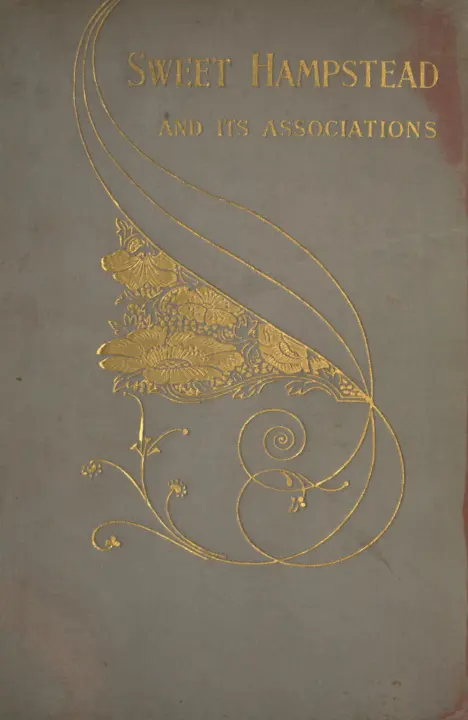
"Sweet Hampstead and Its Associations" by Mrs. Caroline A. White is a historical account written in the late 19th century. The book explores the rich history and notable figures associated with Hampstead, a picturesque area in London known for its natural beauty and cultural significance. It aims to fill a gap in the literature concerning Hampstead's important historical events and personalities from Queen Anne's reign to the author's own time. The opening of "Sweet Hampstead and Its Associations" delves into the author's motivations for writing the book, reflecting on the passage of time and her long-held desire to document Hampstead's past. She highlights a lack of comprehensive works on the subject and acknowledges her connections to the area's history, sharing fond memories intertwined with her personal experiences. Throughout this section, White expresses her passion for documenting forgotten incidents and characters that have shaped Hampstead’s charm, promising readers a journey through its historical landscape enriched by her own reflections and research.
Introduction adapted from the source catalogue; source summaries may be automatically generated.
Free to read · English · 118,334 words · No account needed
MAKE TIME FOR A GOOD BOOK
On by default. Untick to stop anonymous reading totals. Each page counts after 10 seconds in view. How this works.
Anonymous counting is on unless you have switched it off.
[271] Mr. Baines, in his ‘Records of Hampstead,’ has remedied this oversight, and has given some interesting particulars of the young historian’s after-life.
[272] Then the Green Man.
[273] I am told upon excellent authority that the house Constable lived in was taken down and rebuilt about six years ago; this house is now 44, Well Walk.
[274] Sion Chapel.
[275] Mr. G. W. Potter.
[276] Now Tooley’s Farm.
[277] Lintot.
[278] Hogarth is said to have painted this picture at Hampstead.
[279] Mrs. Delany was a Granville.
[280] Richardson’s ‘Correspondence’
[281] ‘Gray was a little man of very ungainly appearance.’—HORACE WALPOLE.
[282] The name of one of his poems.
[283] ‘Lives of the Lord Chancellors.’
[284] Wordsworth.
[285] Charles and Mary Lamb were at this time living in Russell Street,
over a brazier’s shop.
[286] The fields commonly called the Conduit Fields lie under Fitzjohn’s Avenue, and a fountain at a corner of it represents the conduit.
[287] Keats.
[288] Brewer’s ‘Middlesex.’
[289] Park calls him her second husband, which is wrong. See Pepys’ ‘Diary,’ vol. i., p. 6.
[290] See Lord Braybrooke’s ‘Notes to Pepys’ Diary,’ vol. iv.
[291] Not his son, as a recent writer on Belsize asserts.
[292] These gentlemen were German Lavie, James Abel, Thomas Roberts, and Thomas Forsyth, Esqs., of Hampstead.
‘And on each side the gate a grenadier; Howe’er, they cannot speak, nor see, nor hear; But why they’re posted there no mortal knows, Unless it be to fright jackdaws and crows.’
A modern writer on the neighbourhood appears to have been misled by these lines into the supposition that the gates were guarded by living soldiers.
[294] Belsize House stood at the bottom of the present avenue. One of the last inhabitants was old Mr. Martinez, of the famous firm of port-wine shippers, Martinez, Gassiot and Co, Mark Lane, about 1847.—C. A. Ward, Esq.
[295] When Lysons wrote his ‘Environs of London,’ 1812, Belsize was a subrural place, the house modern.
[296] There was a little stile in the lane, at the south-west corner of the estate, and this was the spot of the murder, just as Delarue was mounting it.
[297] Letter of Lucy Aiken to Mrs. Mallett, Hampstead, September, 1845.
[298] The Kilburne rises near West End, Hampstead, and passes through Kilburn to Bayswater, supplying the Serpentine River, Hyde Park; and in Park’s time it flowed through the fields to the Thames at Ranelagh.
‘In a note sewn into a copy of the “Speculum Britanniæ,” wrought by Travaile, and view of John Norden of Fulham, in the year 1596,’ the name is spelt three different ways—Kylburne, Keylbourne, Kulleburne (quoted from Baines’ ‘Records,’ etc.).
[299] Great-uncles to the present Sir Charles Dilke.
Your reading position is saved on this browser. Take it to another device with a library code. Reading pages adapt to text, rather than matching a printed edition.
BEHIND THE BOOK
This eBook is for the use of anyone anywhere in the United States and most other parts of the world at no cost and with almost no restrictions whatsoever. You may copy it, give it away or re-use it under the terms of the Project Gutenberg License included with this eBook or online at www.gutenberg.org. If you are not located in the United States, you will have to check the laws of the country where you are located before using this eBook. Read the source licence.
The original source file, including credits and licence, is retained by this library. Request an original-format copy at no charge. Please include the book title and Project Gutenberg identifier #64394.
KEEP YOUR CURIOSITY GOING
Cécile Tormay

Moritz Busch
John L. Ransom
Frances Wright
Cécile Tormay

Mabel Potter Daggett