THE CLASSIC COLLECTION✦An outlaw’s diary: the CommuneCLASSIC FREE BOOKS
An outlaw’s diary: the Commune
Cécile Tormay
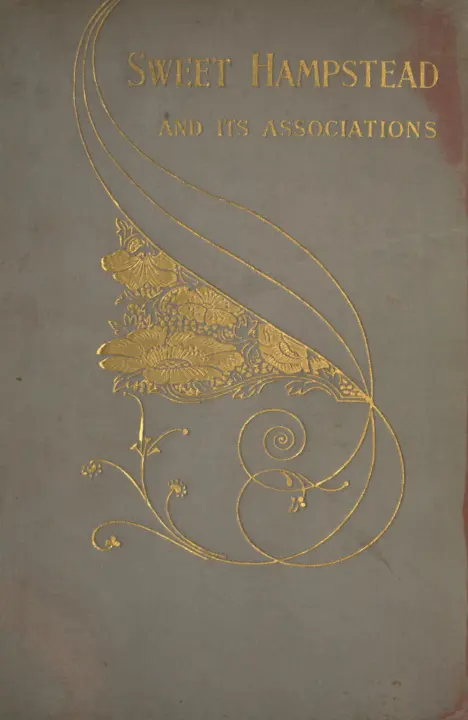
THE CLASSIC COLLECTION · 1903
"Sweet Hampstead and Its Associations" by Mrs. Caroline A. White is a historical account written in the late 19th century. The book explores the rich history and notable figures associated with Hampstead, a picturesque area in London known for its natural beauty and cultural significance. It aims to fill a gap in the literature concerning Hampstead's important historical events and personalities from Queen Anne's reign to the author's own time. The opening of "Sweet Hampstead and Its Associations" delves into the author's motivations for writing the book, reflecting on the passage of time and her long-held desire to document Hampstead's past. She highlights a lack of comprehensive works on the subject and acknowledges her connections to the area's history, sharing fond memories intertwined with her personal experiences. Throughout this section, White expresses her passion for documenting forgotten incidents and characters that have shaped Hampstead’s charm, promising readers a journey through its historical landscape enriched by her own reflections and research.
Introduction adapted from the source catalogue; source summaries may be automatically generated.
Free to read · English · 118,334 words · No account needed
MAKE TIME FOR A GOOD BOOK
On by default. Untick to stop anonymous reading totals. Each page counts after 10 seconds in view. How this works.
Anonymous counting is on unless you have switched it off.
[254] This is precisely the language of Jonas Hanway, the traveller, and introducer of that useful article, the umbrella. This was also the favourite argument of the clergy, when preaching against the use of tea, as they also did against vaccination.
[255] I am told by an old resident that as late as 1830 there was but one butcher’s shop in Hampstead.
[256] A ridiculous custom, of which an account will be found in Hone’s
‘Table Book.’
[257] Connoisseur.
[258] Quoted in ‘Hampstead and the Heath,’ which appeared in Sharpe’s Magazine early in the sixties.
[259] Twelve months later, 1736, Turpin rides on the Highgate road, wearing an open gold-laced hat, while his companion (who sometimes passes for his man) has a plain gold-laced hat.
[260] He was Court painter to George II., and the translator of ‘Don Quixote.’ Sir Joshua Reynolds thought so little of his paintings that when asked where they were to be seen he replied, ‘In the garret.’
[261] Tried for bigamy, and found guilty, 1776.
[262] The Duke of Grafton was Lord Chamberlain.
[263] Mrs. Donnellan (the prefix Mrs. was then frequently applied to unmarried ladies) was the daughter of Chief Justice Donnellan, and sister to the Bishop, of Killala. Dr. Clayton married her sister, and gave his wife’s fortune to Mrs. Donnellan, who seems to have passed a great part of her life in England, making Hampstead a frequent place of residence.
[264] The rich and beautiful Widow Pendarves married the Irish Dean Delany, 1732, to the great disgust of John Gay. See his letter to Swift in the correspondence of the latter. ‘As Dr. Delany hath taken away a fortune from us, I expect to be recommended in Ireland. If authors of godly books are entitled to such fortune, I desire you would recommend me as a moral one—I mean in Ireland, for that recommendation would not do in England’ (Swift’s Correspondence).
[265] I have seen it stated that the burial-place of Pope is unknown.
[266] Clergymen extolled ‘Clarissa’ in the pulpit, and Pope observed of ‘Pamela’ that it would do more good than all their sermons.
[267] The Daily Advertiser, September 26, 1748.
[268] William Moray, for robbing John Head, a farmer’s boy, of sixpence (Universal Magazine, February 15, 1775).
[269] About nine o’clock on a July morning, Turpin was seen by two gentlemen who knew him, at Tottenham High Cross, mounted on a gray horse, with a boy behind as servant on a brown horse, with a black velvet cap and silver tassel. He rode through the town without molestation.—Grub Street Journal, 1736, No. 397.
[270] Park’s ‘History of Hampstead,’ published when the author was little more than of age.
Your reading position is saved on this browser. Take it to another device with a library code. Reading pages adapt to text, rather than matching a printed edition.
BEHIND THE BOOK
This eBook is for the use of anyone anywhere in the United States and most other parts of the world at no cost and with almost no restrictions whatsoever. You may copy it, give it away or re-use it under the terms of the Project Gutenberg License included with this eBook or online at www.gutenberg.org. If you are not located in the United States, you will have to check the laws of the country where you are located before using this eBook. Read the source licence.
The original source file, including credits and licence, is retained by this library. Request an original-format copy at no charge. Please include the book title and Project Gutenberg identifier #64394.
KEEP YOUR CURIOSITY GOING
Cécile Tormay

Moritz Busch
John L. Ransom
Frances Wright
Cécile Tormay

Mabel Potter Daggett