THE CLASSIC COLLECTION✦An outlaw’s diary: the CommuneCLASSIC FREE BOOKS
An outlaw’s diary: the Commune
Cécile Tormay
THE CLASSIC COLLECTION · 1903
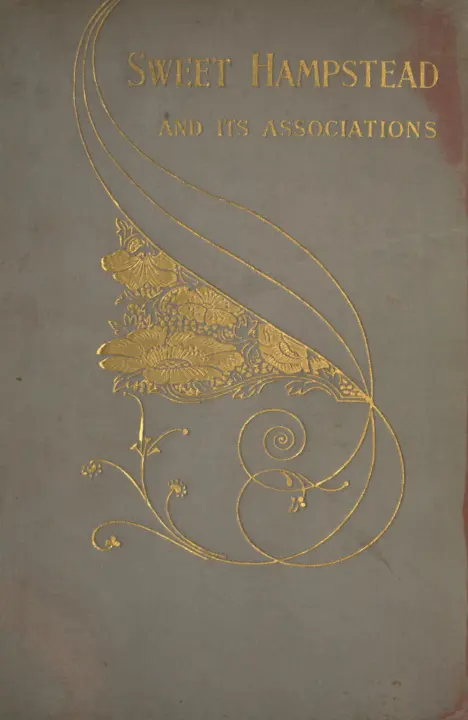
"Sweet Hampstead and Its Associations" by Mrs. Caroline A. White is a historical account written in the late 19th century. The book explores the rich history and notable figures associated with Hampstead, a picturesque area in London known for its natural beauty and cultural significance. It aims to fill a gap in the literature concerning Hampstead's important historical events and personalities from Queen Anne's reign to the author's own time. The opening of "Sweet Hampstead and Its Associations" delves into the author's motivations for writing the book, reflecting on the passage of time and her long-held desire to document Hampstead's past. She highlights a lack of comprehensive works on the subject and acknowledges her connections to the area's history, sharing fond memories intertwined with her personal experiences. Throughout this section, White expresses her passion for documenting forgotten incidents and characters that have shaped Hampstead’s charm, promising readers a journey through its historical landscape enriched by her own reflections and research.
Introduction adapted from the source catalogue; source summaries may be automatically generated.
Free to read · English · 118,334 words · No account needed
MAKE TIME FOR A GOOD BOOK
On by default. Untick to stop anonymous reading totals. Each page counts after 10 seconds in view. How this works.
Anonymous counting is on unless you have switched it off.
[35] Hampstead, July, 1810. It is stated in the Morning Post that the Hampstead Volunteers, who had been practising firing at a large target on the Heath, ‘had fired many excellent shots, some of which nearly entered the bull’s eye.’ They have improved upon this since then, as have also their firearms.
[36] Howitt’s ‘Northern Heights of London.’
[37] Morden’s Map of Middlesex, 1593, shows this road, which skirts the Fleet for a short distance in the neighbourhood of old St. Pancras, and runs up Tottenhall or Tottenham Court Road, passing by Lower Chalcot and Upper Chalcot to Pond Street.
[38] Burnet’s ‘History of his own Times.’
[39] See Macaulay’s ‘Essays.’
[40] Steele had his office at the Cockpit, in Whitehall. He held the post of Gazetteer and Commissioner of Stamps.
[41] There has been a question as to the burial-place of Steele, which the following note, kindly forwarded me through a friend, sets at rest: ‘Sir R. Steele was buried in the church at Carmarthen, and only in August, 1876, was there a memorial tablet placed over his remains by a gentleman of the name of Davies. It bears the inscription:
Author, Essayist, and first chief promoter of the periodical press
of England.
Born in Dublin, March 12, 1671.
Buried in this church, and below this tablet.”’
[42] ‘Lives of the Lord Chancellors.’
[43] ‘Lives of the Lord Chancellors.’
[44] A contributor to Baines’ ‘Records of Hampstead’ states: ‘Under an old thorn-tree, near the house, on the north side of the avenue, there was within the memory of living people a dipping-well for public use.’ Is this, I wonder, the small fountain of delicious water, the footpath to which from the High Street Lord Rosslyn tried to stop? But, though on the Woolsack, he failed to do so. The case appeared in a Times newspaper of 1878.
[45] At the present (1899), only one of the beautiful trees is standing.
[46] Subsequently Sir Rowland Hill resided at Bartrum Park, a little to the east of the green, on the same side of the way.
[47] Where the small-pox sheds stood, the Hampstead Hospital for Fever and Small-pox stands now (1899).
[48] There is an engraving of this house in Mr. Gardener’s collection, copied in Mr. Howitt’s ‘Northern Heights of London.’
[49] An engraving of this picture appeared in the European Magazine.
[50] See Appendix.
[51] The father of this gentleman, the second Thomas Norton Longman, resided here. He was unfortunately killed by a fall from his horse about 1842. Soon after his daughters came to live at Frognal Rise.
Your reading position is saved on this browser. Take it to another device with a library code. Reading pages adapt to text, rather than matching a printed edition.
BEHIND THE BOOK
This eBook is for the use of anyone anywhere in the United States and most other parts of the world at no cost and with almost no restrictions whatsoever. You may copy it, give it away or re-use it under the terms of the Project Gutenberg License included with this eBook or online at www.gutenberg.org. If you are not located in the United States, you will have to check the laws of the country where you are located before using this eBook. Read the source licence.
The original source file, including credits and licence, is retained by this library. Request an original-format copy at no charge. Please include the book title and Project Gutenberg identifier #64394.
KEEP YOUR CURIOSITY GOING
Cécile Tormay

Moritz Busch
John L. Ransom
Frances Wright
Cécile Tormay

Mabel Potter Daggett