THE CLASSIC COLLECTION✦An outlaw’s diary: the CommuneCLASSIC FREE BOOKS
An outlaw’s diary: the Commune
Cécile Tormay
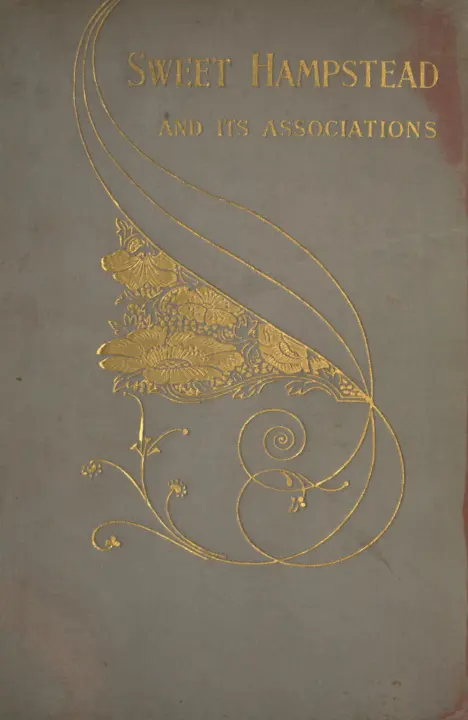
THE CLASSIC COLLECTION · 1903
"Sweet Hampstead and Its Associations" by Mrs. Caroline A. White is a historical account written in the late 19th century. The book explores the rich history and notable figures associated with Hampstead, a picturesque area in London known for its natural beauty and cultural significance. It aims to fill a gap in the literature concerning Hampstead's important historical events and personalities from Queen Anne's reign to the author's own time. The opening of "Sweet Hampstead and Its Associations" delves into the author's motivations for writing the book, reflecting on the passage of time and her long-held desire to document Hampstead's past. She highlights a lack of comprehensive works on the subject and acknowledges her connections to the area's history, sharing fond memories intertwined with her personal experiences. Throughout this section, White expresses her passion for documenting forgotten incidents and characters that have shaped Hampstead’s charm, promising readers a journey through its historical landscape enriched by her own reflections and research.
Introduction adapted from the source catalogue; source summaries may be automatically generated.
Free to read · English · 118,334 words · No account needed
MAKE TIME FOR A GOOD BOOK
On by default. Untick to stop anonymous reading totals. Each page counts after 10 seconds in view. How this works.
Anonymous counting is on unless you have switched it off.
[18] ‘Planché, who has gone deeper into the subject of the Peverels than either Eyton, the Shropshire historian, or Mr. E. Freeman (who rejects this supposition with contempt and indignation), puts it in this wise: “During all the battles and commotions in Normandy preceding the Conquest, we hear nothing of the Peverels. No land is called by their name, nor do we hear of it till that of Ranulph, in Domesday Book, when he figures as the lord of sixty-four manors. Planché suggests what Mr. Eyton has overlooked that the Saxon lady of rank might have visited Normandy before 1051, a circumstance that would remove the only serious difficulty in the story. The latter Ranulph Peverel was the founder of Hatfield Peverel, in Essex, as shown by Camden, Glover, Dugdale, Sandford, Weever and others.”’ The author of the ‘Roman de la Rose’ makes no mention of Peverel.
[19] Norden.
[20] London was a city long before the Romans entered it. Ammianus Marcellinus says that 1200 years before his time it was a city, i.e., about 900 B.C., which, if correct, would make it 200 years older than Rome itself.—C. A. W.
[21] Unfortunately, when copying this account, having no idea of using it, I neglected to note the date or number of the magazine, but I believe it was during Mr. Ainsworth’s editorship.
[22] Where was Roman Lane, which Dr. Hughson must have known?
[23] ‘Bordarii,’ I think, Park scarcely understood for a Domesday Book word. These would not be bordarii before, but Saxon churls; and ‘hame stead’ is ‘home station,’ i.e., the outhouses or cots to the big lord’s residence.—C. A. W.
[24] Hughson thinks that it possibly referred, by way of pre-eminence, to the residence of the Lord of the Manor.
[25] Sanctus Albanus Verolamiensis.
[26] Park’s ‘History of Hampstead.’
[27] In the reign of Henry VI., in the fifteenth century.
[28] See Park’s ‘History of Hampstead,’ pp. 100, 101.
[29] ‘Eccles. Hist.,’ ii. 324, quoted by Park, ‘History of Hampstead,’ p.
21.
[30] Lysons.
[31] The Heath was generally so called. Lord Erskine speaks of his house on Hampstead Hill, The Evergreens, near the Spaniards.
[32] Park.
[33] Daily Advertiser, July 19, 1748: ‘To-morrow, the 20th inst., will be run for on Hampstead Course, a considerable sum, between two poneys, at the Castle on Hampstead Heath. There are great bets depending. The poneys will be rubbed down at the Castle aforesaid.’ In reference to this race we read: ‘On Wednesday a race was run on Hampstead Heath between a bay poney belonging to Lord Blessington, and a gray poney of Mr. Woods, of Jack Straw’s Castle, for a considerable sum of money, which was won by the former.’
[34] Horace Walpole’s Letters.
Your reading position is saved on this browser. Take it to another device with a library code. Reading pages adapt to text, rather than matching a printed edition.
BEHIND THE BOOK
This eBook is for the use of anyone anywhere in the United States and most other parts of the world at no cost and with almost no restrictions whatsoever. You may copy it, give it away or re-use it under the terms of the Project Gutenberg License included with this eBook or online at www.gutenberg.org. If you are not located in the United States, you will have to check the laws of the country where you are located before using this eBook. Read the source licence.
The original source file, including credits and licence, is retained by this library. Request an original-format copy at no charge. Please include the book title and Project Gutenberg identifier #64394.
KEEP YOUR CURIOSITY GOING
Cécile Tormay

Moritz Busch
John L. Ransom
Frances Wright
Cécile Tormay

Mabel Potter Daggett