The Game Fish, of the Northern States and British Provinces With an account of the salmon and sea-trout fishing of Canada and New Brunswick, together with simple directions for tying artificial flies, etc., etc.
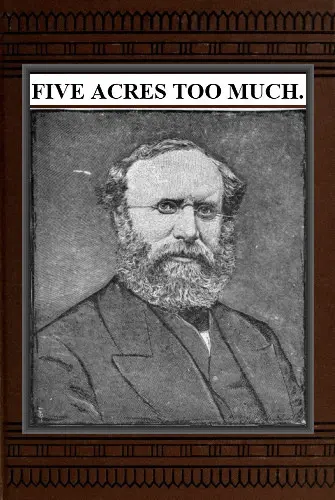
Robert Barnwell Roosevelt
THE CLASSIC COLLECTION · 1884
"Superior Fishing" by Robert Barnwell Roosevelt is a sporting narrative written in the mid-19th century. This work delves into the art of fishing, particularly focusing on game fish such as striped bass, trout, and black bass found in the northern United States. The author, who is also known for other writings on fishing and hunting, aims to educate readers about fishing techniques and the unique experiences available in America's natural waters. At the start of the narrative, Roosevelt sets the scene for a fishing expedition to Lake Superior, introducing prominent characters such as Don Pedro, an elegantly mannered gentleman with a newfound itch for adventure. The beginning portrays their preparations for a camping trip, including discussions about supplies, fishing strategies, and the comforts of life they are willing to forgo in pursuit of the sport. The reader is immediately immersed in the dynamics of the journey and the natural beauty of the fishing landscapes, along with insights into the delicate balance between the sport of fishing and a sportsman's ethics. Overall, the opening section establishes not only the characters and their motivations but also the rich environment that will be explored throughout the book.
Introduction adapted from the source catalogue; source summaries may be automatically generated.
Free to read · English · 74,634 words · No account needed
MAKE TIME FOR A GOOD BOOK
On by default. Untick to stop anonymous reading totals. Each page counts after 10 seconds in view. How this works.
Anonymous counting is on unless you have switched it off.
Legs.--A very small and very light dun hackle, nearly white.
No. 16. THE LITTLE YELLOW MAY DUN.
This is another of the ephemeridæ, and a most useful one to the fisherman. It is not so small as the preceding one (No. 14), and changes to a very light red spinner.
Imitation.
Body.--Pale ginger-colored mohair, ribbed with yellow silk.
Tail.--Two whisks of yellow, or ginger hackle.
Wings.--Mottled feather of the mallard, dyed a greenish yellow.
Legs.--Light ginger hackle, dyed the same color as the wings.
No. 17. THE BLACK GNAT.
Every fisherman is familiar with this little insect, and has taken trout with their mouths and throats filled with them. It is, however, not properly a gnat, but a midge.
Imitation.
Body.--Black ostrich herl.
Wings.--The darkest feather of a robin’s wing.
Legs.--A black hackle.
The black midge should be made similarly, but with a thin black silk
body.
No. 18. THE OAK FLY, ALSO THE DOWN HEAD FLY, AND DOWN HILL FLY.
This is a land fly, and may be found upon the trunks of trees or on posts near the water. It is carried on the water by the wind, and is consequently used with most success on windy days, like the cow-dung.
Imitation.
Body.--Orange floss silk or mohair, ribbed with black silk.
Wings.--The darkest part of the wing-feather of a curlew.
Legs.--A furnace, or red and black hackle.
No. 19. THE TURKEY BROWN.
This ephemera is common to most of the waters of New York, and is found on nearly all the Long Island ponds, where it is eagerly taken by the trout. It appears about the middle of April, and changes to a little dark spinner, which is a most killing fly just before dusk.
Imitation.
Body.--Brown mohair ribbed with purple silk. The female is of a
greenish brown.
Tail.--Two fibres of the same feather as the wings.
Wings.--Of the brown mottled feather from the back of a ruffed grouse.
Legs.--A red-brown hackle.
No. 20. THE LITTLE DARK SPINNER.
This is the perfect, or Imago, state of the turkey brown (No. 19) just described. It is as fragile as it is beautiful, and can hardly be touched without maiming or killing it.
Imitation.
Body.--Light reddish-brown floss silk, ribbed with purple.
Tail.--Three whisks of a light dun hackle.
Wings.--From a feather of the robin’s wing, or the under feather of a
young grouse’s wing.
Legs.--A light dun hackle.
No. 21. THE YELLOW SALLY.
Your reading position is saved on this browser. Take it to another device with a library code. Reading pages adapt to text, rather than matching a printed edition.
Robert Barnwell Roosevelt
Robert Barnwell Roosevelt
Robert Barnwell Roosevelt
Robert Barnwell Roosevelt
BEHIND THE BOOK
This eBook is for the use of anyone anywhere in the United States and most other parts of the world at no cost and with almost no restrictions whatsoever. You may copy it, give it away or re-use it under the terms of the Project Gutenberg License included with this eBook or online at www.gutenberg.org. If you are not located in the United States, you will have to check the laws of the country where you are located before using this eBook. Read the source licence.
The original source file, including credits and licence, is retained by this library. Request an original-format copy at no charge. Please include the book title and Project Gutenberg identifier #55226.
KEEP YOUR CURIOSITY GOING
Wilfrid Scawen Blunt
Wilfrid Scawen Blunt

E. W. (Edgar Watson) Howe
Francis Greenleaf Allinson & Anne C. E. (Anne Crosby Emery) Allinson
Cyrenus Cole

John Martineau