The Game Fish, of the Northern States and British Provinces With an account of the salmon and sea-trout fishing of Canada and New Brunswick, together with simple directions for tying artificial flies, etc., etc.
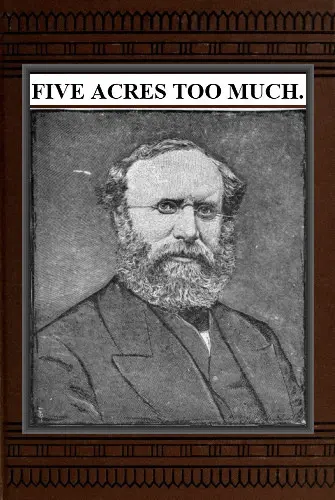
Robert Barnwell Roosevelt
THE CLASSIC COLLECTION · 1884
"Superior Fishing" by Robert Barnwell Roosevelt is a sporting narrative written in the mid-19th century. This work delves into the art of fishing, particularly focusing on game fish such as striped bass, trout, and black bass found in the northern United States. The author, who is also known for other writings on fishing and hunting, aims to educate readers about fishing techniques and the unique experiences available in America's natural waters. At the start of the narrative, Roosevelt sets the scene for a fishing expedition to Lake Superior, introducing prominent characters such as Don Pedro, an elegantly mannered gentleman with a newfound itch for adventure. The beginning portrays their preparations for a camping trip, including discussions about supplies, fishing strategies, and the comforts of life they are willing to forgo in pursuit of the sport. The reader is immediately immersed in the dynamics of the journey and the natural beauty of the fishing landscapes, along with insights into the delicate balance between the sport of fishing and a sportsman's ethics. Overall, the opening section establishes not only the characters and their motivations but also the rich environment that will be explored throughout the book.
Introduction adapted from the source catalogue; source summaries may be automatically generated.
Free to read · English · 74,634 words · No account needed
MAKE TIME FOR A GOOD BOOK
On by default. Untick to stop anonymous reading totals. Each page counts after 10 seconds in view. How this works.
Anonymous counting is on unless you have switched it off.
No. 12. THE GRANNOM, OR GREEN TAIL.
This fly comes from a water larva, and is found chiefly at morning and at evening. The green tint of its body is derived from the color of the bag of eggs near the tail. There are a number of species in the United States, and in some the bag of eggs is yellow, and in some orange. The green is the most used.
Imitation.
Body.--Work in a little tuft of green at the tail, and then finish the body of sandy-colored mohair.
Wings.--A light brown mottled hen’s feather, to lie flat.
Legs.--A pale ginger hackle.
The body of the male is yellow, without the green tag.
No. 13. THE YELLOW DUN.
This beautiful ephemera is one of our very best flies. There are several varieties, and some of them are an inch in length. It changes to a spinner, very similar to the metamorphosis of the blue dun (No. 2), only lighter and yellower, and should be so tied.
Imitation.
Body.--Yellow mohair spun very thinly on pale blue silk.
Wings.--From the lightest part of the feather of a robin’s wing.
Legs.--A pale yellow dun hackle.
This fly must not be finished off at the head with the blue silk, but a yellow must be tied in for the purpose when the body is done.
No. 14. THE IRON BLUE DUN.
This is one of the smallest of the ephemeridæ, but not the least useful. It lives only two or three days before changing its coat, when its body becomes almost white, and its wings transparent.
Imitation.
Body.--Pale blue mohair, very thinly spun on reddish-brown silk, with which the head must be finished.
Tail.--Two whisks of the yellow body-feather of the golden pheasant.
Wings.--From the wing-feather of the blue-bird.
Legs.--A very small yellow dun hackle.
No. 15. THE JENNY SPINNER.
This is the name of the iron blue dun (No. 14) in his new dress, in which he lives four or five days. It is a killing fly towards evening in clear water in summer. There are in the United States at least some hundred varieties of these small ephemeridæ, of every conceivable color, and the skilful dresser will take pleasure in tying them, using the feathers of the small domestic and foreign birds which he can procure. Such are the sky-blue, the orange dun, the pale evening dun, the July dun (blue and yellow), the whirling blue dun, and the little pale dun.
Imitation.
Body.--White floss silk, tied at head and tail with brown silk thread.
Tail.--Two whisks light dun hackle.
Wings.--From a blue-bird’s wing-feather.
Your reading position is saved on this browser. Take it to another device with a library code. Reading pages adapt to text, rather than matching a printed edition.
Robert Barnwell Roosevelt
Robert Barnwell Roosevelt
Robert Barnwell Roosevelt
Robert Barnwell Roosevelt
BEHIND THE BOOK
This eBook is for the use of anyone anywhere in the United States and most other parts of the world at no cost and with almost no restrictions whatsoever. You may copy it, give it away or re-use it under the terms of the Project Gutenberg License included with this eBook or online at www.gutenberg.org. If you are not located in the United States, you will have to check the laws of the country where you are located before using this eBook. Read the source licence.
The original source file, including credits and licence, is retained by this library. Request an original-format copy at no charge. Please include the book title and Project Gutenberg identifier #55226.
KEEP YOUR CURIOSITY GOING
Wilfrid Scawen Blunt
Wilfrid Scawen Blunt

E. W. (Edgar Watson) Howe
Francis Greenleaf Allinson & Anne C. E. (Anne Crosby Emery) Allinson
Cyrenus Cole

John Martineau