THE CLASSIC COLLECTION✦An outlaw’s diary: the CommuneCLASSIC FREE BOOKS
An outlaw’s diary: the Commune
Cécile Tormay
THE CLASSIC COLLECTION · 1888
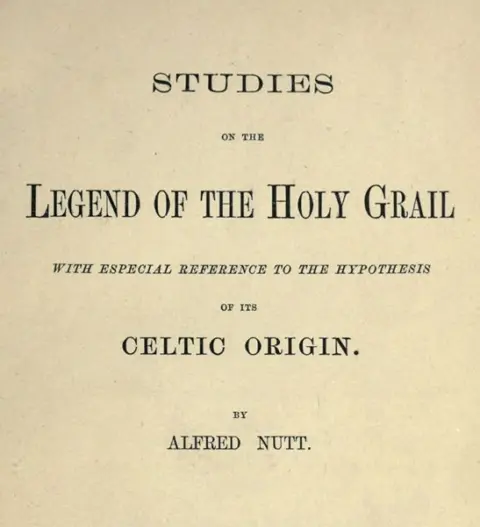
"Studies on the Legend of the Holy Grail" by Alfred Trübner Nutt is a scholarly publication written in the late 19th century. This work examines the various forms and origins of the Holy Grail legend, with a strong emphasis on its connections to Celtic traditions and influences. The book serves as both a study of the Grail Romance cycle and an investigation into the historical, literary, and mythical aspects of the legend. The opening of the scholarly work introduces the author’s intent to explore the different iterations of the Grail legend and their relationships to one another. It begins with a dedication to J. F. Campbell, highlighting the significance of Celtic tradition in Nutt's interpretation. The introduction outlines the structure of the studies, noting that the work does not aim for exhaustiveness but rather focuses on specific aspects of the Grail narrative. Nutt emphasizes the challenges historians face in tracing the origins of the Grail stories, navigating through various manuscripts and forms of the legend, while preparing to delve into the particulars of significant texts that have shaped the legend's evolution.
Introduction adapted from the source catalogue; source summaries may be automatically generated.
Free to read · English · 125,175 words · No account needed
MAKE TIME FOR A GOOD BOOK
On by default. Untick to stop anonymous reading totals. Each page counts after 10 seconds in view. How this works.
Anonymous counting is on unless you have switched it off.
=The Conte du Graal.=--(a) CHRESTIEN.--(1) When as trees and meadows deck themselves with green, and birds sing, the son of the widow lady goes out into the wood. He meets five knights, and, as their weapons shine in the sun, takes them for angels, after having first thought them to be the devils his mother had warned him against. He prays to them as his mother has taught him. One of the knights asks if he has seen five knights and three maidens who had passed that way, but he can but reply with questions concerning the arms and trappings of the knights. He learns of Arthur the King who makes knights, and when he returns to his mother tells her he has beheld a more beautiful thing than God and His angels, knights namely, and he too will become one. In vain his mother tells him of his father's and his two elder brothers' fates, slain in battle. Nothing will serve, so the mother makes him a dress of coarse linen and leather, and before he leaves counsels him as follows: If dame or damsel seek his aid he is to give it, he is to do naught displeasing to them, but to kiss the maiden who is willing, and to take ring and girdle of her if he can; to go for long with no fellow-traveller whose name he knows not, to speak with and consort with worthy men, to pray to our Lord when he comes to church or convent. She then tells him of Jesus Christ, the Holy Prophet. He departs clad and armed in Welsh fashion, and his mother swoons as though dead. (2) Perceval comes to a tent in the wood, and, taking it for a convent, goes in and finds sleeping on a bed a damsel, whom the neighing of his horse wakes. In pursuance of his mother's counsel he kisses her more than twenty times, takes her ring from her, and eats and drinks of her provisions. Thereafter he rides forth, and her lover returning and hearing what has taken place, swears to avenge himself upon the intruder, and until such time the damsel, whose tale he disbelieves, is to follow him barefoot and not to change her raiment. (3) Perceval learns the way to Carduel from a charcoal-burner; arrived there, he sees a knight coming forth from the castle and bearing a golden cup in his hand, clad in red armour, who complains of Arthur as having robbed him of his land. Perceval rides into the castle hall and finds the court at meat. Arthur, lost in thought, pays no attention to the first two salutations of Perceval, who then turns his horse to depart, and in so doing knocks off the King's hat. Arthur then tells him how the Red Knight has carried off his cup, spilling its contents over the Queen. Perceval cares not a rap for all this, but asks to be made knight, whereat all laugh. Perceval insists, and claims the Red Knight's armour. Kex bids him fetch them, whereat the King is displeased. Perceval greets a damsel, who laughs and foretells he shall be the best knight in the world. For this saying Kex strikes her, and kicks into the fire a fool who had been wont to repeat that the damsel would not laugh till she beheld the best of knights. (4) Perceval tarries no longer, but follows the Red Knight, and bids him give up his arms and armour. They fight, and Perceval slays his adversary with a cast of his dart. Yonès, who has followed him, finds him put to it to remove the knight's armour--he will burn him out of it if need be--and shows him how to disarm the dead man and to arm himself. Perceval then mounts the knight's steed and rides off, leaving the cup to Yonés to be given to the King, with this message: he, Perceval, would come back to avenge the damsel of the blow Kex struck her. (5) Perceval comes to a castle, in front of which he finds an old knight, to whom he relates what has befallen him, and of whom he asks counsel as his mother bade him. The knight, Gonemans of Gelbort, takes him into his castle, teaches him the use of arms, and all knightly practices. In especial he is to avoid over-readiness in speaking and in asking questions, and to give over his habit of always quoting his mother's counsels. He then dubs him knight, and sends him forth to return to his mother. (6) After a day's journey Perceval comes to a town defended by a castle, and, being allowed entrance therein, finds all waste and deserted, even the very convents. The lady of the castle, a damsel of surpassing beauty, welcomes him and bids him to table. Mindful of Gonemans' counsels he remains silent, and she must speak to him first. She turns out to be Gonemans' niece. At night the young stranger is shown to his chamber, but the damsel cannot sleep for thought. Weeping she comes to Perceval's bedside, and in reply to his wondering questions tells him how the forces of King Clamadex encompass the castle, and how that on the morrow she must yield, but rather than be Clamadex's she will slay herself. He promises to help her, and bids her to him in the bed, which she does, and they pass the night in each other's arms, mouth to mouth. On the morrow he begs for her love in return for his promised aid, which she half refuses, the more to urge him on. He fights with and overcomes Aguigrenons, Clamadex's marshal, and sends him to Arthur's court. Clamadex hearing of this tries afresh to starve out the castle, but a storm luckily throws a passing ship ashore, and thereby reprovisions the besieged ones. Clamadex then challenges Perceval, is overcome, and sent to Arthur's court, where he arrives shortly after his marshal. They relate wonders concerning the Red Knight, and the King is more than ever displeased with Kex for having offended such a valiant warrior. After remaining for a while with Blanchefleur, Perceval takes leave of her, as he longs to see his mother again. (7) He comes to a river, upon which is a boat, and therein two men fishing. One of them, in reply to his questions, directs him for a night's shelter to his own castle hard by. Perceval starts for it, and at first unable to find it reproaches the fisher. Suddenly he perceives the castle before him, enters therein, is disarmed, clad in a scarlet mantle, and led into a great hall. Therein is a couch upon which lies an old man; near him is a fire, around which some four hundred men are sitting. Perceval tells his host he had come from Biau-Repaire. A squire enters, bearing a sword, and on it is written that it will never break save in one peril, and that known only to the maker of it. 'Tis a present from the host's niece to be bestowed where it will be well employed. The host gives it to Perceval, "to whom it was adjudged and destined." Hereupon enters another squire, bearing in his hand a lance, from the head of which a drop of blood runs down on the squire's hand. Perceval would have asked concerning this wonder, but he minds him of Gonemans' counsel not to speak or inquire too much. Two more squires enter, holding each a ten-branched candlestick, and with them a damsel, a "graal" in her hands. The graal shines so that it puts out the light of the candles as the sun does that of the stars. Thereafter follows a damsel holding a (silver) plate. All defile past between the fire and the couch, but Perceval does not venture to ask wherefore the graal is used. Supper follows, and the graal is again brought, and Perceval, knowing not its use, had fain asked, but always refrains when he thinks of Gonemans, and finally puts off his questions till the morrow. After supper the guest is led to his chamber, and on the morrow, awakening, finds the castle deserted. No one answers his calls. Issuing forth he finds his horse saddled and the drawbridge down. Thinking to find the castle dwellers in the forest he rides forth, but the drawbridge closes so suddenly behind him that had not the horse leapt quickly forward it had gone hard with steed and rider. In vain Perceval calls: none answer. (8) He pricks on and comes to an oak, beneath which sits a maid holding a dead knight in her arms and lamenting over him. She asks him where he has passed the night, and on learning it tells him the fisher who had directed him to the castle and his host were one and the same; wounded by a spear thrust through both thighs his only solace is in fishing, whence he is called the Fisher King. She asks, had Perceval seen the bleeding lance, the graal, and the silver dish? had he asked their meaning? No; then what is his name? He does not know it, but she guesses it: Perceval le Gallois; but it should be Perceval the Caitiff, for had he asked concerning what he saw, the good king would have been made whole again, and great good have sprung therefrom. He has also a heavy sin on his conscience in that his mother died of grief when he left her. She herself is his cousin. Perceval asks concerning the dead knight, and learning it is her lover offers to revenge her upon his slayer. In return she tells him about the sword, how it will fly in pieces if he have not care of it, and how it may be made whole again by dipping it in a lake, near which dwells its maker, the smith Trebucet. (9) Perceval leaves his cousin and meets, riding on a wretched horse, a scantily and shabbily clad woman of miserable appearance, lamenting her hard fate and unjust treatment. She is the lady of the tent whose ring Perceval had carried off. She bids him fly her husband, the Orgellous de la Lande. The latter appears, challenges Perceval, but is overcome by him, convinced of his wife's innocence, compelled to take her into favour again, and both must go to Arthur's court, relate the whole story, and renew Perceval's promise to the damsel whom Kex had struck, to avenge her. Arthur, when he hears of the deeds of the young hero, sets forth with his whole court to seek him. (10) Snow has fallen, and a flock of wild geese, blinded by the snow, has had one of its number wounded by a falcon. Three blood drops have fallen on the snow, and Perceval beholding them falls into deep thought on the red and white in his love's face. Arthur and his knights come up with him. Saigremors sees him first, bids him come, and, when he answers no word, tilts against him, but is overthrown. Kex then trys his luck, but is unhorsed so rudely that arm and leg are broken. Gauvain declares that love must be mastering the strange knight's thoughts, approaches him courteously, tells his own name and learns Perceval's, and brings the latter to Arthur, by whom he is received with all honour. Perceval then learns it is Kex he has overthrown, thus fulfilling his promise to the damsel whom Kex had smitten, and whose knight he offers himself to be. (11) Perceval returns on the morrow with the court to Carlion, and the next day at noon there comes riding on a yellow mule a damsel more hideous than could be pictured outside hell. She curses Perceval for having omitted to ask concerning the lance and graal; had he done so the King would have been healed of his wound and ruled his land in peace; now maidens will be put to shame, orphans and widows made, and many knights slain. Turning to the King she tells of the adventures to be achieved at the Castel Orgellous, where dwell five hundred and seventy knights, each with his lady love. He, though, who would win the highest renown must to Montesclaire to free the damsel held captive there. She then departs. Gauvain will forth to the imprisoned damsel, Giflès to the Castel Orgellous, and Perceval swears to rest no two nights in the same place till he have learnt concerning graal and lance. (12) A knight, Guigambresil, enters and accuses Gauvain of having slain his lord. The latter sets forth at once to the King of Cavalon to clear himself of this accusation. (13) On his way he meets the host of Melians, who is preparing to take part in a tournament to approve himself worthy the love of the daughter of Tiebaut of Tingaguel, who had hitherto refused his suit. Gauvain rides on to Tingaguel to help its lord. On arriving at the castle the eldest daughter jeers at him, whilst the youngest takes his part, declaring him a better knight than Melians, whereat her sister is very indignant. On the first day of the tournament Melians shows himself the best knight, but the younger sister still declares her faith in Gauvain, and has her ears boxed in consequence. She appeals to Gauvain to be her knight and avenge the injury done her. He consents, overcomes Melians, whose horse he sends to his little lady, and all other knights; then, after telling his name, rides forth. (14) He meets two knights, the younger of whom offers him hospitality, and sends him to his sister, bidding her welcome him. She receives him kindly, and when, struck with her beauty, he asks her favours, grants them at once. They are interrupted by a steward, who reproaches her with giving her love to her father's murderer, and calls upon the castle folk to attack Gauvain. The latter defends himself until the return of Guigambresil, who reproaches the lord of the castle for letting Gauvain be attacked, as he had expressed his readiness to do single combat. Gauvain is then allowed to go, and is excused the combat if within a year he can bring back the bleeding lance. He sets off in search of it. (15) The tale returns to Perceval, who has wandered about for five years without thinking of God, yet performing many feats. He meets three knights accompanied by ladies, all clad in penitents' dress. 'Twas a Good Friday, and the eldest knight rebukes Perceval for riding fully armed on such a day. He must confess him to a holy hermit who lives hard by. Perceval goes thither, accuses himself of having forgotten God through his great grief at not learning the use of the graal. The hermit reveals himself as his uncle, tells Perceval that he is in sin as having caused his mother's death, and for that reason he could not ask concerning lance and graal; but for her prayers he had not lived till now. Perceval remains two days with his uncle, receives absolution, and rides forth. (16) The story turns to Gauvain, who, after Escalavon, finds beneath an oak a damsel lamenting over a wounded knight; the latter advises Gauvain to push on, which he does, and comes upon a damsel who receives him discourteously, and when at her bidding he has fetched her horse from a garden hard by, mocks at him and rides off. He follows, and culls on the way herbs with which he heals the wounded knight. A squire rides up very hideous of aspect, mounted on a wretched hack. Gauvain chastises him for discourteous answers; meanwhile the wounded knight makes off with Gauvain's steed, making himself known as Griogoras, whom Gauvain had once punished for ill-doing, Gauvain has to follow the damsel upon the squire's hack, comes to a river, on the other side of which is a castle, overcomes a knight who attacks him, during which the damsel vanishes, is ferried across the stream, giving the vanquished knight to the ferryman as toll; (17) comes on the morrow to the Magic Castle, wherein damsels are held fast, awaiting a knight full of all knightly virtues to restore their lands to the ladies, marry the damsels, and put an end to the enchantments of the palace. Upon entering, Gauvain sees a magnificent bed, seats himself therein, is assailed by magic art, overcomes a lion, and is then acclaimed lord of the castle. He would then leave the castle, but the ferryman says he may not, whereat Gauvain is moved to anger. On the morrow, looking forth, Gauvain beholds the (18) damsel who led him to the ford, accompanied by a knight. He hastens forth, overcomes the knight, seeks again the damsel's love, but is sent by her to the Ford Perillous. Here he meets Guiromelant, who loves Gauvain's sister, Clarissant, a dweller in the Magic Castle. A combat is arranged to take place after seven days. Upon his return to the damsel, named Orgellouse de Logres, he is now well received by her. She hates Guiromelant for having slain her lover, and has long sought a good knight to avenge her. Guiromelant on his side hates Gauvain for having, as he says, treacherously killed his father. Gauvain and Orgellouse return to the Magic Castle. One of the queens who dwells there is mother to Arthur; the second one, his daughter, mother to Gauvain. The latter gives his sister Clarissant a ring Guiromelant had begged him, unknowing who he was, to bring to her. He then sends a knight to Arthur to bid him and his whole train come witness the fight 'twixt him and Guiromelant. The messenger finds Arthur plunged in grief at Gauvain's absence....
Your reading position is saved on this browser. Take it to another device with a library code. Reading pages adapt to text, rather than matching a printed edition.
BEHIND THE BOOK
This eBook is for the use of anyone anywhere in the United States and most other parts of the world at no cost and with almost no restrictions whatsoever. You may copy it, give it away or re-use it under the terms of the Project Gutenberg License included with this eBook or online at www.gutenberg.org. If you are not located in the United States, you will have to check the laws of the country where you are located before using this eBook. Read the source licence.
The original source file, including credits and licence, is retained by this library. Request an original-format copy at no charge. Please include the book title and Project Gutenberg identifier #42205.
KEEP YOUR CURIOSITY GOING
Cécile Tormay

Moritz Busch
John L. Ransom

Maurice Baring
Frances Wright
Cécile Tormay