THE CLASSIC COLLECTION✦An outlaw’s diary: the CommuneCLASSIC FREE BOOKS
An outlaw’s diary: the Commune
Cécile Tormay
THE CLASSIC COLLECTION · 1917
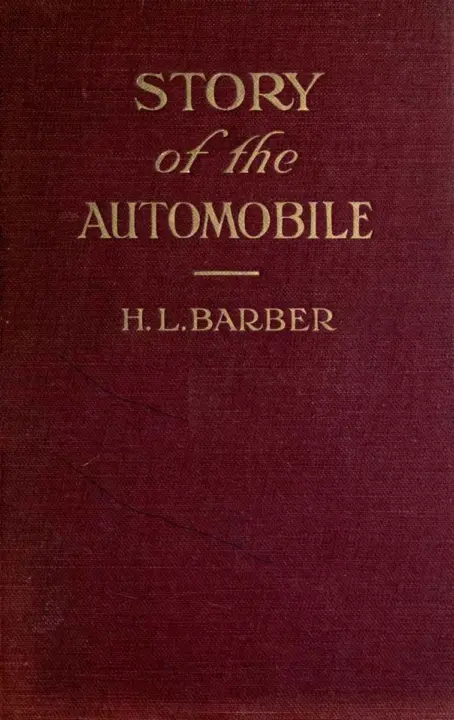
"Story of the Automobile: Its History and Development from 1760 to 1917" by H. L. Barber is a comprehensive historical account written in the early 20th century. The book chronicles the evolution of the automobile over a span of more than a century, detailing its transition from a concept to a widespread commercial product. Barber highlights key figures and innovations in the industry, focusing particularly on the transformative impact of the automobile on society and its profitability as an investment opportunity. The opening of the work establishes the foundation for understanding the automobile's significance in modern history. Barber emphasizes the challenges faced by inventors and manufacturers over the years, highlighting early attempts at creating a horseless carriage and the eventual success achieved in America, particularly by influential figures like Henry Ford. Through a mix of anecdotal evidence and economic analysis, he sets the stage for a deep dive into the mechanics of automobiles, their impact on daily life, and the financial opportunities they present, thus inviting readers to appreciate both the historical and contemporary relevance of automotive innovation.
Introduction adapted from the source catalogue; source summaries may be automatically generated.
Free to read · English · 45,491 words · No account needed
MAKE TIME FOR A GOOD BOOK
On by default. Untick to stop anonymous reading totals. Each page counts after 10 seconds in view. How this works.
Anonymous counting is on unless you have switched it off.
One of the few instances of an issue of bonds by a tire company is the issue of $60,000,000 of 5 per cent gold bonds by the United States Rubber Company. Of course, tires are only a part of this company’s output. The proceeds of the sale of these bonds are to be used to retire certain obligations of subsidiaries, to provide additional working capital, etc.
While in the foregoing chapter are noted some of the securities of representative manufacturers attracting the most pronounced attention, there are several others on the border line, or that have not as yet “arrived,” and possibly may never do so.
There has, therefore, been so little activity in these securities, that examples of their flotations are negligible in this report.
Those most in the public eye are perhaps:
The Harroun Motors Corporation
The Emerson Motors Company, Inc.
The Ford Tractor Company, Inc., etc. etc.
SOME LEADING EXAMPLES OF APPRECIATION OR DEPRECIATION IN VALUE OF SUCH STOCKS SINCE THEY WERE PUT OUT.
An example of depreciation in automobile stocks of an exaggerated type was that of the United States Motor Company, a combination of the Maxwell-Briscoe, Columbia, Stoddard-Dayton, Brush, and Sampson Companies. With an issue of about $35,000,000 stock, New York Curb prices in 1912 for the common ranged from 9 down to 1/16 and for the preferred from 30-1/2 down to 3/4.
The properties of this company have since been taken over by the Maxwell Motors Companys, which issued the following securities:
$13,000,000 1st preferred
11,000,000 2nd preferred
13,000,000 common
The prices of these stocks have ranged as follows:
1914 1917
Common 3 47-1/2
1st preferred 22 64
2nd preferred 7 32
This instance gives an extreme example of the fluctuations possible in motor stocks in one year, in 1912 the market values reaching as high as 7,200 per cent of the value indicated at low. The re-organized company in less than five years showed a market value of possibly 38,000 per cent of the market value of the old company at its low, and 500 per cent of its value at its high.
These great increases in volume and values are what have made so
many motor millionaires, and, conversely, have swept away some large
fortunes.
Another instance is the stock of the Studebaker Corporation, which sold as low as 20 in 1914 and which now brings 102. Also the Kelly-Springfield Tire Company’s stock rose from 50 to 299, due to their great increase in business and consequent large earnings.
The attached chart, showing the average high and low prices of representative groups of securities during 1916, may be used as a comparison of the average selling price of the motor group with that of railroads, industrials, and mining.
Your reading position is saved on this browser. Take it to another device with a library code. Reading pages adapt to text, rather than matching a printed edition.
BEHIND THE BOOK
This eBook is for the use of anyone anywhere in the United States and most other parts of the world at no cost and with almost no restrictions whatsoever. You may copy it, give it away or re-use it under the terms of the Project Gutenberg License included with this eBook or online at www.gutenberg.org. If you are not located in the United States, you will have to check the laws of the country where you are located before using this eBook. Read the source licence.
The original source file, including credits and licence, is retained by this library. Request an original-format copy at no charge. Please include the book title and Project Gutenberg identifier #66607.
KEEP YOUR CURIOSITY GOING
Cécile Tormay

Moritz Busch
John L. Ransom
Frances Wright
Cécile Tormay

Mabel Potter Daggett