THE CLASSIC COLLECTION✦An outlaw’s diary: the CommuneCLASSIC FREE BOOKS
An outlaw’s diary: the Commune
Cécile Tormay
THE CLASSIC COLLECTION · 1917
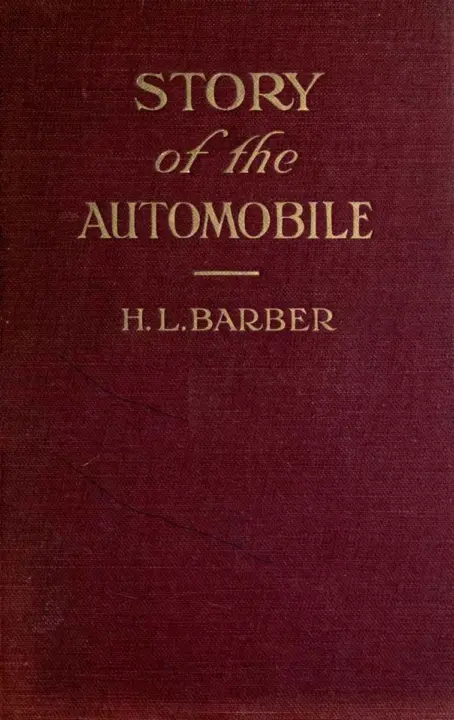
"Story of the Automobile: Its History and Development from 1760 to 1917" by H. L. Barber is a comprehensive historical account written in the early 20th century. The book chronicles the evolution of the automobile over a span of more than a century, detailing its transition from a concept to a widespread commercial product. Barber highlights key figures and innovations in the industry, focusing particularly on the transformative impact of the automobile on society and its profitability as an investment opportunity. The opening of the work establishes the foundation for understanding the automobile's significance in modern history. Barber emphasizes the challenges faced by inventors and manufacturers over the years, highlighting early attempts at creating a horseless carriage and the eventual success achieved in America, particularly by influential figures like Henry Ford. Through a mix of anecdotal evidence and economic analysis, he sets the stage for a deep dive into the mechanics of automobiles, their impact on daily life, and the financial opportunities they present, thus inviting readers to appreciate both the historical and contemporary relevance of automotive innovation.
Introduction adapted from the source catalogue; source summaries may be automatically generated.
Free to read · English · 45,491 words · No account needed
MAKE TIME FOR A GOOD BOOK
On by default. Untick to stop anonymous reading totals. Each page counts after 10 seconds in view. How this works.
Anonymous counting is on unless you have switched it off.
(b) A somewhat unusual plan was the Perlman Rim Corporation (manufacturers of demountable automobile rims) which issued 100,000 shares of stock of no par value, divided into two classes as follows:
Class “A,” having voting power.... 3,000 shares Common, no par value or voting power 97,000 shares
The estimated earnings of this company for 1917 are $3,000,000. In addition the company has been allowed claims for infringements sustained by the courts, amounting to $2,000,000.
(c) The Motor Products Corporation issued 100,000 shares, divided as
follows:
Class “A,” no par value, non voting .. 95,000 shares Class “B,” no par value, voting ....... 5,000 shares
This corporation has taken over five companies manufacturing miscellaneous products, such as automobile radiators, windshields, etc. Their earnings for 1916 were $788,000.
(d) A more usual form is the $5,000,000 issue of 7 per cent cumulative preferred stock and 200,000 shares common stock, of the Fischer Body Corporation. It is not contemplated to pay a dividend on the common until the company has $1,000,000 surplus earnings. Its net profits for the year 1916 were $1,000,000 on a total volume of business amounting to $20,000,000. The preferred stock is redeemable at $120.
(e) The United Alloy Steel Corporation issued 525,000 shares without par value, of which 500,000 were used to acquire United Steel Company, manufacturing alloy steel parts for the automobile trade.
For expansion purposes to provide more adequate equipment to supply the increasing demand for its product, $4,000,000 additional cash capital was to be provided. The estimated net earnings for 1916 were about $7 a share on 500,000 shares.
(f) Transue & Williams Steel Forging Company issued 110,000 shares without par value. One hundred thousand shares and $750,000 cash was to be paid for company subscriptions at $45.50 a share. The net earnings for 7 months of 1916 were $648,026 or $12 a share.
Among the tire company stock issues a few leading examples may be cited.
The Firestone Tire & Rubber Company issued $5,000,000 of 6 per cent cumulative preferred stock. A sinking fund is provided to redeem this stock at $110, beginning 1921. There are no bonds, and the company is required to maintain at all times total net assets equal to 250 per cent and net quick assets equal to 150 per cent of the aggregate par value of this stock outstanding.
The earnings for 1916 were $4,482,554.52, or over seven times the dividend requirements on the total issue of preferred stock. This stock was sold at $107.
Another representative issue was that of the Fisk Rubber Company, which consisted of $5,000,000 of cumulative 7 per cent first preferred convertible stock. This is redeemable at $110 upon 60 days’ notice.
The earnings for the year ending August 31, 1916, were $1,992,043, or three times the dividend requirements. There are no bonds or other form of funded debt.
Your reading position is saved on this browser. Take it to another device with a library code. Reading pages adapt to text, rather than matching a printed edition.
BEHIND THE BOOK
This eBook is for the use of anyone anywhere in the United States and most other parts of the world at no cost and with almost no restrictions whatsoever. You may copy it, give it away or re-use it under the terms of the Project Gutenberg License included with this eBook or online at www.gutenberg.org. If you are not located in the United States, you will have to check the laws of the country where you are located before using this eBook. Read the source licence.
The original source file, including credits and licence, is retained by this library. Request an original-format copy at no charge. Please include the book title and Project Gutenberg identifier #66607.
KEEP YOUR CURIOSITY GOING
Cécile Tormay

Moritz Busch
John L. Ransom
Frances Wright
Cécile Tormay

Mabel Potter Daggett