THE CLASSIC COLLECTION✦A dead man’s diaryCLASSIC FREE BOOKS
A dead man’s diary
Coulson Kernahan
THE CLASSIC COLLECTION · 1865
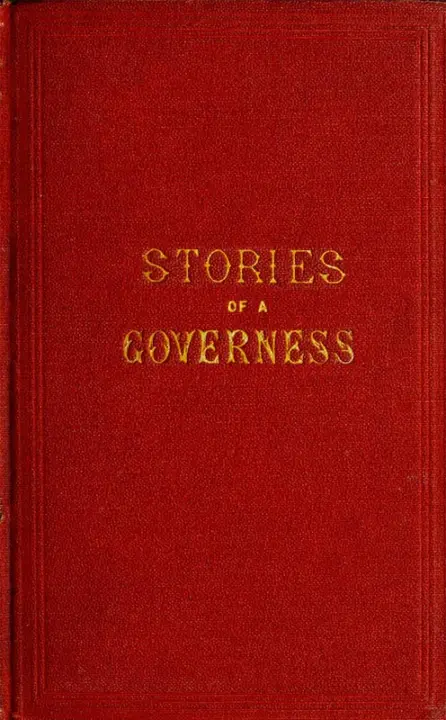
"Stories of a Governess" by Annie Fisler is a fictional work written in the mid-19th century. The narrative revolves around the experiences and challenges faced by a young governess named Miss Lane as she interacts with the children under her care—a family grappling with loss and seeking guidance. The story delves into themes of childhood innocence, moral lessons, and the nurturing bond between the governess and the young ones, reflecting on the transformative power of love and responsibility. At the start of the book, the anticipation and curiosity of the children waiting for their new governess set the emotional tone. As they speculate about her qualities, the story paints a vivid picture of their home life, marked by the absence of their deceased mother and the loving but challenging environment created by their father. The narrative introduces each child's unique personality—Lillie's eagerness, Frank's restlessness, and Rosie’s quiet contemplation. The arrival of Miss Lane reveals her gentle, nurturing demeanor and her resolve to instill discipline and decorum in her young charges. As she begins to integrate into their lives, the children grapple with feelings of loss, longing, and the transformative importance of guidance in their formative years. The opening establishes a foundation of emotional depth and moral undertones that promise to unfold as the story progresses.
Introduction adapted from the source catalogue; source summaries may be automatically generated.
Free to read · English · 29,998 words · No account needed
MAKE TIME FOR A GOOD BOOK
On by default. Untick to stop anonymous reading totals. Each page counts after 10 seconds in view. How this works.
Anonymous counting is on unless you have switched it off.
“Anything would be better than that, papa,” ventured Frank. “It will be so dull—and then, no Christmas presents. Why, who ever heard of such a thing?”
“Little Alice, I dare say,” his father replied; “I imagine she has never had a present in her life.”
Frank seemed amazed at the idea. His imagination had never fathomed the
depth of such misery.
“But,” continued his papa, “you can sell Robin, or your watch, or your
gun.”
“Oh, papa, Robin! And, you see, I’m so used to the watch—and my gun, why, just think, I couldn’t stand seeing the ducks on the lake with nothing to shoot at them.”
“Well, my boy, Alice has no stockings, and Mrs. Ross no wood—just think of this room without a fire this morning!”
“I know it, it is all right, papa—I’m agreed!” cried Frank, abruptly,
leaving the room.
“Very well, then, here’s the purse. I’ll put it into Miss Lane’s hands—she’ll be prudent. Are you satisfied, Kitten?” pulling Rosie’s ears.
“Yes, papa, for I thought you might want Dolly, and you know I love Dolly—that would have been sad.”
“I think we must manage a dolly for little Alice, too, Miss Lane,” said
Mr. Graham.
Rosie started a little anxiously. A look of perplexity puckered her smooth forehead, and all day she moved about in an unusually thoughtful manner. Towards evening, as Miss Lane was going to her own room to get her bonnet and cloak, before setting out for Mrs. Ross’s dwelling, in order to make inquiries into her necessities, she heard a little voice talking in the nursery, and going to the door, peeped in. Rosie sat on the floor, with her little bureau of doll’s clothing before her. She had the precious plaything in her arm, and was soothing it with gentle words.
“Now you must not cry, for I shall come to see you sometimes, and I hope Alice will be good to you. But, you know, she never had a dolly, nor a present in all her life—just think how dreadful, and her papa’s gone, and they have no wood to make a fire: so you must comfort Alice, for she must be very unhappy. I am sure I love you very much, better than anything I have, and that is the reason I give you away. You have made me so happy that I think you’ll make Alice happy too, and then she won’t cry when she comes to Sunday school any more. It makes me so sad to see her.”
Your reading position is saved on this browser. Take it to another device with a library code. Reading pages adapt to text, rather than matching a printed edition.
BEHIND THE BOOK
This eBook is for the use of anyone anywhere in the United States and most other parts of the world at no cost and with almost no restrictions whatsoever. You may copy it, give it away or re-use it under the terms of the Project Gutenberg License included with this eBook or online at www.gutenberg.org. If you are not located in the United States, you will have to check the laws of the country where you are located before using this eBook. Read the source licence.
The original source file, including credits and licence, is retained by this library. Request an original-format copy at no charge. Please include the book title and Project Gutenberg identifier #52572.
KEEP YOUR CURIOSITY GOING
Coulson Kernahan

Maurice Baring
Frances Wright
Cécile Tormay

Frederic Jesup Stimson

W. H. P. (William Henry Pope) Jarvis