THE CLASSIC COLLECTION✦A dead man’s diaryCLASSIC FREE BOOKS
A dead man’s diary
Coulson Kernahan
THE CLASSIC COLLECTION · 1865
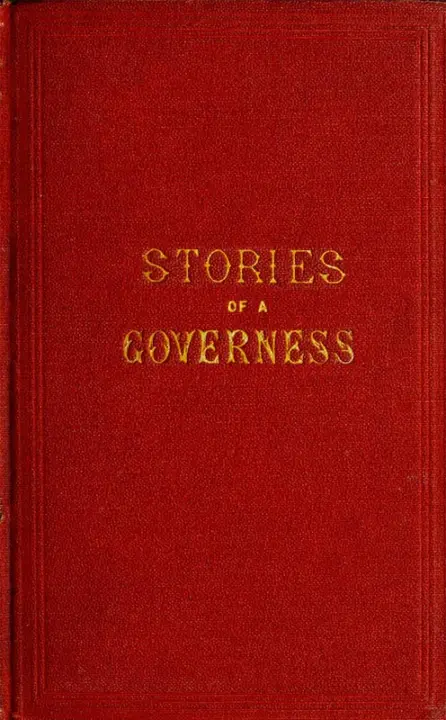
"Stories of a Governess" by Annie Fisler is a fictional work written in the mid-19th century. The narrative revolves around the experiences and challenges faced by a young governess named Miss Lane as she interacts with the children under her care—a family grappling with loss and seeking guidance. The story delves into themes of childhood innocence, moral lessons, and the nurturing bond between the governess and the young ones, reflecting on the transformative power of love and responsibility. At the start of the book, the anticipation and curiosity of the children waiting for their new governess set the emotional tone. As they speculate about her qualities, the story paints a vivid picture of their home life, marked by the absence of their deceased mother and the loving but challenging environment created by their father. The narrative introduces each child's unique personality—Lillie's eagerness, Frank's restlessness, and Rosie’s quiet contemplation. The arrival of Miss Lane reveals her gentle, nurturing demeanor and her resolve to instill discipline and decorum in her young charges. As she begins to integrate into their lives, the children grapple with feelings of loss, longing, and the transformative importance of guidance in their formative years. The opening establishes a foundation of emotional depth and moral undertones that promise to unfold as the story progresses.
Introduction adapted from the source catalogue; source summaries may be automatically generated.
Free to read · English · 29,998 words · No account needed
MAKE TIME FOR A GOOD BOOK
On by default. Untick to stop anonymous reading totals. Each page counts after 10 seconds in view. How this works.
Anonymous counting is on unless you have switched it off.
“I’ll tell you all, to-morrow morning, what you can do. You must say good night now, and think about it seriously. Because God has been very good to you, my dears, in giving you all you desire, you must be willing to share with others, even at the sacrifice of some of your pleasures. It is not good for us to have all we wish, and I will see how my little ones bear doing without some gratification for the sake of doing good.”
And so they went to bed, full of curiosity, though without much comprehending the real meaning of their father’s words. But when the morning came, each child was about his chair at his early breakfast.
“What early birds you are! What brought you down stairs at such an hour? Isn’t this the first time you have seen the sun rise this year?”
He glanced smilingly at Miss Lane, who appeared in the back ground, looking over the glossy heads of Frank and brown Rosie.
“I must confess, I was curious, too, and hearing the commotion, I followed to learn the mystery.”
“Now, ‘brown Rosie,’ how much do you suppose you thought of it all last night? The sand-man had arrived when you kissed me—did he wait till you put your head on the pillow?”
“I did think of it, papa,” said the little one, putting her head on one side, like a bird; “and,” she continued in a low tone, so that only her father could hear, “I asked God about it.”
“Bless you! my love,” he exclaimed, pressing the soft face close to him.
“We can’t think what it can be,” cried Jennie, in much impatience. “Oh, do, papa, tell us quickly.”
“Well, my dears,”—a profound silence reigned, four little hearts beat quickly. “Last year your Christmas tree and the presents on it cost me sixty dollars.” A shadow gathered over more than one face. “This is such a sad time for so many, and we must do with less ourselves to help them. If you are willing to do without your presents this year, Alice’s mother shall have the money.”
Lillie sighed, Frank made a wry face, and Jennie could not quite help
the exclamation:
“Oh, my bracelet!” but little Rosie’s brown eyes remained quite bright, and she stroked her father’s cheek contentedly.
“Well, my dears, what do you say?”
“Oh, papa, you could not think us so cruel; of course we are willing,” the three cried in a breath. “We did not think of that, you know, and so it can’t help being a disappointment just at first.”
Your reading position is saved on this browser. Take it to another device with a library code. Reading pages adapt to text, rather than matching a printed edition.
BEHIND THE BOOK
This eBook is for the use of anyone anywhere in the United States and most other parts of the world at no cost and with almost no restrictions whatsoever. You may copy it, give it away or re-use it under the terms of the Project Gutenberg License included with this eBook or online at www.gutenberg.org. If you are not located in the United States, you will have to check the laws of the country where you are located before using this eBook. Read the source licence.
The original source file, including credits and licence, is retained by this library. Request an original-format copy at no charge. Please include the book title and Project Gutenberg identifier #52572.
KEEP YOUR CURIOSITY GOING
Coulson Kernahan

Maurice Baring
Frances Wright
Cécile Tormay

Frederic Jesup Stimson

W. H. P. (William Henry Pope) Jarvis