THE CLASSIC COLLECTION✦Glimpses of Bengal Selected from the letters of Sir Rabindranath Tagore, 1885 to 1895CLASSIC FREE BOOKS
Glimpses of Bengal Selected from the letters of Sir Rabindranath Tagore, 1885 to 1895
Rabindranath Tagore
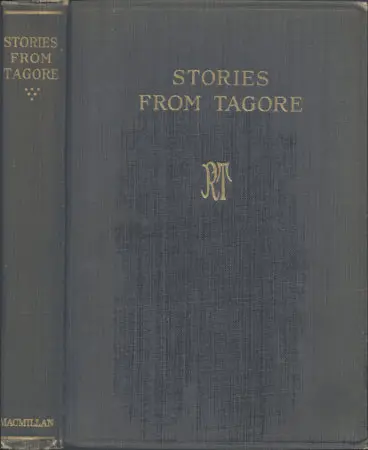
THE CLASSIC COLLECTION · 1916
"Stories from Tagore" by Rabindranath Tagore is a collection of short stories written in the early 20th century. The anthology captures various facets of life, culture, and social issues in India, exploring themes of love, friendship, and the human condition through relatable characters and poignant narratives. Each story provides a glimpse into the complexities of life, often highlighting the emotional and spiritual journeys of its characters. At the start of this collection, the opening story, "The Cabuliwallah," introduces us to Mini, a lively five-year-old girl who is unfazed by curiosity and chatter. Her life intersects with that of Rahmun, a fruit-seller from Kabul, who becomes a source of fascination for Mini and a friend who offers her snacks and playful banter. As their relationship develops amidst cultural contrasts and societal expectations, a poignant sense of attachment grows between the innocent child and the rugged man, leading to a deeper understanding of love and loss as life unfolds. The narrative sets the tone for Tagore's exploration of human connections across social divides, creating an evocative backdrop for the stories that follow.
Introduction adapted from the source catalogue; source summaries may be automatically generated.
Free to read · English · 47,675 words · No account needed
MAKE TIME FOR A GOOD BOOK
On by default. Untick to stop anonymous reading totals. Each page counts after 10 seconds in view. How this works.
Anonymous counting is on unless you have switched it off.
=good-for-nothing.= Such "phrase" words as these are not very common in English. They are more common in French. Compare the English ne'er-do-well, lazybones, out-of-the-way, and the French coup-d'A(C)tat, nom-de-plume, fin-de-siA(C)cle. On the other hand, adjectives made up of two words are quite common in English. Compare simple-hearted, middle-aged.
=rA(C)gime.= This word still retains its French form and accent and pronunciation. Little by little such French words become pronounced and spelt in an English form and take a permanent place in the language. For instance, the French word "morale" with accent on the last syllable is now becoming a common English word. In time it will probably be accented on the first syllable like ordinary English words and will drop its final "e."
=gap.= This is another Old Norwegian word meaning a wide opening. Compare gape. These Norwegian words came into English somewhat plentifully at the time of the Danish Conquest.
=sympathy.= From the Greek "syn" with, and "pathos" suffering. It should be noted that the word "compassion" from the Latin "cum" with, and "passio" suffering, has the same root meaning, viz. "suffering with another."
=law-suit.= The English word "suit" comes from the Latin "sequi," to follow, which in French becomes "suivre." We have two English forms, one form directly from the Latin, the other from the French. From the Latin prosecute, persecute, consecutive, execute. From the French pursue, ensue, sue.
A "suit" in a game of cards means the cards that follow one
another in a sequence.
A "suit" of clothes means the trousers, coat, waistcoat, following the same pattern. Compare also the French word suite which has now been taken into English, e.g. a suite of rooms, a suite of furniture (pronounced like "sweet").
=incoherence.= From the Latin "haerere," to stick. Compare adhere, cohere, inherent, coherence.
=foreign.= From the Old French "forain," out of doors. The letter "g" has become wrongly inserted in this word as also in "sovereign."
=bargain.= From the late Latin "barca," a boat, because trade was carried on by boats along the rivers. Compare barque, barge, bark.
=husky.= From the noun husk,--as dry as a husk.
=shawl.= From the Persian word "shAel." A considerable number of words are coming into use in English now from the East. One of the most curious recent ones is Blighty which is a corruption of wilayati, bilaiti. For words introduced into English compare karma, sanyasi, fakir, brahmin, ghat, puggaree, pyjama, pucca, curry, chutney, chintz, cummerbund, khaki, rupee, durrie, turban, sepoy.
=doll.= This is a shortened form of the English girl's name Dorothy, Dolly, Doll. Compare poll-parrot from Polly or Poll.
Your reading position is saved on this browser. Take it to another device with a library code. Reading pages adapt to text, rather than matching a printed edition.
Rabindranath Tagore
Rabindranath Tagore
Rabindranath Tagore
Rabindranath Tagore
BEHIND THE BOOK
This eBook is for the use of anyone anywhere in the United States and most other parts of the world at no cost and with almost no restrictions whatsoever. You may copy it, give it away or re-use it under the terms of the Project Gutenberg License included with this eBook or online at www.gutenberg.org. If you are not located in the United States, you will have to check the laws of the country where you are located before using this eBook. Read the source licence.
The original source file, including credits and licence, is retained by this library. Request an original-format copy at no charge. Please include the book title and Project Gutenberg identifier #33525.
KEEP YOUR CURIOSITY GOING
Coulson Kernahan

Maurice Baring
Frances Wright
Cécile Tormay

Frederic Jesup Stimson

W. H. P. (William Henry Pope) Jarvis