THE CLASSIC COLLECTION✦Glimpses of Bengal Selected from the letters of Sir Rabindranath Tagore, 1885 to 1895CLASSIC FREE BOOKS
Glimpses of Bengal Selected from the letters of Sir Rabindranath Tagore, 1885 to 1895
Rabindranath Tagore
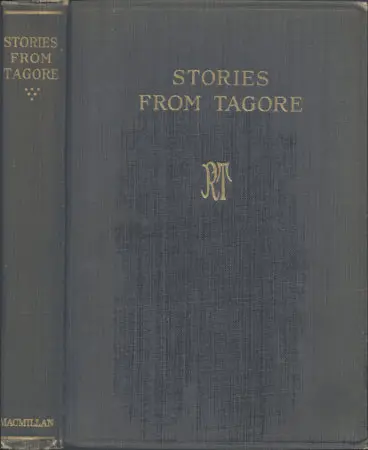
THE CLASSIC COLLECTION · 1916
"Stories from Tagore" by Rabindranath Tagore is a collection of short stories written in the early 20th century. The anthology captures various facets of life, culture, and social issues in India, exploring themes of love, friendship, and the human condition through relatable characters and poignant narratives. Each story provides a glimpse into the complexities of life, often highlighting the emotional and spiritual journeys of its characters. At the start of this collection, the opening story, "The Cabuliwallah," introduces us to Mini, a lively five-year-old girl who is unfazed by curiosity and chatter. Her life intersects with that of Rahmun, a fruit-seller from Kabul, who becomes a source of fascination for Mini and a friend who offers her snacks and playful banter. As their relationship develops amidst cultural contrasts and societal expectations, a poignant sense of attachment grows between the innocent child and the rugged man, leading to a deeper understanding of love and loss as life unfolds. The narrative sets the tone for Tagore's exploration of human connections across social divides, creating an evocative backdrop for the stories that follow.
Introduction adapted from the source catalogue; source summaries may be automatically generated.
Free to read · English · 47,675 words · No account needed
MAKE TIME FOR A GOOD BOOK
On by default. Untick to stop anonymous reading totals. Each page counts after 10 seconds in view. How this works.
Anonymous counting is on unless you have switched it off.
But when he came outside to the spot where the figure had stood, there was no one to be seen. He walked up and down in the garden through the drenching rain, but no one was there. He stood still for a moment raising his voice and calling,--"Kalipada," but no answer came. The servant, Noto, who was sleeping in the cowshed, heard his cry and came out and coaxed him back to his room.
Next day, in the morning, Noto, while sweeping the room found a bundle just underneath the grated window. He brought it to Bhavani who opened it and found it was an old document. He put on his spectacles and after reading a few lines came rushing in to Rashmani and gave the paper into her hand.
Rashmani asked, "What is it?"
Bhavani replied, "It is the will!"
"Who gave it you?"
"He himself came last night to give it to me."
"What are you going to do with it?"
Bhavani said: "I have no need of it now." And he tore the will to
pieces.
When the news reached the village Bagala proudly nodded his head and said: "Didn't I prophesy that the will would be recovered through Kalipada?"
But the grocer Ramcharan replied: "Last night when the ten o'clock train reached the Station a handsome looking young man came to my shop and asked the way to the Chowdhuri's house and I thought he had some kind of bundle in his hand."
"Absurd," said Bagala.
=detailed.= From the French "tailler," to cut. Compare tailor,
entail, retail.
=patrimony.= From the Latin "pater," a father. Compare paternal, patriarch, patriot. The ending -mony is from the Latin -monium. Compare testimony, matrimony, sanctimony.
=revert.= From the Latin "vertere," to turn. Compare convert, subvert, divert, invert, advert, version, conversion, adverse.
=amazement.= This word is of doubtful origin. We have the simpler form "maze" but do not know how it has come into English.
=preposterous.= The Latin word "pre" means "before," and the Latin word "posterus" behind. The literal meaning, therefore, is "before-behind" and so "absurd," "outrageous."
=treachery.= This comes from the Old French "treacher," to trick. It is to be distinguished from the word "traitor," which comes from the Latin "traditor," one who gives up another. Compare intricate, trickery, trick, intrigue.
=parasites.= From the Greek word "sitos," food,--one who feeds on
another.
=property.= From the Latin "proprius," meaning "one's own." Compare proper, appropriate, improper.
=haggle.= This is an Old Norwegian word which has come into English, meaning literally to chop.
Your reading position is saved on this browser. Take it to another device with a library code. Reading pages adapt to text, rather than matching a printed edition.
Rabindranath Tagore
Rabindranath Tagore
Rabindranath Tagore
Rabindranath Tagore
BEHIND THE BOOK
This eBook is for the use of anyone anywhere in the United States and most other parts of the world at no cost and with almost no restrictions whatsoever. You may copy it, give it away or re-use it under the terms of the Project Gutenberg License included with this eBook or online at www.gutenberg.org. If you are not located in the United States, you will have to check the laws of the country where you are located before using this eBook. Read the source licence.
The original source file, including credits and licence, is retained by this library. Request an original-format copy at no charge. Please include the book title and Project Gutenberg identifier #33525.
KEEP YOUR CURIOSITY GOING
Coulson Kernahan

Maurice Baring
Frances Wright
Cécile Tormay

Frederic Jesup Stimson

W. H. P. (William Henry Pope) Jarvis