THE CLASSIC COLLECTION✦Hearts and the highwayCLASSIC FREE BOOKS
Hearts and the highway
Cyrus Townsend Brady
THE CLASSIC COLLECTION · 1910
"South American Fights and Fighters, and Other Tales of Adventure" by Cyrus Townsend Brady is a collection of historical accounts and adventure narratives likely written in the early 20th century. The book explores the dramatic and often violent episodes surrounding South American exploration and colonization, delving into the exploits of notable figures such as Vasco Núñez de Balboa, Alonzo de Ojeda, and the Pizarros, among others. With rich storytelling, Brady brings to life the perils and triumphs of early explorers in the tumultuous and highly contested New World. The opening of the work sets the stage for the Spanish colonization efforts in South America, introducing key themes of ambition, rivalry, and the harrowing encounters between European explorers and indigenous peoples. It begins with an elucidation of the term "Spanish Main," clarifying its meaning and historical significance. The narrative follows the early expeditions of figures like Ojeda and Nicuesa, who competed for territories that would soon become crucial in the Spanish empire. Through vivid anecdotes and character portrayals, Brady captures the urgency and peril of the colonization process while foreshadowing the adventures to come throughout the rest of this fascinating collection.
Introduction adapted from the source catalogue; source summaries may be automatically generated.
Free to read · English · 91,365 words · No account needed
MAKE TIME FOR A GOOD BOOK
On by default. Untick to stop anonymous reading totals. Each page counts after 10 seconds in view. How this works.
Anonymous counting is on unless you have switched it off.
On one occasion the soldiers, tiring of this, demanded, and Cortes in compliance with their wishes projected, an attack which was hoped would capture the narrow circle of defense by storm. In his own words the story of this day's fighting is now related. It will be seen how he narrowly escaped with his life:
"The day after mass,[10] in pursuance of the arrangements already mentioned, the seven brigantines with more than three thousand canoes of our allies left the encampment; and I, with twenty-five horses and {199} all the other force I had, including the seventy-five men from the division at Tacuba, took up the line of march and entered the city, where I distributed the troops in the following manner: There were three streets leading from where we entered to the market-place, called by the Indians Tianguizco, and the whole square in which it is situated is called Tlaltelulco; one of these streets was the principal avenue to the marketplace, which I ordered your Majesty's treasurer and auditor to take, with seventy men and more than fifteen or twenty thousand of our allies, and rear-guard consisting of seven or eight horses. I also directed that, whenever a bridge or entrenchment was taken, it should be immediately filled up; and for this purpose they had twelve men with pick-axes, together with many more of our allies who were very useful in this kind of work. The two other streets also lead from that of Tacuba to the market-place, and are narrower and full of causeways, bridges, and water-streets (or canals). I ordered two captains,[11] to take the wildest of these with eighty men and more than ten thousand of our Indian allies; and at the head of the street of Tacuba I placed two heavy cannon with eight horse to guard them. With eight other horse and about one hundred foot, including twenty-five or more bowmen and musketeers, and an innumerable host of our allies, I took up the line of march along the other narrow street, intending to penetrate as far as possible. At its entrance I caused the cavalry to halt, and ordered them by no means to pass from there, nor to come in my rear, unless I first sent them orders to that effect; and then I alighted from my {200} horse, and we came to an entrenchment that had been raised in front of a bridge, which we carried by means of a small field-piece, and the archers and musketeers, and then proceeded along the causeway, which was broken in two or three places, where we encountered the enemy. So great was the number of our allies, who ascended the terraces and other places, that it did not appear possible anything could stop us. When we had gained the two bridges, the entrenchments and the causeways, our allies followed along the street without taking any spoils; and I remained behind with about twenty Spanish soldiers on a little island, for I saw that some of our Indians were getting into trouble with the enemy; and in some instances they retreated until they cast themselves into the water, and with our aid were enabled to return to the attack. Besides this, we were on the watch to prevent the enemy from sallying forth out of the cross-streets in the rear of the Spaniards, who had advanced on the main street and at this time sent us word that they had made much progress, and were not far from the great square of the market-place; adding, that they wished to push forward, for they already heard the noise of the combat in which the Alguazil mayor and Pedro de Alvarado were engaged on their side of the city. I answered them that they must by no means go forward without leaving the bridges well filled up, so that, if it became necessary to beat a retreat, the water might present no obstacle or impediment, for in this consisted all the danger. They sent to me a message in reply, the amount of which was that the whole they had gained was in good condition, and that I might go and see if it was not so. But suspecting that they had disregarded the orders and left the {201} bridges imperfectly filled up, I went to the place and found they had passed a breach in the road ten or twelve paces wide, and the water that flowed through it was ten or twelve feet deep. At the time the troops had passed this ditch, thus formed, they had thrown in it wood and reed-canes, and as they had crossed a few at a time and with great circumspection, the wood and canes had not sunk beneath their weight; and they were so intoxicated with the pleasure of victory that they imagined it to be sufficiently firm. At the moment I reached this bridge of troubles, I discovered some Spaniards and many of our allies flying back in great haste, and the enemy like dogs in pursuit of them; and when I saw such a rout, I began to cry out, 'Hold, hold!' and on approaching the water, I beheld it full of Spaniards and Indians in so dense a mass that it seemed as if there was not room for a straw to float. The enemy charged on the fugitives so hotly, that in the melee they threw themselves into the water after them; and soon the enemy's canoes came up by means of the canal and took the Spaniards alive.
Your reading position is saved on this browser. Take it to another device with a library code. Reading pages adapt to text, rather than matching a printed edition.
Cyrus Townsend Brady
Cyrus Townsend Brady
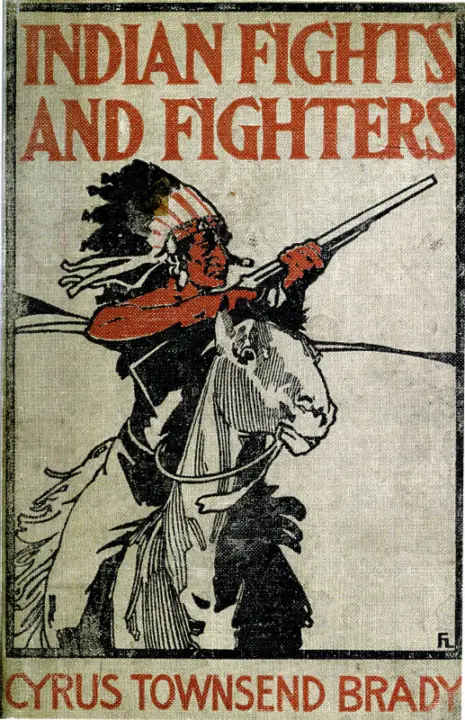
Cyrus Townsend Brady
Cyrus Townsend Brady
BEHIND THE BOOK
This eBook is for the use of anyone anywhere in the United States and most other parts of the world at no cost and with almost no restrictions whatsoever. You may copy it, give it away or re-use it under the terms of the Project Gutenberg License included with this eBook or online at www.gutenberg.org. If you are not located in the United States, you will have to check the laws of the country where you are located before using this eBook. Read the source licence.
The original source file, including credits and licence, is retained by this library. Request an original-format copy at no charge. Please include the book title and Project Gutenberg identifier #20910.
KEEP YOUR CURIOSITY GOING
Wilfrid Scawen Blunt
Wilfrid Scawen Blunt

E. W. (Edgar Watson) Howe
Cécile Tormay

Moritz Busch
Coulson Kernahan