THE CLASSIC COLLECTION✦Hearts and the highwayCLASSIC FREE BOOKS
Hearts and the highway
Cyrus Townsend Brady
THE CLASSIC COLLECTION · 1910
"South American Fights and Fighters, and Other Tales of Adventure" by Cyrus Townsend Brady is a collection of historical accounts and adventure narratives likely written in the early 20th century. The book explores the dramatic and often violent episodes surrounding South American exploration and colonization, delving into the exploits of notable figures such as Vasco Núñez de Balboa, Alonzo de Ojeda, and the Pizarros, among others. With rich storytelling, Brady brings to life the perils and triumphs of early explorers in the tumultuous and highly contested New World. The opening of the work sets the stage for the Spanish colonization efforts in South America, introducing key themes of ambition, rivalry, and the harrowing encounters between European explorers and indigenous peoples. It begins with an elucidation of the term "Spanish Main," clarifying its meaning and historical significance. The narrative follows the early expeditions of figures like Ojeda and Nicuesa, who competed for territories that would soon become crucial in the Spanish empire. Through vivid anecdotes and character portrayals, Brady captures the urgency and peril of the colonization process while foreshadowing the adventures to come throughout the rest of this fascinating collection.
Introduction adapted from the source catalogue; source summaries may be automatically generated.
Free to read · English · 91,365 words · No account needed
MAKE TIME FOR A GOOD BOOK
On by default. Untick to stop anonymous reading totals. Each page counts after 10 seconds in view. How this works.
Anonymous counting is on unless you have switched it off.
This great city of Temixtitan (Mexico) is situated in this salt lake, and from the main land to the denser parts of it, by which ever route one choses to enter, {149} the distance is two leagues. There are four avenues or entrances to the city, all of which are formed by artificial causeways, two spears' length in width. The city is as large as Seville or Cordova; its streets, I speak of principal ones, are very wide and straight; some of these, and all the inferior ones, are half land and half water, and are navigated by canoes. All the streets at intervals have openings, through which the water flows, crossing from one street to another; and at these openings, some of which are very wide, there are also very wide bridges, composed of large pieces of lumber, of great strength and well put together; on many of these bridges ten horses can go abreast. Foreseeing that if the inhabitants of this city should prove treacherous, they would possess great advantages from the manner in which the city is constructed, since by removing the bridges at the entrances and abandoning the place, they could leave us to perish by famine without our being able to reach the mainland--as soon as I had entered it, I made great haste to build four brigantines, which were soon finished, and were large enough to take ashore three hundred men and the horses, whenever it became necessary.
This city has many public squares, in which are situated the markets and other places for buying and selling. There is one square twice as large as that of the city of Salamanca, surrounded by porticoes, where are daily assembled more than sixty thousand souls, engaged in buying and selling; and where are found all kinds of merchandise that the world affords, embracing the necessities of life, as, for instance, articles of food, as well as jewels of gold, silver, lead, brass, copper, tin, precious stones, bones, shells, snails and feathers. There were also exposed for sale wrought and unwrought {150} stone, bricks burnt and unburnt, timber hewn and unhewn of different sorts. There is a street for game, where every variety of birds found in the country is sold, as fowls, partridges, quails, wild ducks, fly-catchers, widgeons, turtle-doves, pigeons, reedbirds, parrots, sparrows, eagles, hawks, owls, and kestrels; they sell, likewise, the skins of some birds of prey, with their feathers, head and beak and claws. There they also sold rabbits, hares, deer, and little dogs which are raised for eating and castrated. There is also an herb street, where may be obtained all sorts of roots and medicinal herbs that the country affords. There are apothecaries' shops, where prepared medicines, liquids, ointments, and plasters are sold; barber shops where they wash and shave the head; and restauranteurs that furnish food and drink at a certain price. There is also a class of men like those called in Castile porters, for carrying burdens. Wood and coal are seen in abundance, and brasiers of earthenware for burning coals; mats of various kinds for beds, others of a lighter sort for seats, and for halls and bedrooms. There are all kinds of green vegetables, especially onions, leeks, garlic, watercresses, nasturtium, borage, sorel, artichokes, and golden thistle-fruits also of numerous descriptions, amongst which are cherries and plums, similar to those in Spain; honey and wax from bees, and from the stalks of maize, which are as sweet as the sugar-cane; honey is also extracted from the plant called maguey,[2] which is superior to sweet or new wine; from the same plant they extract sugar and wine, which they also sell. Different kinds of cotton thread {151} of all colors in skeins are exposed for sale in one quarter of the market, which has the appearance of the silk market at Granada, although the former is supplied more abundantly. Painter's colors, as numerous as can be found in Spain, and as fine shades; deer-skins dressed and undressed, dyed different colors; earthenware of a large size and excellent quality; large and small jars, jugs, pots, bricks, and an endless variety of vessels, all made of fine clay, and all or most of them glazed and painted; maize or Indian corn, in the grain, and in the form of bread, preferred in the grain for its flavor to that of the other islands and terra firma; pates of birds and fish; great quantities of fish, fresh, salt, cooked and uncooked; the eggs of hens, geese and of all the other birds I have mentioned, in great abundance, and cakes made of eggs; finally, everything that can be found throughout the whole country is sold in the markets, comprising articles so numerous that, to avoid prolixity and because their names are not retained in my memory, or are unknown to me, I shall not attempt to enumerate them. Every kind of merchandise is sold in a particular street or quarter assigned to it exclusively, and thus the best order is preserved. They sell everything by number or measure; at least, so far we have not observed them to sell anything by weight. There is a building in the great square that is used as an audience house, where ten or twelve persons, who are magistrates, sit and decide all controversies that arise in the market, and order delinquents to be punished. In the same square there are other persons who go constantly about among the people observing what is sold, and the measures used in selling; and they have been seen to break measures that were not true.
Your reading position is saved on this browser. Take it to another device with a library code. Reading pages adapt to text, rather than matching a printed edition.
Cyrus Townsend Brady
Cyrus Townsend Brady
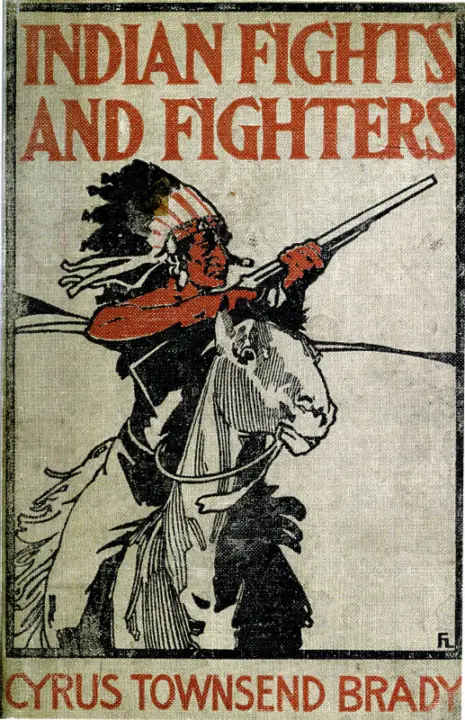
Cyrus Townsend Brady
Cyrus Townsend Brady
BEHIND THE BOOK
This eBook is for the use of anyone anywhere in the United States and most other parts of the world at no cost and with almost no restrictions whatsoever. You may copy it, give it away or re-use it under the terms of the Project Gutenberg License included with this eBook or online at www.gutenberg.org. If you are not located in the United States, you will have to check the laws of the country where you are located before using this eBook. Read the source licence.
The original source file, including credits and licence, is retained by this library. Request an original-format copy at no charge. Please include the book title and Project Gutenberg identifier #20910.
KEEP YOUR CURIOSITY GOING
Wilfrid Scawen Blunt
Wilfrid Scawen Blunt

E. W. (Edgar Watson) Howe
Cécile Tormay

Moritz Busch
Coulson Kernahan